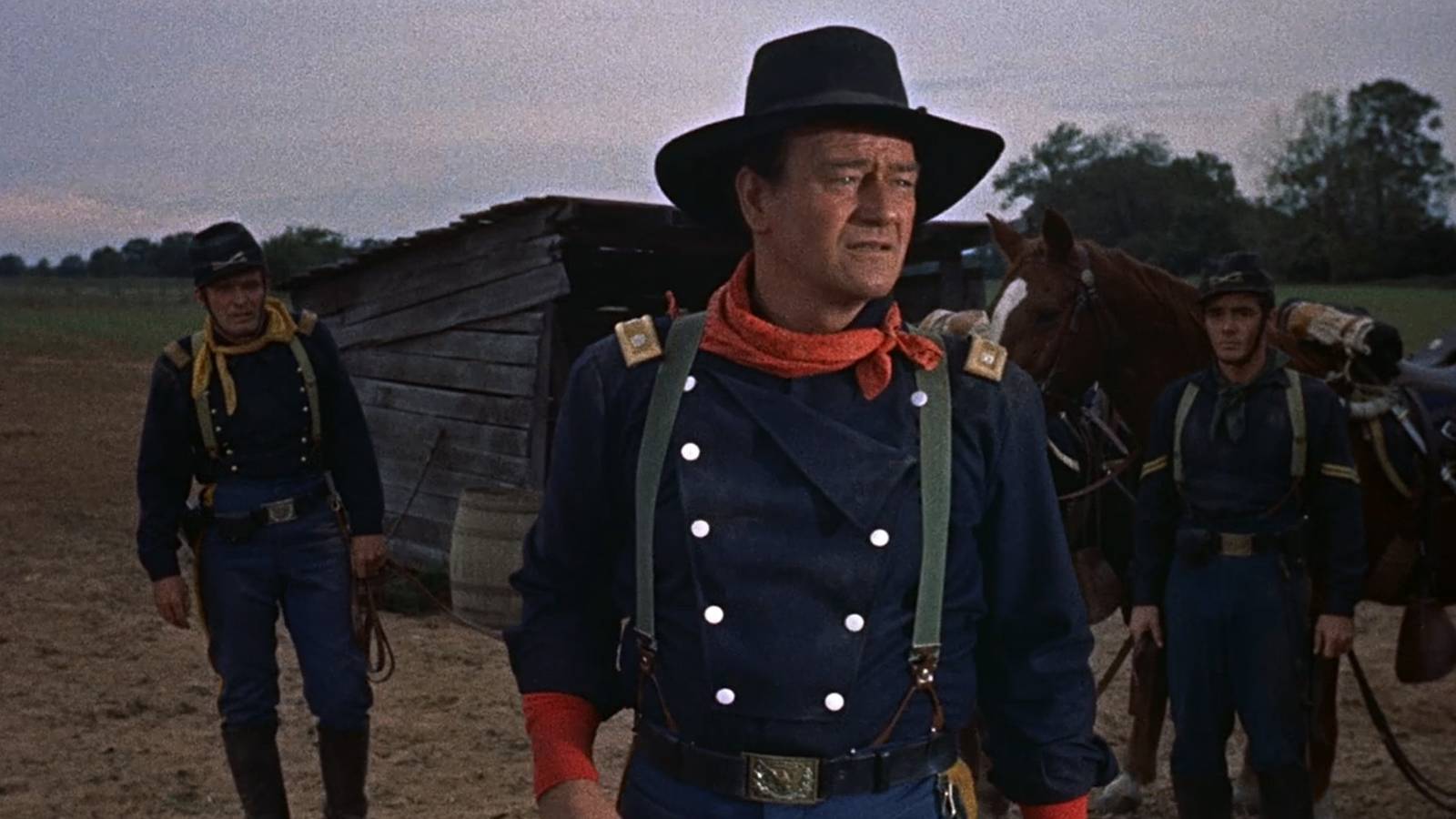
The legendary partnership between director John Ford and actor John Wayne produced some of Hollywood's most enduring classics, primarily in the Western genre. Yet, their 1959 Civil War film, The Horse Soldiers, stands apart—not just for its setting, but for the somber real-world event that permanently altered its conclusion. What was meant to be a rousing war epic instead became a quieter, more reflective film after a fatal accident on set forced a major creative change.
A Planned Finale Abandoned
Based on a novel by Harold Sinclair, The Horse Soldiers follows Union Colonel John Marlowe (John Wayne) and Major Henry Kendall (William Holden) on a dangerous raid behind Confederate lines. The original script built toward a climactic battle sequence, with Wayne's character leading a triumphant charge into Baton Rouge. This grand finale was designed to deliver the thrilling action audiences expected from a Ford-Wayne collaboration, capping the story with a decisive Union victory.
However, as filming progressed, a devastating incident occurred. During the shooting of an action sequence, veteran stuntman Fred Kennedy suffered a fatal fall from his horse. Kennedy had worked with Ford for years, and the director was deeply affected, feeling a profound sense of responsibility for the loss. The tragedy cast a pall over the entire production.
Ford's Decisive—and Defiant—Choice
With the planned large-scale battle scene next on the schedule, Ford made a sudden and definitive decision. He scrapped it entirely. According to accounts from biographers and crew members, the director refused to stage another complex action sequence so soon after the accident. When a producer argued that the film needed a strong finish to be successful, Ford reportedly shut down the discussion with a firm "No, we won't spend the money." His priority was to wrap the film and move on.
The result is the ending we have today: instead of a grand battle, Marlowe and his men destroy a bridge to delay pursuing Confederate forces and simply ride away. It’s an abrupt, anti-climactic conclusion that has long been cited as the film's major weakness, leaving it as a forgotten entry in the duo's filmography compared to their iconic Westerns.
A Film Shaped by Grief
The shift in tone is palpable. The retreat-focused ending mirrors Ford's own mindset—choosing to withdraw rather than engage in further cinematic combat. Some film historians see a direct parallel: just as Colonel Marlowe accepts a tactical retreat to save his men for another day, Ford accepted a creative retreat, carrying the weight of the tragedy with him. The film's lack of a traditional heroic resolution became a quiet testament to the loss on set.
This behind-the-scenes story adds a poignant layer to The Horse Soldiers, transforming it from a mere historical adventure into a document of a filmmaker's grief. It serves as a stark reminder that even grand Hollywood productions are vulnerable to real-world pain. While it may not have the explosive finish of other war films, its subdued ending now reads as a deliberate, if somber, artistic choice.
Ultimately, The Horse Soldiers remains a fascinating outlier. It captures a unique moment where the brutal reality of filmmaking collided with narrative ambition, leaving us with a film that is, in many ways, a hidden treasure defined by the story behind the camera as much as the one on screen. We can only wonder how the planned battle would have played, but the film we have stands as a testament to a director processing loss in real time.