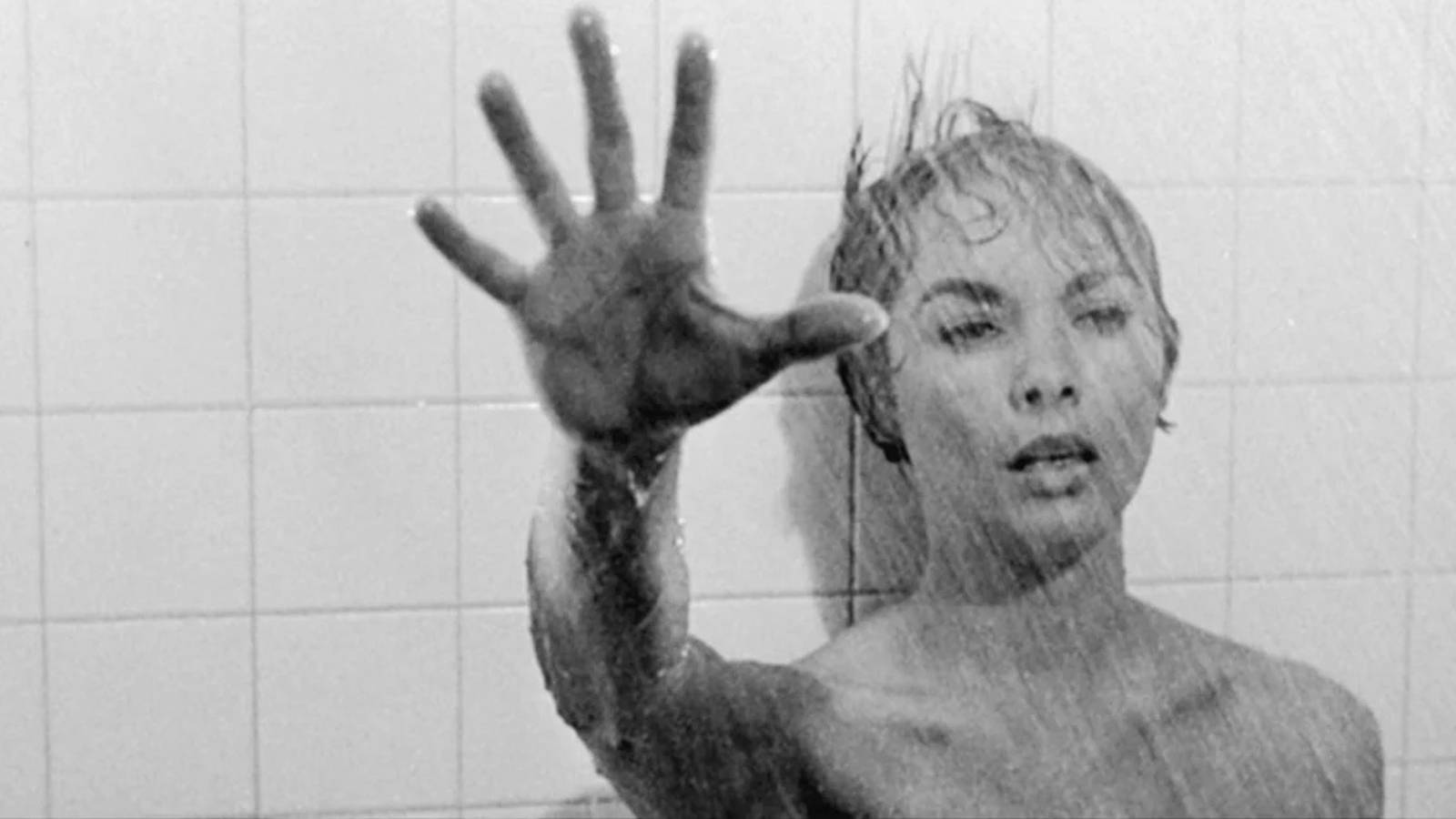
Horror movies have a strange obsession with bathrooms. Showers, mirrors, tubs—they keep circling back, like something went wrong in there once and never got fixed. Alfred Hitchcock's Psycho shattered the illusion of safety in the shower back in 1960, and for decades, filmmakers tried to recapture that lightning in a bottle. But it wasn't until 1984 that Wes Craven's A Nightmare on Elm Street truly made bathrooms terrifying again—by skipping the invasion entirely and suggesting the line you thought protected you never existed.
Most bathroom scares follow a simple formula: someone gets in, or someone crosses a line. You think you're alone, and then you're not. A Nightmare on Elm Street doesn't bother with that. Instead, it reveals that the line itself was always an illusion. Freddy Krueger doesn't invade safe spaces—he exposes they were never safe to begin with.

The Bathtub Scene: Horror at Its Most Vulnerable
In the film, protagonist Nancy (Heather Langenkamp) runs a bath. It's a mundane act—she's bone-tired, the kind of exhaustion where you stop arguing with it. She just wants to sit in warm water and quiet, nothing else for a minute. Then Freddy Krueger's (Robert Englund) bladed glove emerges slowly into view, so gradual you register it but don't quite believe what you're seeing. It doesn't feel like he came in. It feels like he's been there the whole time, letting her relax before showing himself. That's not being caught off guard. That's realizing you missed when it started.
Your brain tries to wrap itself around the logistics: How can Freddy be under the water in a one-person tub without Nancy knowing? Impossible. Then the lights dim, the edges pull away, and the bathroom feels cut loose from the house, hanging there by itself. Nancy slips, and the water turns from warm and harmless to murky and thick, like it's no longer on her side. Suddenly, she's in a bottomless pool—claustrophobic and disorienting. She's drifted into that space between awake and asleep, and the film doesn't try to pull her back. The safe version of that space is already gone.
Exhaustion as the Ultimate Horror
What really gets under your skin isn't Freddy popping up. It's how little it takes for him to get there. Nancy doesn't make a bad call or wander into something she shouldn't. She's just tired—properly and completely worn out. At some point, your body needs to recover, whether you want to sleep or not. You can only fight that exhaustion for so long. The film doesn't turn it into a grand underwater battle. She's just losing the ability to stay awake. You've felt that before: sitting there, telling yourself you're fine, then your eyes start doing their own thing. You blink it off, try again, and it keeps creeping back.
Being in the bath is the whole problem. It's warm, quiet, and thoroughly comfortable—nothing to keep you alert. Your tired mind decides to go to sleep. So when the dream monster appears, you're simply too late. By the time anything happens, Nancy is halfway gone. That's what makes the scene work perfectly. It didn't jump-scare her. It just waited her out.
Destroying the Idea of Safe Spaces
Then there's the part that creeps in later: the idea that your house is supposed to keep things out. That certain rooms are off-limits, safe by default, because you say they are. A Nightmare on Elm Street doesn't agree with that at all. Everything about that bathroom says things should be fine—doors closed, walls solid, nothing out of place. It's the most private spot in the house, the one place where you expect not to be interrupted. And the film leans on that expectation just long enough to show you how little it actually means.
Freddy doesn't break in. He's not creeping through hallways or entering through the doorway like your standard slasher villain. He just materializes in the most impossible of places. That's where the tension comes from: Nancy has no idea she's already vulnerable. Seeing the glove makes you realize that no space in the house was ever protected to begin with. The film keeps that idea running quietly in the background—adults who don't have answers, a past that hasn't stayed buried, houses that look fine from the outside but don't do the job they're meant to do. The bath scene condenses all of that into one moment you can't shrug off.
Later Elm Street sequels went bigger, leaning into spectacle with more special effects and insanity. While that kind of movie has entertainment value, it's not the same thing. The original doesn't try to force a scare by jumping out at you. It just presents a normal moment, lets you relax, and then takes that away without warning. That's the takeaway—not because it's louder than Psycho or trying to beat other slasher films at their own game. It just finds a different angle and lets it sit there, working on you long after the scene's over. You don't walk away thinking about how it was done. You walk away feeling like your bathroom isn't quite yours anymore.
For more horror that redefines fear, check out Why Mike Flanagan's 'Midnight Mass' Demands a Rewatch: A Horror Masterpiece and Prime Video's Lore: The Horror Anthology That's a Perfect Binge. If you're looking for hidden gems, Forgotten Frights: 7 Near-Perfect Horror Thrillers That Deserve a Second Look is a must-read.