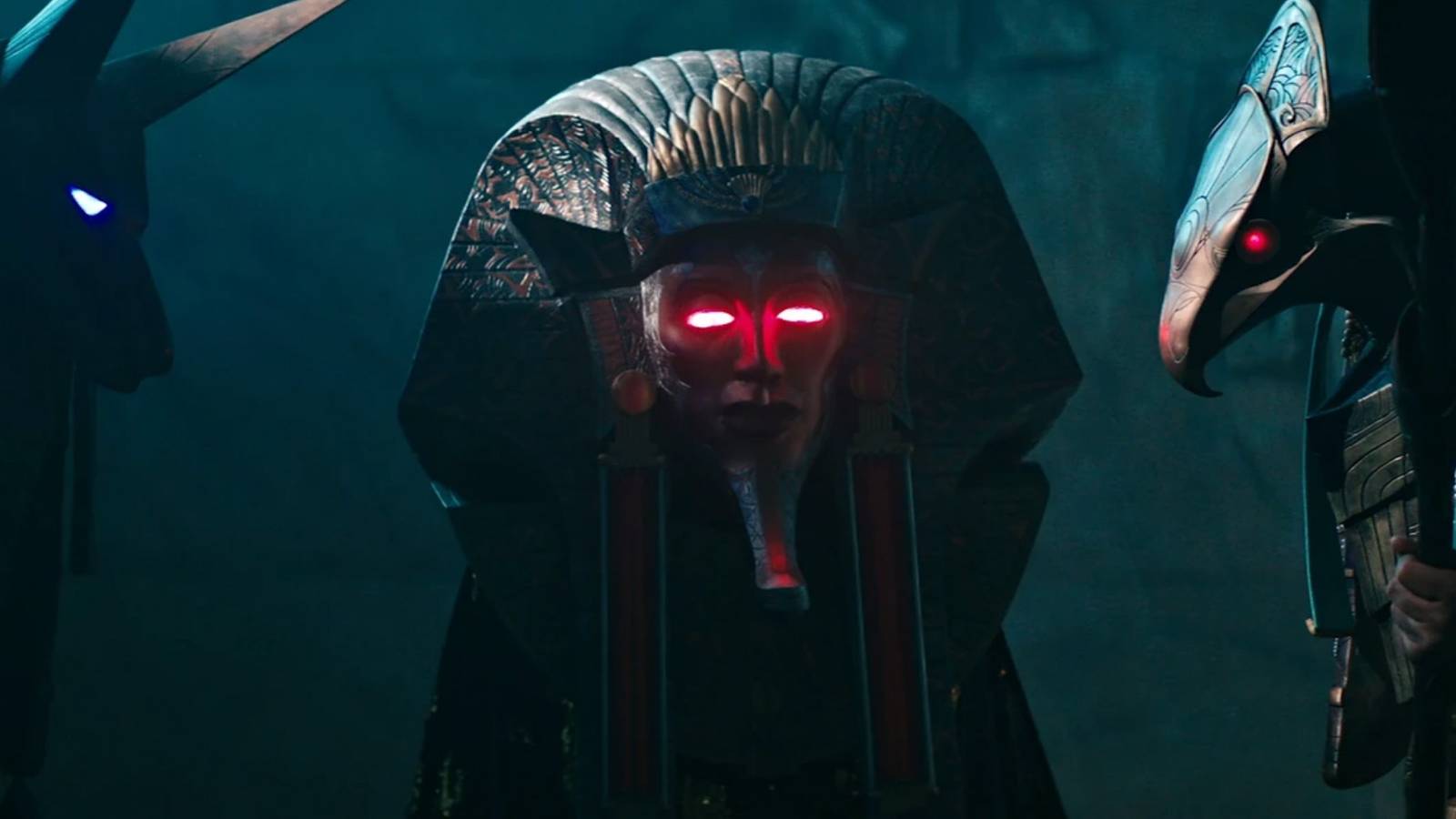
The Stargate franchise has weathered its share of setbacks, from a stalled reboot at Prime Video to fan outcry over creative direction changes. But long before those headlines, there was a forgotten spin-off that squandered the very formula that made the series a cult phenomenon. That show is Stargate Infinity, an animated misstep that remains a cautionary tale for any franchise expansion.
Most fans remember Stargate Atlantis or Stargate Universe as the franchise's first spin-offs, but the truth is that Stargate Infinity premiered in 2002, before either of those shows. The series followed Gus Bonner, a Stargate Command officer framed for a crime, who escapes through a Stargate with a mysterious chrysalis and a small team of soldiers. On paper, animation offered a chance to explore bigger worlds and more ambitious stories than live-action could afford. In practice, it became a textbook example of wasted potential.
Production Woes That Crippled the Show
MGM Television tapped Eric Lewald and Michael Maliani to bring Stargate Infinity to life. Lewald had a stellar track record, having produced X-Men: The Animated Series and later X-Men '97. He brought in other X-Men veterans like director Will Meugniot and writer Mark Edward Edens. But the animation was handled by DIC Entertainment, a studio infamous for cheap-looking productions—most notably their controversial English dub of Sailor Moon.
The result was a show that looked like a bargain-bin video game. Instead of the lush, alien landscapes that Stargate SG-1 fans loved, Infinity offered flat designs and characters in bulky power suits that felt more Power Rangers than Stargate. Lewald later admitted that the writing team imagined epic, cinematic sequences, but DIC's budget allowed only about 30% of that vision. "We wrote with an Imax screen image of action in our heads," he said, "but what DIC paid to produce was something iPad-sized."
Why It Failed to Capture the Magic
Beyond the visual shortcomings, Stargate Infinity made a fatal narrative error: it set itself in the far future, with almost no connection to the characters or lore that made Stargate SG-1 beloved. SG-1 co-creator Brad Wright has stated publicly that he doesn't consider Infinity canon. Later spin-offs like Atlantis and Universe wisely tied their stories directly to SG-1, allowing guest appearances and shared mythology that made the universe feel rich and interconnected. Infinity lacked that connective tissue, leaving it adrift.
The show also faced stiff competition from popular anime like Yu-Gi-Oh! and struggled to find an audience. After just one season, it was quietly canceled and relegated to a footnote in Stargate history. It's a stark reminder that whether a spin-off is live-action or animated, the key to success is staying true to what made the original special. For Stargate, that meant epic world-hopping, a sense of wonder, and characters you cared about—elements Infinity simply couldn't deliver.
As the franchise looks toward a possible future, fans can only hope that any new projects learn from this forgotten failure. For more on how other sci-fi properties have stumbled, check out our look at Prime Video's RoboCop reboot snub and Hulu's Planet of the Apes epic.