Thrillers live and die by momentum. A great one doesn't give you time to relax. It pulls you forward, forcing you to keep watching, even when you're not entirely sure you want to. Every reveal is timed, and every piece of information carefully placed. This list looks at some of the most effective of them, from the icy fatalism of The Killing to the raw, nerve-shredding endurance test of Sorcerer.
10. 'Blow Out' (1981)
"I heard a gunshot." Blow Out is Brian De Palma's riff on Michelangelo Antonioni's Blow-Up, but about sound rather than photography. John Travolta leads the cast as Jack Terry, a sound technician working on low-budget films, who accidentally records what he believes is evidence of a political assassination disguised as a car accident. He attempts to reconstruct what happened, but each new discovery only deepens the conspiracy.

Unusually, much of the suspense comes from process. Most of the movie is built around Travolta's character painstakingly reconstructing the event: syncing tape recordings, analyzing frames of film, trying to prove that what he heard was real. These scenes shouldn't be thrilling on paper, but De Palma shoots them like action sequences. The camera glides, splits the screen, and traps the viewer inside the mechanics of paranoia. All this culminates in a bleak, ironic, but powerful ending.
9. 'Mother' (2009)
"Trust your mother." This dark gem from Bong Joon Ho begins as a mystery and slowly transforms into something far more unsettling. When her intellectually disabled son (Won Bin) is accused of murder, a fiercely devoted mother (Kim Hye-ja) takes it upon herself to prove his innocence, embarking on her own investigation. This determination becomes both her strength and her fatal flaw.
On the surface, the movie functions as a procedural. Clues are uncovered, alibis tested, new suspects emerge. But Bong constantly undermines the audience's expectations. Just when you think you understand the direction of the mystery, the film pivots, revealing new information that complicates everything. He also weaves together tones seamlessly, balancing the tension with dark humor. And then there's the ending. Devastating and ambiguous, it forces you to sit with what the characters have done and what it means.
8. 'The Grifters' (1990)
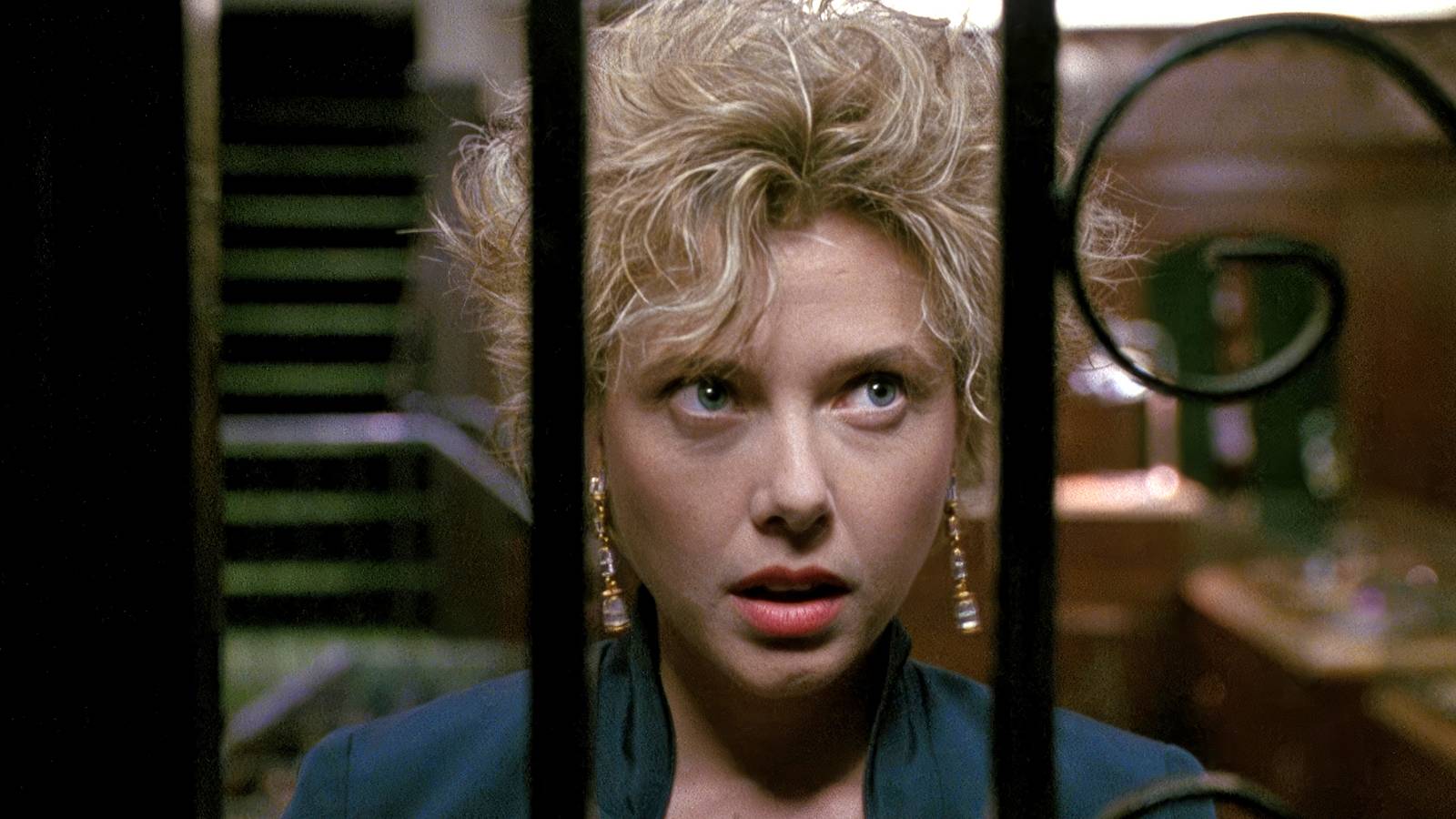
"You either go up or down. Usually down, sooner or later." This neo-noir crime film was directed by The Queen's Stephen Frears, though where that movie is stately and dramatic, this one is nerve-wracking and psychological. Indeed, The Grifters pulls you into a world where deception is not just a tactic, but a way of life. Roy Dillon (John Cusack) is a small-time con artist caught between two women: his estranged mother (Anjelica Huston), a seasoned grifter herself, and his girlfriend (Annette Bening), who has ambitions of her own.
The plot is fueled by the characters' shifting alliances. In this world, trust is always provisional, and relationships are constantly being renegotiated. This provides the movie with a bleak emotional undercurrent. Frears directs with a restrained elegance that lets the unease simmer. There are no flashy set pieces, just carefully composed scenes where power dynamics subtly shift.
7. 'Blood Simple' (1984)
"You're not that smart, Marty." The Coen brothers' feature debut, Blood Simple is a study in how quickly things can spiral out of control. When a bar owner (Dan Hedaya) hires a private investigator (M. Emmet Walsh) to kill his wife (Frances McDormand) and her lover (John Getz), the plan begins to unravel almost immediately, setting off a chain reaction of misunderstandings and violence. Stylistically, that's all unmistakably Coen-esque.
There's also a heavy noir influence that comes through in the shocking violence and grim consequences. This extends to the cinematography, with shadows stretching across walls and neon lights bleeding into darkness. The performances ground all of this in something human and fragile. The always-great McDormand, in particular, makes her character feel constantly on the edge of panic, while Walsh is deeply unsettling as the oily, opportunistic detective.
6. 'The Manchurian Candidate' (1962)
"I can't get it out of my mind." A movie so good it coined a piece of political jargon. The Manchurian Candidate operates on pure paranoia, spinning a tale that feels oddly plausible even as it veers into the surreal. After returning from the Korean War, a group of soldiers begins experiencing recurring nightmares, suggesting that their memories (and perhaps their actions) have been manipulated. The film gradually reveals a conspiracy involving brainwashing and hidden control.
The tension here is both psychological and political. The film is steeped in the anxieties of the Cold War, when fears of infiltration were pervasive. Despite that, it doesn't feel out of date. A big part of what makes the movie work is the way it reveals information at just the right moments. The truth comes out gradually, through fractured memories, recurring dreams, and subtle behavioral shifts.
5. 'The Killing' (1956)
"When you're planning a robbery, you don't leave anything to chance." The Killing is Stanley Kubrick's lean, mean crime masterpiece. It's a remarkably economical movie, clocking in at a brisk 84 minutes and wasting no time in establishing its tension. Johnny Clay (Sterling Hayden), freshly out of prison, assembles a group of men to pull off a meticulously planned racetrack heist. Every participant has a role, and every second is timed. At least...
For more on gripping thrillers, check out our article on Prime Video's Best Political Thriller: 'The Salisbury Poisonings' Is a Must-Binge. And if you love edge-of-your-seat mysteries, don't miss Forgotten Mystery Movies That Are Perfect From Start to Finish.