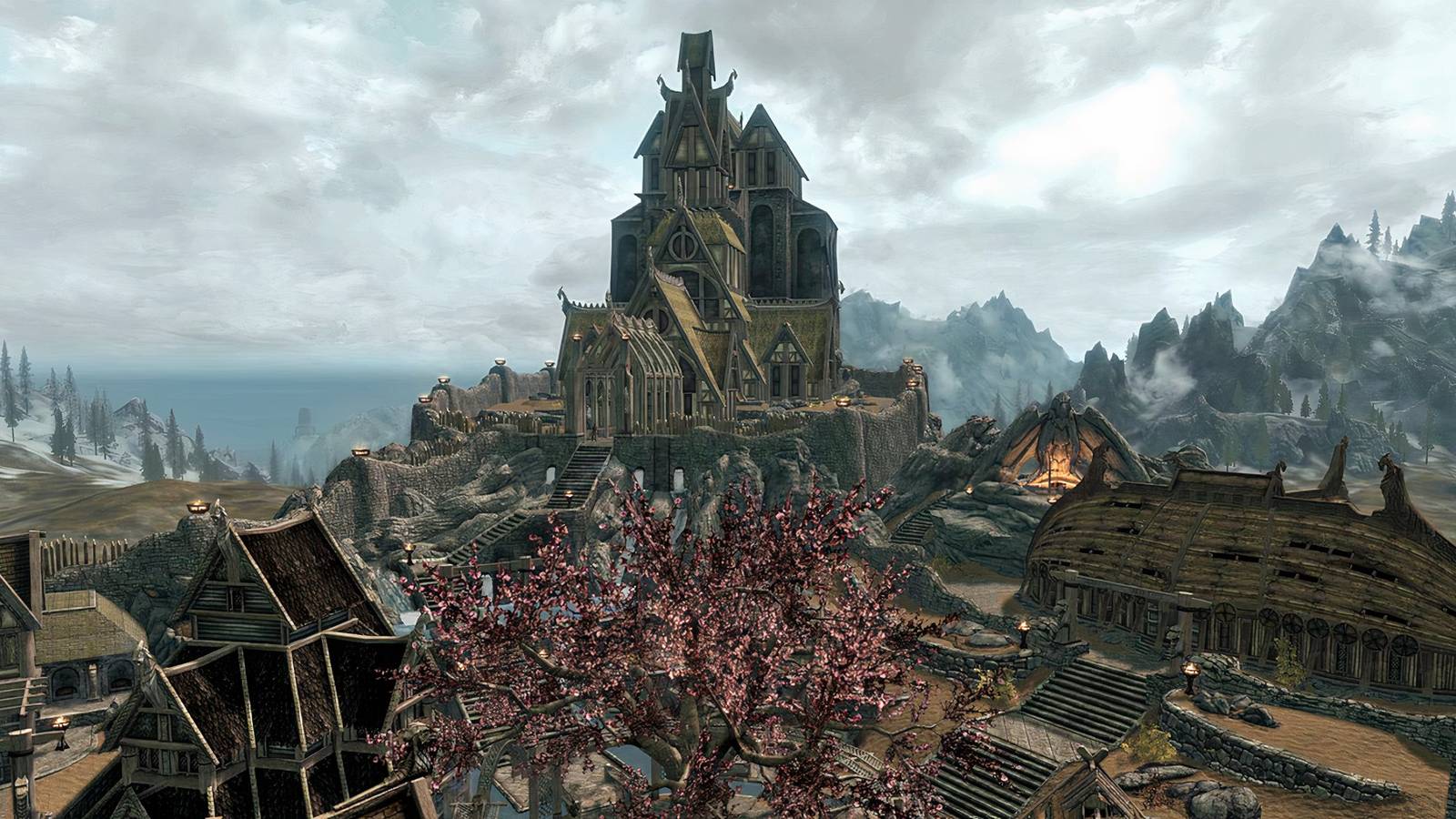
Video games have a unique edge over other storytelling mediums: they let you step directly into the action. Instead of watching a story unfold, you live it. That's why games like Cyberpunk 2077 and Red Dead Redemption 2 are so beloved—they build worlds so rich that you can't help but get lost in them. But when it comes to pure fantasy, some titles go above and beyond, crafting universes with history, culture, and politics that feel as real as our own.
Worldbuilding isn't just about creating a cool backdrop; it's about weaving together lore, geography, and the everyday lives of the people who inhabit it. The best fantasy games make you believe in their worlds, from the grandest cities to the smallest villages. Here are ten fantasy games that set the gold standard for worldbuilding.

Dragon Age: Origins (2009)
BioWare's Dragon Age: Origins remains a benchmark for fantasy worldbuilding. Set in the kingdom of Ferelden on the continent of Thedas, the game throws you into a land on the brink of annihilation. The Blight, an apocalyptic force led by an archdemon, threatens to consume everything, forcing rival factions to unite or perish.
What makes Thedas so compelling is how it subverts classic fantasy tropes. Elves are marginalized, living in alienages, while dwarves are trapped in a rigid caste system. The game's factions—from the mage-hating Templars to the elven Dalish—each have their own histories and prejudices, making their uneasy alliance feel earned and fragile. It's a world where centuries of conflict are forced to simmer under the pressure of a greater threat, and that tension is what makes it unforgettable.
Planescape: Torment (1999)
If you're looking for a world that's as philosophical as it is fantastical, Planescape: Torment is a masterpiece. Set in Sigil, the City of Doors, this game takes place in a ring-shaped metropolis floating at the center of the multiverse. Here, belief shapes reality, and factions are built on ideologies rather than armies.
Sigil is a place where gods fear to tread, and the game's worldbuilding reflects its focus on dialogue and thought. Every corner of the city is steeped in history and philosophy, making exploration a journey through ideas as much as places. It's a world that rewards patience and curiosity, and it's still celebrated for its depth.
Elden Ring (2022)
FromSoftware and George R.R. Martin teamed up to create Elden Ring, a game that redefined open-world fantasy. The Lands Between is a breathtaking expanse of ruined castles, misty forests, and golden plains, but its beauty hides a fractured history. You play as a Tarnished, tasked with restoring the Elden Ring and becoming the Elden Lord.
What sets Elden Ring apart is its environmental storytelling. Every item description, every crumbling statue, every ghostly NPC tells a piece of the world's story. The game doesn't hand you lore on a silver platter; it invites you to piece it together yourself. It's a world that feels ancient and alive, and it's no wonder it's considered one of the best fantasy games of its generation.
World of Warcraft (2004)
For over two decades, World of Warcraft has been a titan of MMORPGs, and its worldbuilding is a huge reason why. Azeroth is a sprawling planet filled with diverse races, from the noble Alliance to the fierce Horde, each with their own cultures and conflicts. The game has evolved over 20 real-world years, adding new continents, stories, and threats that keep the world feeling fresh.
What makes Azeroth special is its scale and charm. It's a world that feels lived-in, with bustling cities, dangerous wilds, and ancient ruins. The game's lore is deep enough to fill encyclopedias, but it's the little details—like a farmer's quest to save his crops or a ghost's unfinished business—that make it feel real. It's a theme park of fantasy, and it's still going strong.
The Witcher 3: Wild Hunt (2015)
Based on Slavic folklore, The Witcher 3: Wild Hunt drops you into the Continent, a war-torn land where monsters are as common as people. As Geralt of Rivia, you hunt these beasts for coin, but the real treasure is the world itself. The game's side quests are legendary for their depth—what starts as a simple job can unravel into a tragic story of loss, betrayal, or redemption.
The worldbuilding in The Witcher 3 is woven into every quest, every NPC, and every ruined village. It's a world that feels lived-in, with politics, racism, and magic all tangled together. Whether you're exploring the war-torn Velen or the bustling city of Novigrad, you're constantly reminded that this is a world with a history—and a future that depends on your choices.
Dishonored (2012)
Not all fantasy worlds are lush forests and towering castles. Dishonored takes a gothic turn with the city of Dunwall, a Victorian-era metropolis powered by whale oil. The wealthy live in gleaming towers while the poor struggle in the grimy streets below. It's a world of stark contrasts, where magic and industry collide.
What makes Dunwall so memorable is its atmosphere. The art direction is stunning, but it's the details—the propaganda posters, the plague-ridden alleys, the whispers of the Outsider—that build a world teetering on the edge of chaos. Dishonored proves that fantasy doesn't need dragons to be epic; sometimes, it just needs a city with a pulse.
These games are just a taste of what fantasy gaming has to offer. If you're hungry for more, check out our list of sci-fi games with unforgettable worlds or dive into low fantasy's most inventive magic systems. And if you're a fan of epic TV, don't miss the most flawless fantasy series of all time.