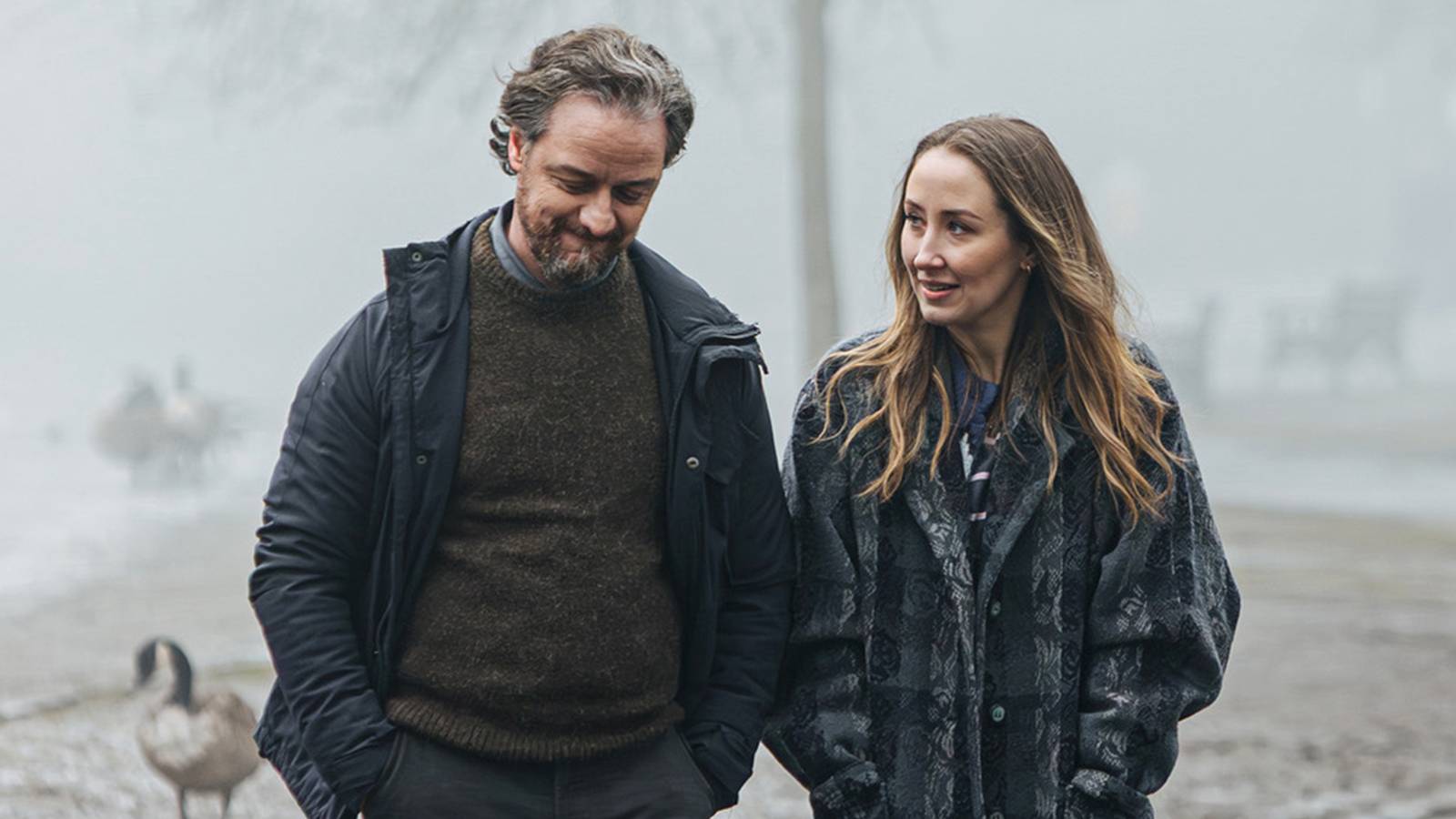
Paul Andrew Williams' Faith, which premiered at the Toronto International Film Festival, might be the year's most baffling genre hybrid. It opens as a tender, working-class character study set in northern England, then abruptly transforms into a supernatural drama dripping with religious iconography. The result is a film that never quite reconciles its two halves, even as its lead actress delivers work that deserves serious awards consideration.
A Promising Setup
Erin Doherty plays Gina, a single mother raising her nine-year-old son Jamie (Smylie Bradwell) in West Yorkshire. She works the production line at a sweets factory, and while money is tight, her bond with Jamie is warm and playful. Williams refuses to reduce them to their economic struggles, instead painting a portrait of a comfortable, loving home. That changes when Gina meets Michael (James McAvoy) at a local pub. He's polite, charming, and utterly mysterious: he doesn't drink, reveals nothing about himself, and gently declines her invitation to come inside. Gina is drawn to him anyway, and as Michael becomes a fixture in her and Jamie's lives, the film dangles several possibilities. Is he a romantic partner, a much-needed friend, or someone she shouldn't trust? The camera occasionally suggests the latter, as when Gina enters her home while a figure watches from the shadows, only for the shot to reveal Michael observing quietly from a distance.
Doherty's Devastating Transformation
McAvoy plays Michael with a gentle but unsettling presence, never pushing too far in either direction. He's kind one moment, quietly ominous the next, and he makes Gina's trust believable. But the film belongs to Doherty. She introduces Gina as vibrant and self-possessed, a woman who loves her son fiercely without losing sight of herself. She has a routine, enjoys dressing up, and wants to feel desired. Doherty never turns her into an idealized parent, which makes the tragedy that befalls her even more devastating. After it strikes, Gina is hollowed out. Her grief is not quiet or graceful; she is furious, cruel, and self-destructive. Doherty communicates that pain through her posture, her heavier movements, and the physical exhaustion that colors every conversation. It's a transformation that never feels overdone, and it keeps Gina painfully human even when the character becomes emotionally difficult.
The Script Loses Its Way
For much of its runtime, Faith works when Michael remains an unanswered question. Williams blends romance, family drama, and thriller elements without revealing where things are headed. But once the truth about Michael emerges, the film abandons its grounded storytelling for a finale packed with religious symbolism and bizarre imagery. The ideas touch on guilt, salvation, and the desperation grief inspires, but the shift is so abrupt that none of it has room to coalesce. The decision to shroud key conversations between Gina and Michael in whispers is especially frustrating. It deepens the mystery early on, but once his identity and intentions are clear, those unheard exchanges feel like a way to avoid providing necessary answers. Faith remains watchable thanks to its gripping setup and Doherty's exceptional work, but its confused conclusion is more likely to be remembered for its strange imagery than its emotional payoff.
For fans of supernatural thrillers that blend faith and mystery, Harlan Coben's Lazarus offers a more cohesive take on similar themes. And if you're tracking this year's awards contenders, keep an eye on Andrew Scott's Hamlet triumph and other TIFF standouts. Doherty, best known for her award-winning role in Netflix's Adolescence and Disney+'s A Thousand Blows, deserves recognition for a performance that far outshines the film surrounding it.