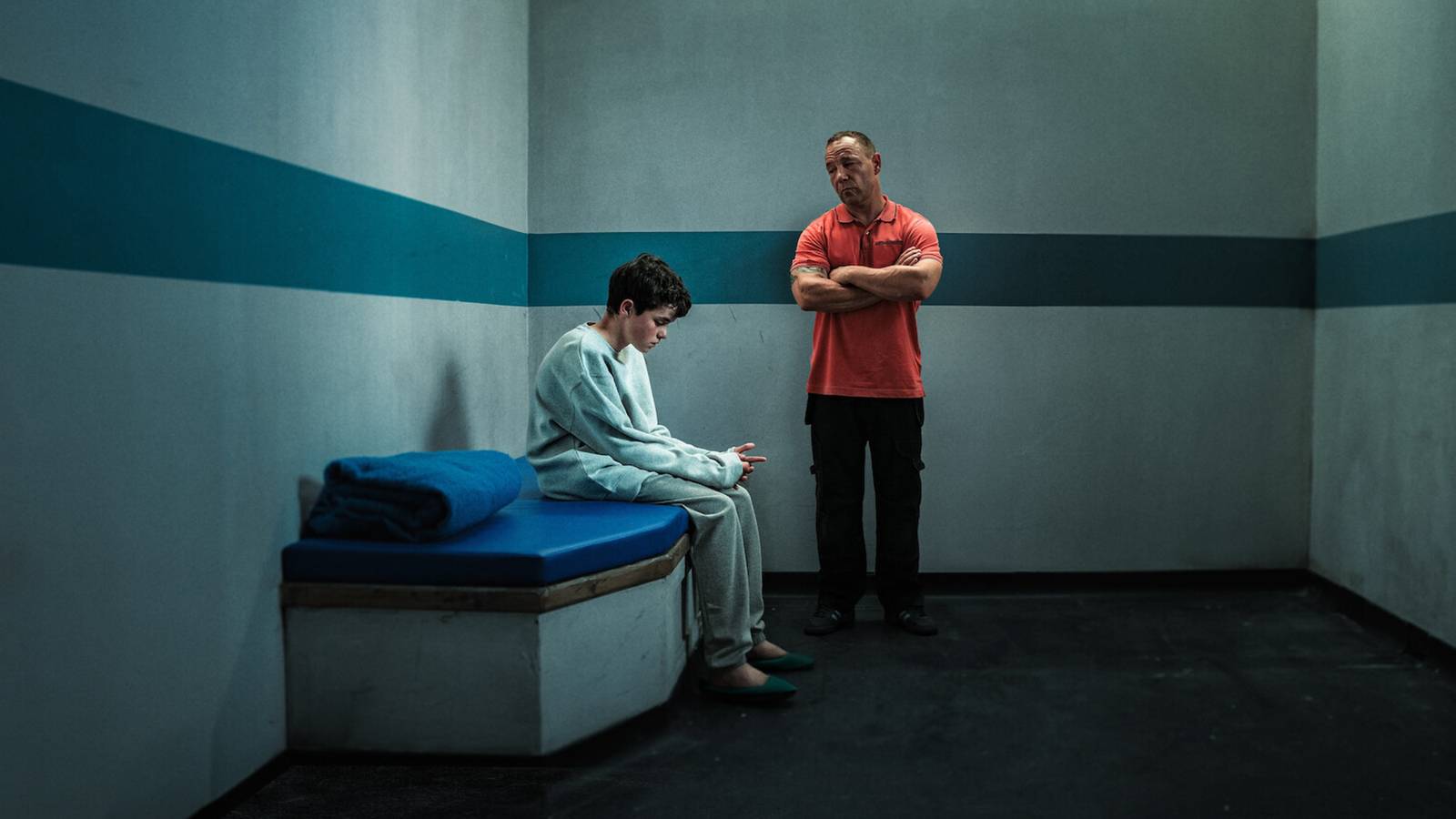
Gabriel Luna has built a career on playing complex, often dark characters, but his latest role in Dexter: Resurrection Season 2 pushes him into truly unsettling territory. In Episode 3, “Live Free and Die,” viewers are formally introduced to Ray Ballard, the so-called Sleepy-Eyed Killer. Ray’s method is uniquely terrifying: he breaks into victims’ homes, subtly rearranges their belongings, and leaves them questioning their own sanity before he ever strikes. It’s a premise that only a show like Dexter could pull off with such chilling effect.
But Ray’s reign of terror comes to an abrupt halt when Michael C. Hall’s Dexter Morgan finally corners him and straps him to the infamous kill table. Before the blood is spilled, Ray tries to justify his murders, claiming he’s doing his victims a favor. Dexter, who knows a thing or two about rationalizing homicide, isn’t buying it. In a recent interview with Collider, Luna delved into Ray’s twisted psychology, the show’s exploration of our fascination with serial killers, and what it was like to be on the receiving end of Dexter’s knife.

A God Complex Born from Trauma
Luna believes Ray’s god complex is rooted in deep childhood pain. “When I read it, I think it was just that speech by Michael that really informed most of it,” Luna said, referring to a pivotal monologue in the episode. “The idea that everyone is going to hurt you—your family, your friends, everyone—they’re not there to love you, they’re only there to inevitably hurt you. Wow, where does that come from?”
For Luna, the key was imagining a traumatic event around age 11 or 12—abuse or abandonment—that left Ray emotionally frozen. “He’s stuck there,” Luna explained. “That’s why he speaks the way he does, and why he’s so isolated. He doesn’t really interact with people normally; he gets frustrated and annoyed quickly. The only reason he’s even in this situation is Prater.”
Ray’s relationship with Prater, a father figure of sorts, is crucial. “There must be something about Prater that they’ve had in their past,” Luna noted. “The need to impress him is rooted in that 12-year-old somewhere, maybe his father.” This desperate need for approval contrasts sharply with Ray’s godlike self-image, revealing a fragile, childlike core.
Cowardice Disguised as Power
Luna is quick to point out that Ray’s god complex is less about genuine superiority and more about overcompensation. “There’s more cowardice than anything involved in what he does,” he said. “The fact that he can’t see them, that he can’t be awake when he does it, is cowardice. But he frames it as, ‘Oh, I’m a god and I control everything.’”
When Dexter confronts him on the kill table, Ray’s defensive, childlike reaction is telling. “He’s not used to having to justify his actions to anyone,” Luna said. “But there I am lying on Dexter’s table, and he’s calling me out for all my bullshit. And then he gets very defensive, very childlike, and presents this idea that he’s God.”
The Show’s Fascination with Serial Killers
This season of Dexter: Resurrection has been exploring our culture’s morbid fascination with serial killers—from the FBK to Don Frampt, each killer seems to crave a kind of celebrity. Ray, however, is different. He’s not seeking fame; he’s seeking Prater’s attention. “There’s a throughline this season about the celebrity aspect attached to serial killers,” Luna observed. “But Ray was trying to get that with Prater—his attention, at least.”
Luna’s performance adds a layer of tragic humanity to a character who could easily be a cartoonish villain. His portrayal makes Ray’s final moments on the kill table all the more impactful. As Dexter delivers his brand of justice, viewers are left to ponder the line between monster and victim.
For fans of the series, this episode is a standout, and Luna’s insights offer a deeper appreciation of the craft. If you’re hungry for more dark thrills, check out our list of TV's most brutal thrillers or revisit Stephen King's most unforgettable opening chapters. And for more on the show’s universe, don’t miss our coverage of another shocking off-screen death.
Dexter: Resurrection Season 2 airs Sundays on Paramount+.