When a stage play makes the leap to the big screen, it often loses some of its raw power. But Prima Facie, Susanna White's adaptation of Susie Miller's acclaimed one-woman show, doesn't just survive the transition—it thrives, thanks in large part to a towering performance from Cynthia Erivo. The film, which premiered at TIFF, takes Miller's gripping courtroom drama and expands it into a full-bodied narrative that feels both intimate and epic.
At its core, Prima Facie follows Tessa, a brilliant barrister who defends clients accused of sexual assault. She's ruthless, sharp, and unapologetically good at her job—even when that job means tearing apart the testimony of survivors. Raised by a cleaner and educated at Cambridge on a scholarship, Tessa has clawed her way into a world of privilege, and she knows exactly how to play the game. When she begins a flirtation with a colleague, Julian (Daniel Ings), it seems like a rare moment of lightness in her cutthroat world. But one night, Julian rapes her, and Tessa's life fractures. Suddenly, she's on the other side of the system she once mastered, forced to navigate a legal process that feels rigged against her.
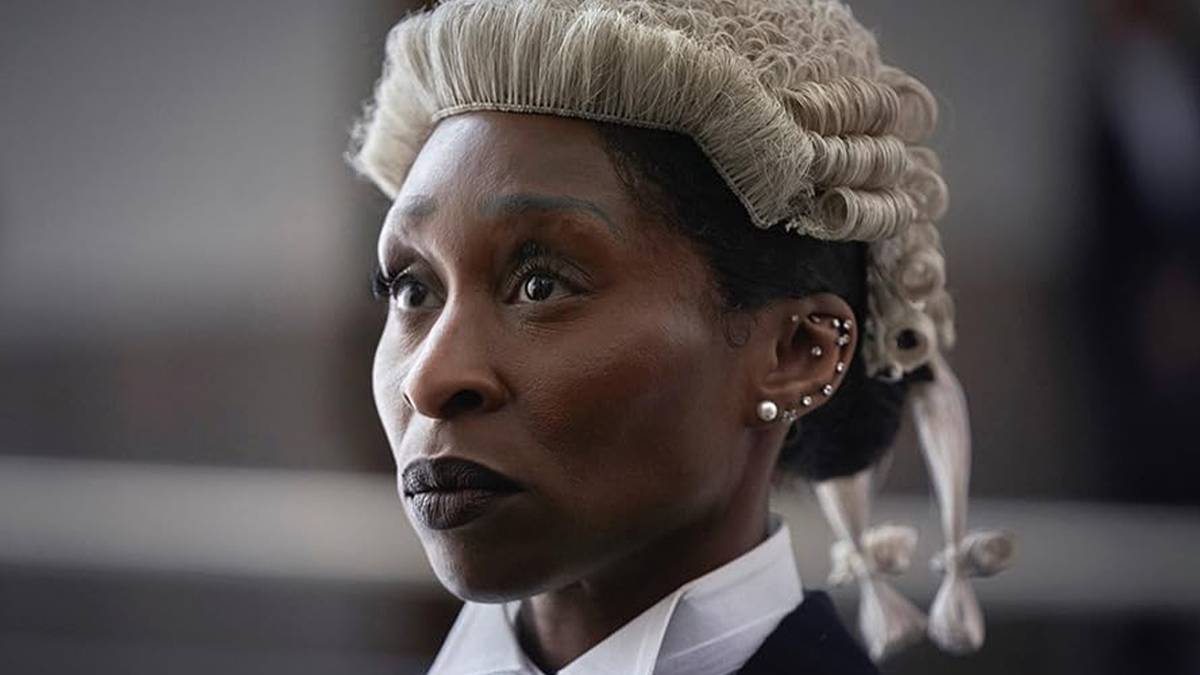
Erivo is nothing short of magnetic. In the film's first half, she embodies Tessa's swagger with a gleam in her eye and a razor-sharp tongue. She's the kind of character you might love to hate—until you realize you're rooting for her anyway. Erivo's Tessa is complex, flawed, and utterly human. After the assault, we watch her unravel in slow motion: the sleek wigs give way to natural curls, the polished armor cracks. But she never loses her steel. It's a transformation that could easily veer into melodrama, but Erivo grounds it in quiet, devastating truth.
The film's tonal shift is jarring by design. The first act crackles with energy, almost like a rom-com, before plunging into darkness. White handles the assault with unflinching sensitivity, never exploiting the moment for shock value. But the pacing stumbles in the aftermath. The film's midsection drags as it meticulously details the grueling wait for justice—1107 days, to be exact. It's a deliberate choice that mirrors the exhausting reality of the legal system, but it also saps some of the narrative momentum. Still, Erivo's final monologue, delivered directly to the judge, is a knockout. It's a speech that lays bare the hypocrisy of a system that demands perfect victims, and Erivo delivers it with such conviction that you can feel the courtroom walls closing in.
What makes Prima Facie so effective is its refusal to offer easy answers. Tessa isn't a saint; she's a woman who spent years upholding a flawed system until it failed her. The film doesn't let her—or us—off the hook. It's a story that lingers, much like the best legal dramas, from the most powerful endings in sci-fi to the classics that fans say should never be remade. And like those films, it demands to be seen and discussed.
While the film's pacing and tonal shifts may not land for everyone, Erivo's performance is undeniable. She carries the weight of the story on her shoulders, and she never falters. Prima Facie is a stark reminder that sometimes the most powerful special effect is a single actor, completely in command. It's a performance that will be talked about for years—and rightfully so.