Before Celine Song's dating-app critique Materialists hit screens, Yorgos Lanthimos served up his own twisted take on modern romance with The Lobster. Released in 2015, this was Lanthimos' first English-language film and his fifth feature overall, co-written with regular collaborator Efthimis Filippou. It announced a singular voice straddling indie and mainstream cinema, carving out a Kubrickian niche that would later lead to Oscar darlings like The Favourite and Poor Things. But for Colin Farrell, The Lobster was more than a career milestone—it was a second chance.
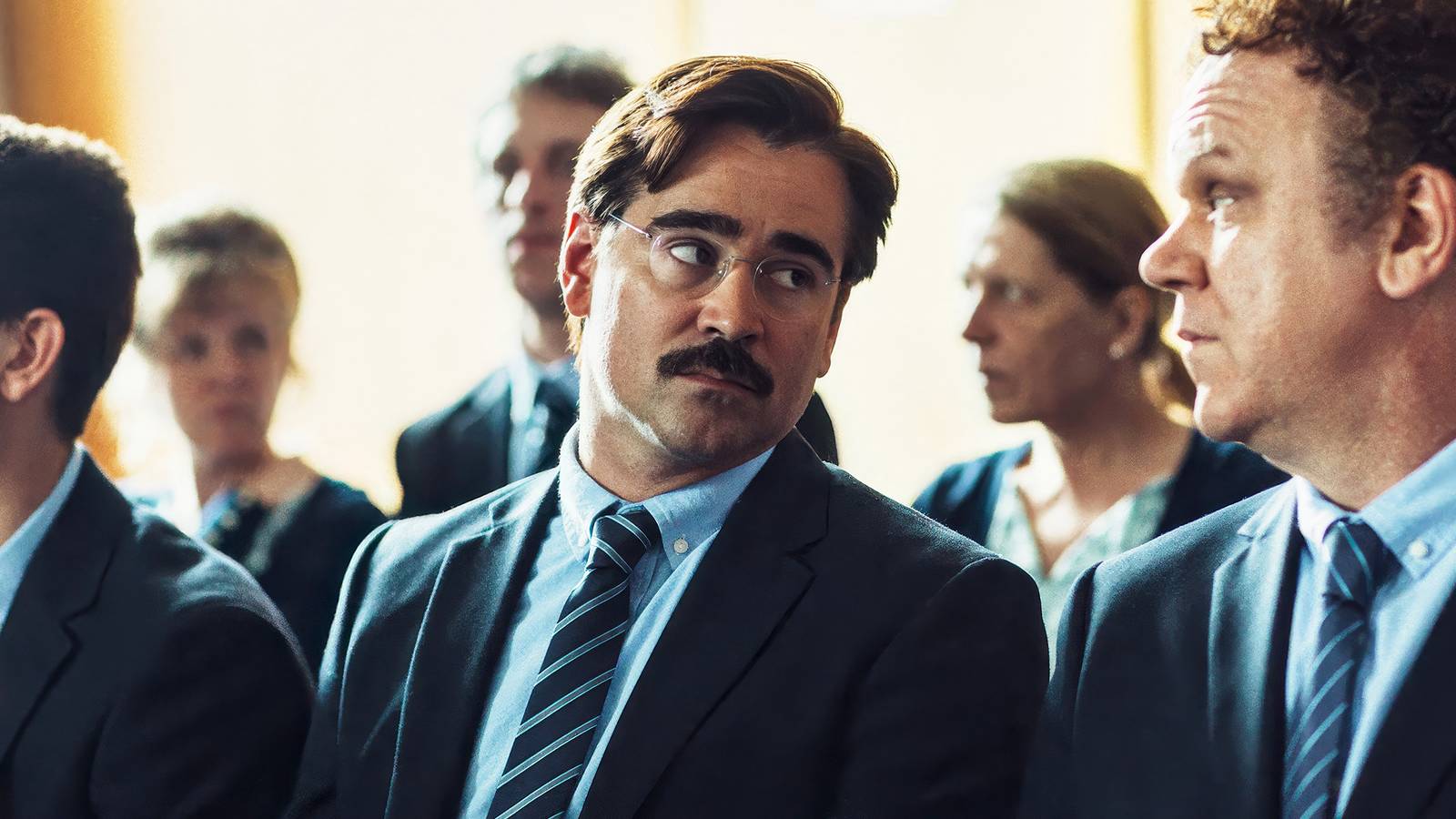
Set in a near-future dystopia where single people are rounded up and sent to a matchmaking hotel—or else turned into animals of their choice—The Lobster follows David (Farrell), a newly single man who picks a lobster as his punishment animal. The film marked Farrell's first collaboration with Lanthimos (they'd reunite for The Killing of a Sacred Deer), and it signaled a dramatic reinvention for the Irish actor. Gone were the rugged good looks and blockbuster roles of the 2000s; in their place was a softer, more vulnerable performer willing to gain 40 pounds and hide behind thick-rimmed glasses and a mustache.
A Premise That's Still Strangely Original
It's hard to describe The Lobster without using the word "strange." Lanthimos' signature style—stilted dialogue, deadpan delivery, and a cold, detached tone—had been honed in earlier films like Dogtooth, but The Lobster brought it to a wider audience. The hotel operates like a dating app algorithm, enforcing norms and punishing those who don't pair up. Guests are given 45 days to find a mate, or they're transformed into animals. David's choice of a lobster—for its longevity, sexual stamina, and blue blood—reflects his own lack of backbone and desperate need to come out of his shell.
The film's satire of amatonormativity is sharp and unrelenting. Olivia Colman plays the hotel manager with a perfect poker face, while John C. Reilly and Rachel Weisz add to the ensemble's bizarre energy. Hunts for escaped singles in the forest, propaganda broadcasts, and scenes of self-harm as courtship rituals all underscore Lanthimos' critique of societal pressure to couple up.
Lanthimos as a Budding Auteur
The Lobster is filled with Lanthimos' trademarks: wide-angle photography (before he discovered fisheye lenses), grandiose orchestral music, and slow-motion shots. The film's sexual encounters are awkward and dispassionate, its violence chilling but purposeful. Lanthimos uses these elements to explore the primal nature of human connection and how artificial matchmaking corrupts traditional courtship. It's a minimalist work that foreshadows his later maximalist ventures, and it earned Lanthimos and Filippou their first Oscar nominations for Best Original Screenplay.
Colin Farrell's Reinvention
Before The Lobster, Farrell's career was a mixed bag. He'd shown promise in In Bruges and Minority Report, but too often coasted through mid-tier blockbusters. The Lobster gave him a chance to play against type, revealing a quiet sadness and dark humor that had been hiding beneath his heartthrob exterior. The performance is anything but flattering—David is frumpy, closed-off, and desperate—but it's also deeply human. Farrell's willingness to embrace vulnerability here paved the way for later acclaimed roles in The Banshees of Inisherin and The Batman.
Eleven years later, The Lobster remains one of Lanthimos' most sentimental works, a strange and beautiful film that deserves a second look. For fans of sci-fi that challenges conventions, it's a must-watch. And for those who missed it the first time, now is the perfect moment to dive into this bizarre, thought-provoking gem. As streaming platforms continue to revive overlooked titles, The Lobster stands as a testament to the power of second chances—both for its characters and its star.