In the 1940s, a new kind of movie emerged from the shadows of Hollywood. Classic film noir traded the bright optimism of earlier cinema for a world of moral gray areas, cynical detectives, and dangerous women. These films, like The Maltese Falcon and Double Indemnity, didn't just entertain—they redefined what American movies could be. Today, noir remains one of the most influential and beloved eras in film history, a genre where the line between hero and villain is always blurred, and romance often leads to ruin.
Whether it's the sharp-tongued detective navigating a corrupt city or the seductive femme fatale leading a man to his doom, classic noir gave us some of the most enduring stories ever put on screen. From the brutal streets of The Big Heat to the twisted schemes of Double Indemnity, these ten films are the very essence of the genre. Let's dive into the shadows and rank the best of the best.
10. Murder, My Sweet (1944)
Edward Dmytryk's Murder, My Sweet is a cornerstone of detective noir, based on Raymond Chandler's novel Farewell, My Lovely. It stars Dick Powell, known for musicals, as the tough private eye Philip Marlowe. Hired by an ex-con to find his old girlfriend, Marlowe gets tangled in a web of stolen jade, blackmail, and a deadly femme fatale. The film's standout feature is its innovative visual style—when Marlowe is knocked out or drugged, we see surreal, dreamlike sequences with swirling smoke and distorted lenses, putting us inside his disoriented mind. This technique became a noir trademark. With stark shadows and neon reflections, Murder, My Sweet set the bar for hard-boiled detective films for years to come.
9. The Killing (1956)
Stanley Kubrick's early gem The Killing is a masterclass in non-linear storytelling and fatalistic noir. Sterling Hayden plays Johnny Clay, a career criminal who plans a meticulous heist to steal two million dollars from a racetrack. Kubrick jumps back and forth in time, showing the heist from each conspirator's perspective, a bold move that defied genre conventions. The film highlights noir's focus on human weakness—Clay's perfect plan unravels due to jealousy, greed, and bad luck. A cold, documentary-style voice-over tracks the clock, reinforcing the sense that time itself is a trap. With crisp black-and-white cinematography capturing gritty settings, The Killing is an essential noir that shows how fate and flaws always lead to disaster.
8. The Big Heat (1953)
Fritz Lang's The Big Heat is one of the most brutal police noirs ever made. Glenn Ford stars as Dave Bannion, an honest detective whose investigation into a fellow officer's suicide uncovers a conspiracy linking city officials to a crime syndicate. The film exposes the vulnerability of domestic life when corruption reaches every level. Gloria Grahame steals the show as Debby Marsh, a mob girlfriend whose face is scarred by boiling coffee—a shocking moment that subverts the typical femme fatale role. The Big Heat strips away Hollywood polish to reveal a bleak world where justice demands the hero become as ruthless as the villains. It's a powerful, influential classic.
7. The Big Sleep (1946)
Howard Hawks' adaptation of Raymond Chandler's novel proves that atmosphere and chemistry matter more than a tidy plot. Humphrey Bogart reprises his role as Philip Marlowe, hired by a wealthy general to handle his daughter's gambling debts, only to stumble into a labyrinth of blackmail and murder. The story is famously confusing—even the writers didn't know who killed one of the drivers—but its power lies in its mood. Bogart and Lauren Bacall sizzle with rapid-fire, double-entendre dialogue that pushed censorship limits. Filled with cigarette smoke, rain, and dim interiors, The Big Sleep is a perfect example of noir's corrupt, intoxicating world.
6. The Third Man (1949)
Carol Reed's The Third Man brings noir to post-war Vienna, a city divided among Allied powers. The film follows Holly Martins, a struggling novelist, as he investigates the mysterious death of his friend Harry Lime. Robert Krasker's groundbreaking cinematography uses tilted angles and deep shadows to create a sense of unease, while Anton Karas's zither score adds an unforgettable, haunting melody. The story is a gripping mystery, but it's the atmosphere—the rubble, the sewers, the moral decay—that makes it a classic. The Third Man is a must-see for any noir fan.
5. Laura (1944)
Otto Preminger's Laura is a stylish mystery that blurs the line between obsession and investigation. A detective falls in love with the portrait of a murdered woman, only to discover she may not be dead. Gene Tierney is mesmerizing as the titular Laura, and the film's sophisticated dialogue and elegant visuals set it apart. The plot twists keep you guessing until the end, and the film's exploration of obsession and identity makes it a standout. Laura is a classic that proves noir can be both cerebral and romantic.
4. Out of the Past (1947)
Jacques Tourneur's Out of the Past is often called the ultimate noir. Robert Mitchum plays Jeff Bailey, a former private eye trying to escape his past, but it catches up with him when a gangster's femme fatale, played by Jane Greer, re-enters his life. The film is a perfect blend of romance, betrayal, and fate, with Mitchum's cool, world-weary performance setting the standard for noir antiheroes. The cinematography is stunning, with shadows and light creating a mood of inescapable doom. Out of the Past is a must-watch for anyone wanting to understand the genre.
3. Sunset Boulevard (1950)
Billy Wilder's Sunset Boulevard is a dark satire of Hollywood itself. William Holden plays a struggling screenwriter who becomes entangled with Norma Desmond, a faded silent film star played by Gloria Swanson. The film is narrated by Holden's character, who is found dead in a swimming pool at the start—a bold choice that sets the tone. Swanson's performance is iconic, and the film's critique of fame and delusion is as sharp today as it was in 1950. Sunset Boulevard is a noir masterpiece that transcends the genre.
2. Double Indemnity (1944)
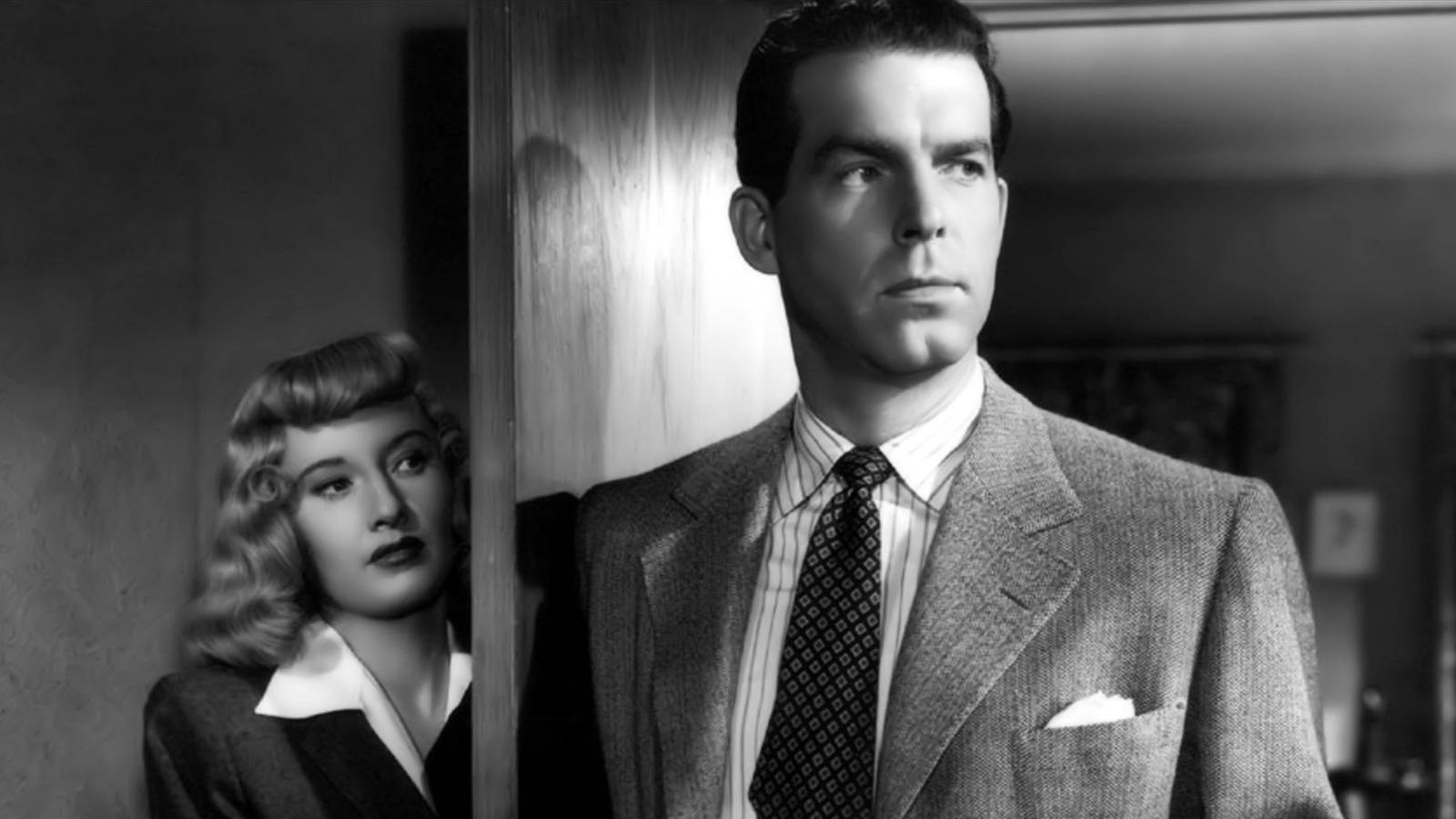
Billy Wilder's Double Indemnity is the quintessential film noir. Fred MacMurray plays an insurance salesman who conspires with a seductive housewife, Barbara Stanwyck, to murder her husband and collect on a life insurance policy. The film is a textbook example of noir's themes: greed, lust, and betrayal. The dialogue is sharp, the tension is relentless, and the ending is bleakly satisfying. Stanwyck's femme fatale is one of the greatest in cinema history. Double Indemnity set the template for all noir that followed.
1. The Maltese Falcon (1941)
John Huston's directorial debut, The Maltese Falcon, is the film that started it all. Humphrey Bogart stars as Sam Spade, a private eye who gets drawn into a hunt for a priceless statuette, with a cast of unforgettable characters including the duplicitous Brigid O'Shaughnessy (Mary Astor) and the sinister Kasper Gutman (Sydney Greenstreet). The film is a perfect blend of mystery, suspense, and wit, with Bogart's performance defining the hard-boiled detective archetype. The Maltese Falcon is not just a great noir—it's one of the greatest films ever made.
These ten films represent the best of classic noir, each contributing to the genre's legacy. For more cinematic explorations, check out our list of adventure classics or dive into dark fantasy films. And if you're a fan of gripping storytelling, you might enjoy our picks for flawless miniseries.