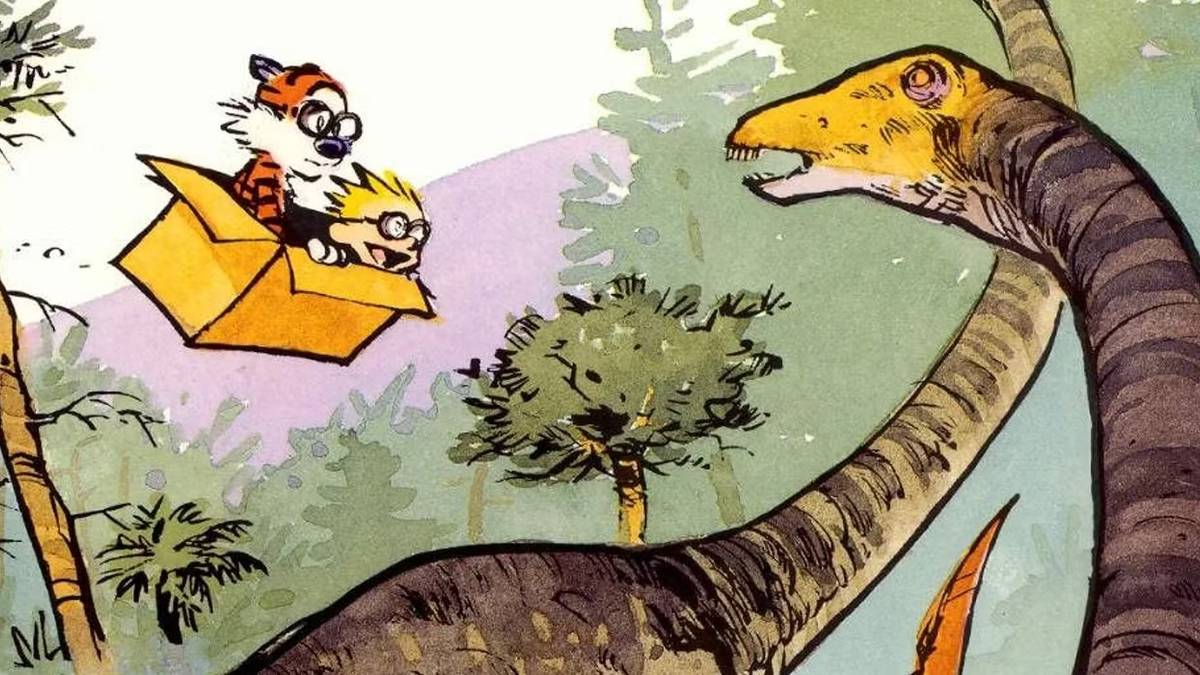
For a comic strip that only ran for a decade, Calvin and Hobbes has left an outsized mark on the world of sequential art. Creator Bill Watterson was never content to rest on his laurels, constantly pushing the boundaries of what a comic strip could be. While other strips might stick to a familiar formula, Watterson's creation could pivot from a philosophical musing on existence to a cardboard-box rocket launch in the span of a single week. That versatility is a big reason why the strip remains so beloved, and why it continues to inspire new generations of readers.
One particular strip, published on January 1, 1990, stands as a perfect example of Watterson's genius. It's not just that it marked the halfway point of the strip's run—though that's notable in itself. What makes it truly special is that it tells a complete, hilarious story without a single word of dialogue. The strip shows Calvin gleefully rolling a snowball down a hill, watching it grow to absurd proportions, and then cheering as it careens out of sight. The punchline comes in the final panel, where we see his long-suffering neighbor, Susie Derkins, buried under the massive snowball, shaking her fist in fury. It's a moment of pure visual comedy that speaks louder than any caption could.

The Art of Silent Storytelling
Watterson was a master of visual humor, and this strip is a testament to that skill. The exaggerated expressions on Calvin's face—from mischievous glee to triumphant joy—are as clear as any words. Susie's indignant pose in the final panel is equally expressive, conveying a world of frustration without a single syllable. The gag itself, a snowball that grows to Looney Tunes proportions, is delightfully absurd, but Watterson's confident pacing makes it feel perfectly natural. It's a reminder that comics are a visual medium, and sometimes the best jokes are the ones you can see coming from a mile away.
The strip also shines a light on the dynamic between Calvin and Susie, which is one of the most underrated aspects of the series. Susie, introduced as the studious, well-mannered girl next door, is the perfect foil to Calvin's chaotic energy. She tries to befriend him, but Calvin, in his six-year-old wisdom, responds with snowball ambushes and gross-out antics. This wordless strip captures that push-and-pull perfectly, showing how their relationship is a constant cycle of provocation and retaliation. It's a dynamic that feels refreshingly real, and it's one of the reasons Calvin and Hobbes stands apart from other strips like Garfield.
A Legacy of Innovation
Watterson's willingness to experiment—whether with wordless strips, full-page layouts, or shifts in tone—helped cement Calvin and Hobbes as an all-time classic. He never overstayed his welcome, ending the strip at the height of its creative powers, and he fiercely resisted the kind of mass merchandising that diluted other beloved properties. That integrity has kept the strip timeless, and it's why it continues to resonate with readers today. Even legendary comic artist Frank Miller, known for his gritty work on The Dark Knight Returns and 300, has cited Calvin and Hobbes as a masterclass in the medium. As Miller told Entertainment Weekly, "If you want to see what comics can do and learn how to do it, the answer is Calvin & Hobbes. The drawing is such a joy."
That single wordless strip, with its five simple panels, is a perfect encapsulation of why Calvin and Hobbes remains so beloved. It's a reminder that sometimes the most powerful stories are told with the fewest words. Whether it's a giant snowball, a T-Rex stomping through the woods, or the chaotic rules of Calvinball, Watterson's creation continues to inspire and delight. For those looking to revisit the strip's best moments, there's a ranking of its funniest Halloween comics that's worth a look. And for fans of visual storytelling, the snowball strip is a perfect example of how much can be said with so little.
In an era where comic strips often rely on punchy one-liners, Calvin and Hobbes stands out as a reminder that the medium can be so much more. Watterson's work has influenced countless artists and writers, and its legacy is secure. As we look back on this wordless masterpiece, it's clear that sometimes the most profound statements are the ones that need no words at all.