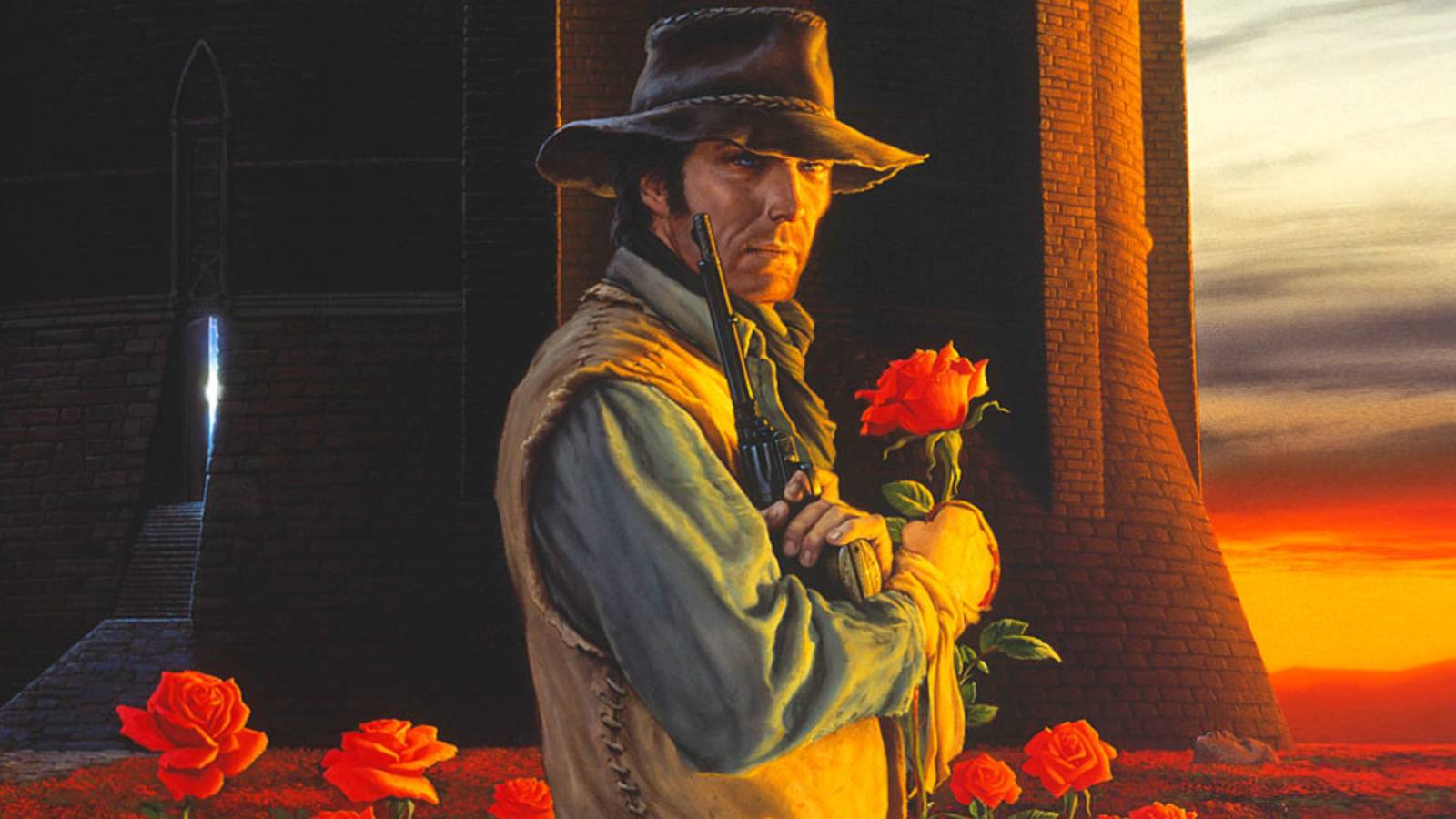
Stephen King's name is practically synonymous with horror, thanks to iconic works like Carrie, The Shining, and It. However, the prolific author's imagination has never been confined to a single genre. Over his decades-long career, King has ventured boldly into science fiction, crime, and, most notably, fantasy, creating sprawling worlds that often intersect with his darker tales.
King's Fantastical Multiverse
Many of King's fantasy novels exist within a connected multiverse, with the epic Dark Tower series serving as the central hub. This allows for a rich tapestry where characters and concepts from different stories collide, rewarding dedicated readers with deeper layers of meaning. While some of these books blend with horror elements, their core identity lies in grand quests, alternate realities, and supernatural conflicts beyond our world.
10. The Dark Tower I: The Gunslinger (1982)
This novel introduces readers to Roland Deschain, the last gunslinger, on his obsessive quest for the mysterious Dark Tower. It's a weird, atmospheric, and foundational entry that establishes the series' unique blend of dark fantasy, Western, and sci-fi. The fantastical elements are bold and distinct, setting the stage for one of literature's most ambitious sagas.
9. Insomnia (1994)
This standalone novel is a deep-cut treasure for fans of King's interconnected universe. It follows an elderly man suffering from severe insomnia who begins to perceive supernatural forces and a cosmic conflict. Insomnia is densely packed with references to The Dark Tower mythos, making it a challenging but immensely rewarding read for those invested in the broader King multiverse.
8. The Dark Tower V: Wolves of the Calla (2003)
Following a near-fatal accident, King returned to Roland's journey with renewed focus. Wolves of the Calla kicks the final act of the series into high gear, delivering punchier action and propelling the narrative toward its climax. The final 100 pages are particularly intense, setting up crucial events for the saga's conclusion. This entry marked King's determined push to finish the epic he'd spent decades building.
7. The Talisman (1984)
Co-written with Peter Straub, this is a quintessential fantasy adventure. A young boy, Jack Sawyer, journeys into a parallel world called the Territories to find a magical talisman that can save his dying mother. The novel is a masterful blend of coming-of-age story and epic quest. While King revisited similar themes in Fairy Tale, his collaboration with Straub here is considered a high point in his fantasy output.
6. The Eyes of the Dragon (1984)
Often noted as one of King's gentler works, this novel is a pure, straightforward fantasy tale. Written initially for his daughter, it features a classic story of a kingdom, a poisoned king, a framed prince, and a sinister magician. Its more traditional fantasy structure and slimmer page count make it one of King's most accessible gateways into the genre, proving his storytelling prowess extends far beyond scares. For fans of King's horror roots looking for a different flavor, his influence is felt in adaptations like Castle Rock: The Stephen King Adaptation That Mastered Psychological Horror.
King's fantasy works demonstrate that his true genre is simply storytelling. Whether through the dusty trails of Mid-World in The Dark Tower or the shifting landscapes of The Talisman, he builds immersive worlds with high stakes and deeply human characters. These novels offer a perfect entry point for readers who may be hesitant of his horror reputation but crave epic, imaginative journeys. They remind us that while King may be the modern master of horror, his creative kingdom is vast and varied, encompassing realms of pure wonder and dark fantasy. For more explorations of horror across media, check out our look at Ranking the 10 Most Terrifying Horror Films of the 1960s.