In an era of endless reboots and fleeting streaming hits, one sci-fi series from 2004 continues to operate on a different level entirely. The reimagined Battlestar Galactica didn't just tell a story about humanity's last survivors fleeing genocidal robots—it crafted a relentless, character-driven masterpiece that feels as vital and challenging today as it did seventeen years ago. Its perfection lies not in neat resolutions, but in its unwavering commitment to asking difficult questions about survival, identity, and what remains when civilization is stripped away.
A Relentless Narrative Engine
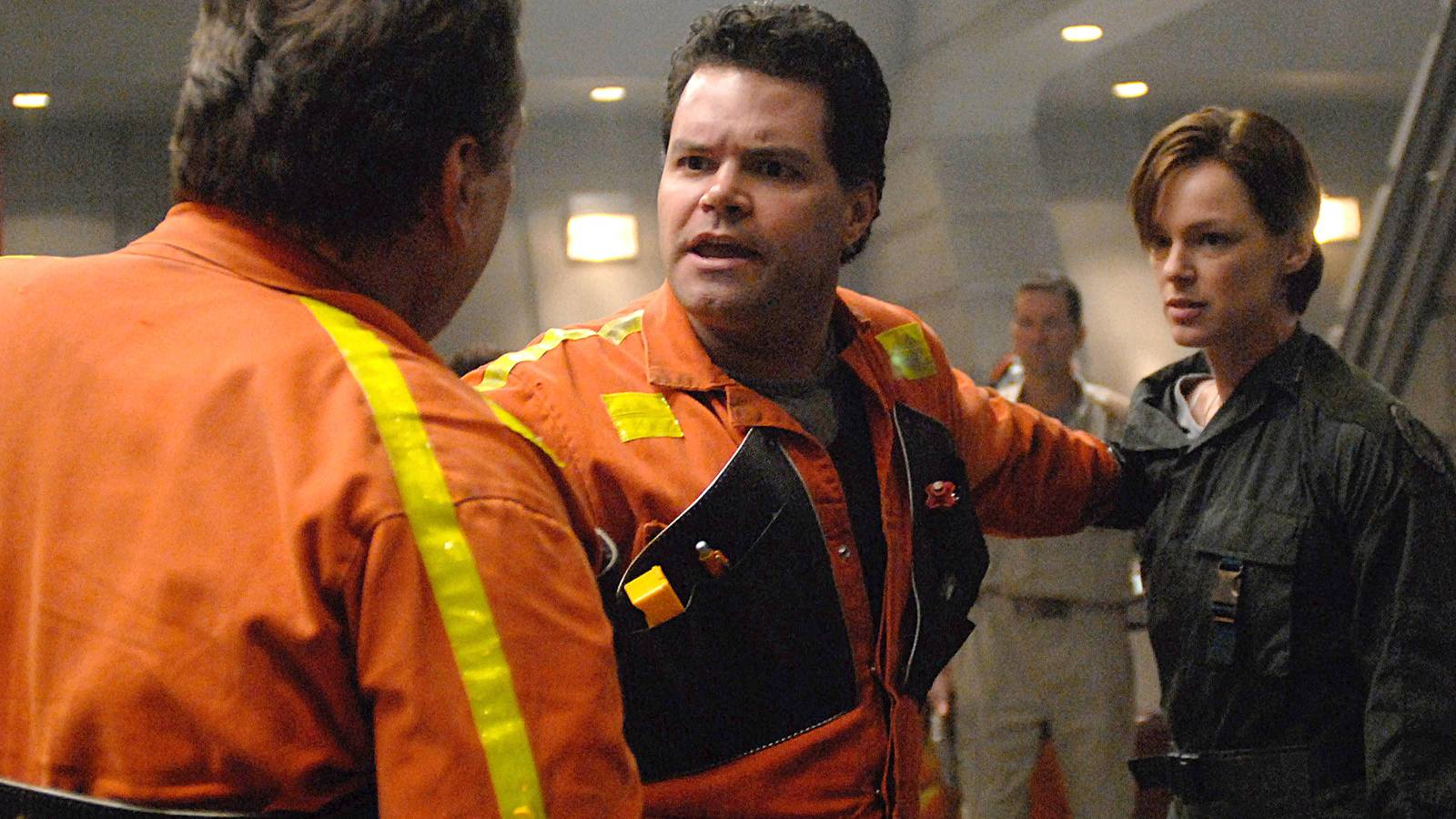
From its devastating opening miniseries, Battlestar Galactica established a pace and tone that refused to coddle its audience. This wasn't a hopeful adventure like Star Trek or a weekly mission-based series like 'Buffy'; it was a pressure cooker. The premise is stark: the twelve human colonies are annihilated in a surprise attack by the Cylons, the sentient machines they created. The few thousand survivors, crammed into a ragtag fleet of civilian ships, are shepherded by the aging warship Galactica on a desperate search for the mythical planet Earth.

The show immediately distinguishes itself with episodes like "33," where the exhausted fleet must make faster-than-light jumps every thirty-three minutes to evade pursuit. Sleep deprivation and constant terror become characters themselves, forcing impossible choices that erode morality. This establishes the series' core tension: survival often comes at the cost of humanity's soul.
Leadership Forged in Crisis
At the heart of this struggle are two phenomenal performances. Edward James Olmos's Commander William Adama is a military leader bearing the weight of extinction on his shoulders, making brutal decisions with weary resolve. Opposite him, Mary McDonnell's President Laura Roslin, a former Secretary of Education thrust into supreme power, evolves from a reluctant leader into a formidable, sometimes ruthless, political force. Their dynamic—military pragmatism clashing with civilian idealism—forms the series' powerful backbone.
They are surrounded by a brilliantly flawed ensemble. Katee Sackhoff's Kara "Starbuck" Thrace is a volatile, gifted pilot constantly at war with authority and herself. Jamie Bamber's Lee "Apollo" Adama grapples with his father's legacy. And James Callis delivers a career-defining performance as Dr. Gaius Baltar, the narcissistic scientist whose cowardice and vanity inadvertently enable the Cylon holocaust, yet who undergoes one of television's most surprising and complex character journeys.
War Without Easy Answers
Battlestar Galactica revolutionized how television sci-fi portrays conflict. This isn't a war of clear heroes and faceless drones. The Cylons have evolved into humanoid models, blurring the line between man and machine and making the enemy unsettlingly familiar. The conflict becomes philosophical, psychological, and deeply personal. Alliances shift, trust shatters, and the very definition of "human" is questioned.
This complexity peaks in arcs like the arrival of the Battlestar Pegasus, which should bring hope but instead introduces a rival command with a more savage interpretation of martial law. Similarly, the New Caprica storyline, where survivors attempt to colonize a planet only to fall under Cylon occupation, explores collaboration, resistance, and the cost of compromise with a rawness few series dare attempt. It's a narrative boldness that shares DNA with modern hits like Taylor Sheridan's gritty westerns, where moral ambiguity reigns.
An Enduring Legacy and a Streaming Paradox
The series' four-season run builds to a conclusion that remains fiercely debated, a testament to its ambition to provoke rather than placate. Every character arc—from Adama and Roslin's hard-worn partnership to Baltar's spiritual reckoning—feels earned through fire. The show's reputation as a genre landmark is secure, cited as an influence on everything from The Last of Us to The Expanse.
Yet, for a show about a desperate journey, finding it today can feel like its own quest. Unlike contemporary hits that dominate a single platform, Battlestar Galactica often requires viewers to hunt across services or resort to digital rentals—a frustrating reality for a story of this caliber. In an age where classics are constantly rediscovered, like John Wayne films finding new audiences, this sci-fi titan deserves a permanent, prominent home.
Seventeen years later, Battlestar Galactica retains its perfect score because it never aimed for simple entertainment. It was a mirror held up to post-9/11 anxieties about terrorism, security, and identity, and its reflections remain piercingly relevant. It asked what we cling to when everything is lost, and answered with unforgettable characters, relentless suspense, and philosophical depth that continues to set the standard for science fiction television.