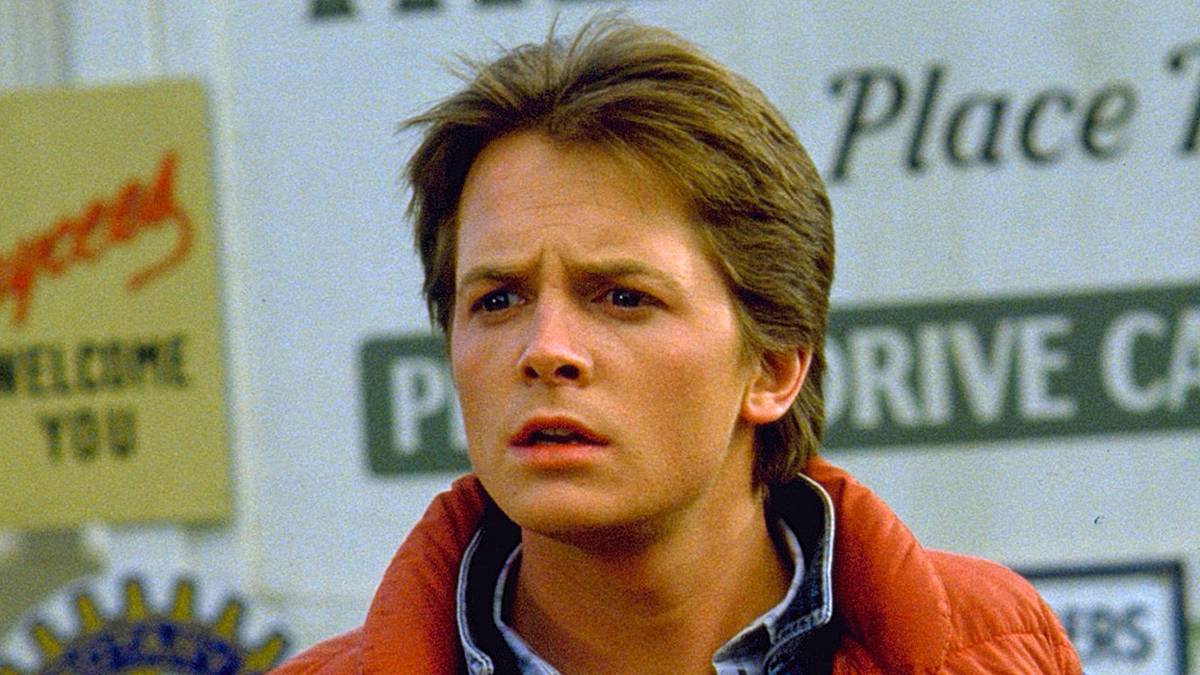
Robert Zemeckis' Back to the Future remains one of the most beloved films of all time, but its journey to the big screen was anything but smooth. From being turned down by Disney over its controversial mother-son romance subplot to recasting Michael J. Fox after weeks of filming with Eric Stoltz, the movie faced numerous hurdles. Yet, perhaps the most surprising twist is that the ending we all know—Marty McFly racing against a lightning strike at the Hill Valley clock tower—wasn't the original plan. Instead, the filmmakers envisioned a finale that was much, much darker.
The Original Ending: A Nuclear Blast
In 2016, storyboards drawn by artist Andrew Probert surfaced, revealing an ending that was never shot. Instead of a lightning strike, the climax involved a nuclear bomb test in the desert. The military prepares for a detonation, and Doc Brown orchestrates for Marty to drive the DeLorean directly into the blast zone. As the bomb explodes, Marty hits 88 miles per hour, and the car disappears in a mushroom cloud. The DeLorean then reappears in 1985 at the test site, now a tourist attraction, where a guide recounts rumors of strange phenomena. It's a wild, over-the-top sequence that would have fundamentally changed the film's tone.
Why the Change?
Co-writer Bob Gale explained on The Collider Podcast in 2020 that the decision came down to budget. The studio demanded a $1 million cut, and the nuclear bomb sequence was the most expensive scene to shoot. Gale said, "The most expensive thing was going on location and building this town. And we said well, if we can cut that out – if we can cut going on location and building a town and do something on a location that we already have, namely the backlot, that would save us $1 million easy." So, the filmmakers swapped a nuclear explosion for a lightning strike, saving money and creating one of cinema's most iconic moments.
A Triumphant Ending vs. a Darker Shadow
The filmed ending is a triumph of suspense and emotion. Marty returns to a better 1985, his family is successful, and Doc Brown survives, having learned that changing the timeline can be positive. It's a hopeful conclusion that perfectly balances the film's comedic and adventurous spirit. The original nuclear ending, while visually spectacular, would have cast a grim shadow over the story. As Gale noted, nobody wants to think about nuclear warfare when watching a time travel comedy. The lighter, more personal climax allowed the film to end on a note of triumph rather than dread.
What We Almost Lost
Beyond the bomb, the storyboards also show other differences: Doc Brown still receives Marty's warning letter, and the DeLorean struggles to start, but the stakes are far higher. The nuclear test site sequence would have required building a fake town and coordinating with military props, adding complexity and cost. Ultimately, the decision to cut it was a creative and financial win. The lightning strike ending is not only cheaper but also more intimate, focusing on Marty's personal journey rather than a global catastrophe.
For fans of the film, it's fascinating to imagine what might have been. The original ending would have been a spectacle, but it likely would have robbed the movie of its emotional resonance. As it stands, Back to the Future remains a perfect example of how constraints can lead to better storytelling. If you're a fan of satisfying conclusions, check out our list of The Most Satisfying Movie Endings of All Time, Ranked. And for more on how directors' cuts can change a film, see When the Director's Cut Beats the Original: 10 Movies That Prove It.
In the end, the lighter, more triumphant ending we got is a big reason why Back to the Future continues to captivate audiences nearly 40 years later. It's a reminder that sometimes the best creative decisions come from practical limitations.