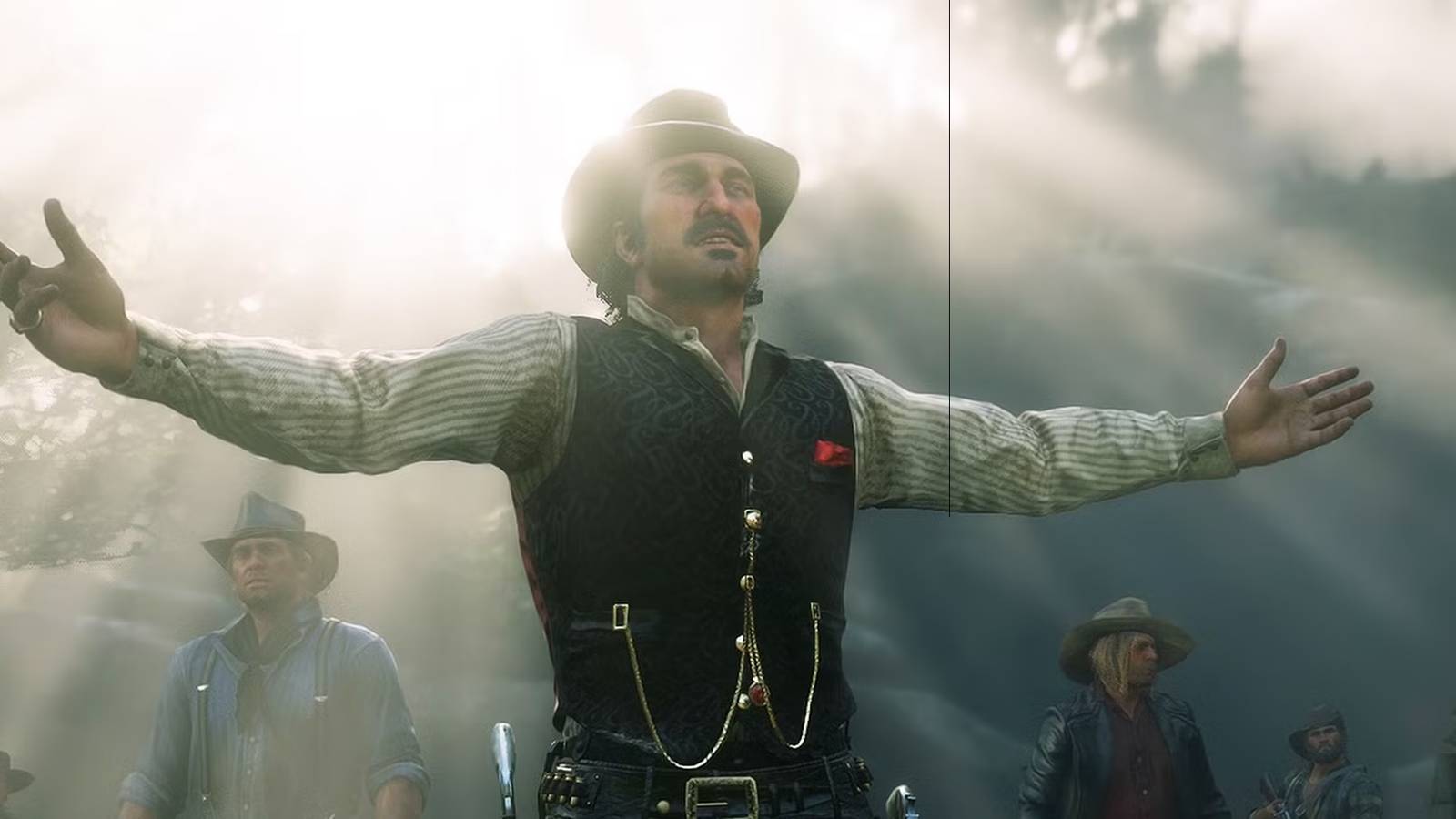
For years, Red Dead Redemption 2 fans have debated the exact moment Dutch van der Linde lost his moral compass. Was it the head injury he suffered during the botched trolley robbery in Saint Denis? Or was he always capable of the ruthless decisions that tore the Van der Linde gang apart? The question has fueled countless playthroughs and online discussions, but Arthur Morgan himself—actor Roger Clark—has now weighed in with a definitive answer.
During a panel at FanX Salt Lake Comic & Pop Culture Convention, moderated by Collider's Maggie Lovitt, Clark was joined by John Marston actor Rob Wiethoff. When asked about the trolley theory, Clark didn't mince words: "I disagree. I don't believe in that at all." His reasoning points to a moment that predates the crash—Dutch's cold-blooded killing of Heidi McCourt, an innocent woman. For Clark, that single act makes it hard to blame Dutch's descent on a bump to the head, even if the robbery happens as his behavior grows increasingly erratic.
Hosea and Micah: The Real Influences
Clark offered a more nuanced take on Dutch's transformation. "I think the trolley had nothing to do with it," he said. "I think Hosea leaving the gang had more to do with it." He described Hosea Matthews as the angel on Dutch's shoulder, the steadying presence that kept his darker impulses in check. When Hosea was gone, that balance vanished, and Micah Bell—the devil whispering in Dutch's ear—filled the void.
But Clark was careful not to paint Micah as the sole villain. In his view, Micah didn't create a new Dutch; he simply gave the existing one permission to act on instincts that had always been there. "I think it's lots of little small moments piled up on top of each other that change us," Clark explained, emphasizing that Dutch's downfall wasn't a single event but a slow accumulation of choices and losses.
This reading makes Dutch's arc far more tragic. Clark stressed that Dutch begins Red Dead Redemption 2 as a leader who genuinely cares about his people, which makes watching him unravel all the more painful. "I don't think it was one moment," he reiterated. "I think it's lots of little small moments piled up on top of each other that change us."
The debate over Dutch's nature—whether he was always a monster or became one—is part of what makes the character so compelling. Clark's perspective suggests the answer is "a bit of both," a complexity that keeps players returning to the game's story. For those who want to dive deeper into Clark's thoughts on the Red Dead universe, he's also addressed GTA 6 cameo rumors and Arthur Morgan comparisons in other interviews.
While the trolley crash might be the easiest moment to point to, Clark's insight offers a richer explanation: Dutch's choices, Hosea's absence, and Micah's influence all played a part. It's a reminder that in the world of Red Dead Redemption 2, tragedy isn't born from a single blow—it's forged over time, one small moment at a time.