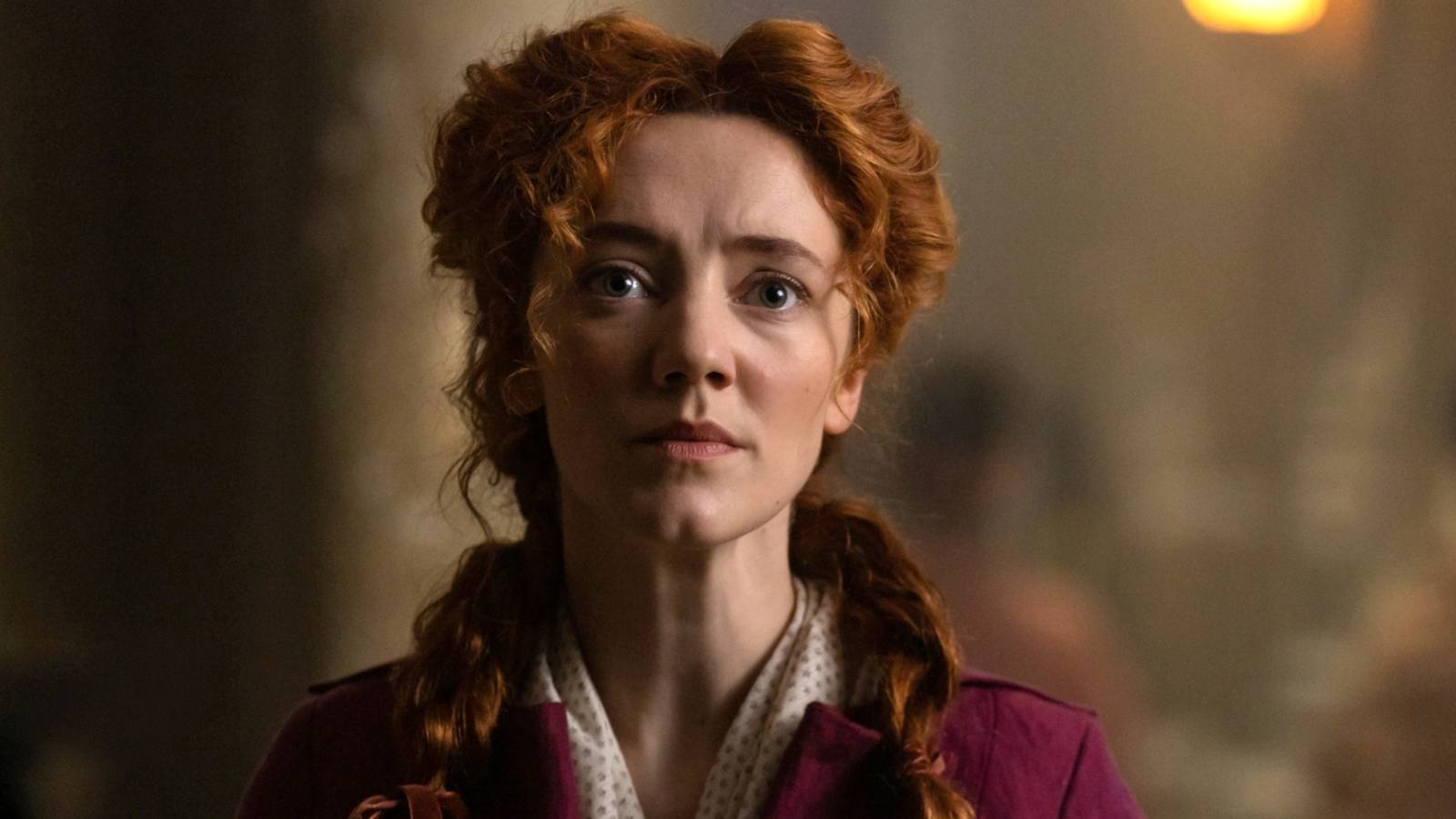
The MGM+ adaptation of A Tale of Two Cities has captivated audiences with its lush period drama and a love triangle that cuts to the bone. At its heart is Lucie Manette (Mirren Mack), a woman who defies the constraints of her era—studying medicine in secret, pulling cadavers from the river to practice surgery, and boldly taking charge of her own romantic destiny. She finds herself torn between two very different men: Charles Darnay (François Civil), an aristocrat who has turned his back on his privileged past, and Sydney Carton (Kit Harington), a brilliant but self-destructive lawyer haunted by his own demons.
When Charles abruptly leaves Lucie without explanation, she decides to take matters into her own hands and confess her feelings to Sydney. But Sydney, still wrestling with his inner turmoil, isn't ready to offer the love she deserves. The tension between the three builds until Charles finally steps up, and Lucie and Charles build a life together—until his arrest in revolutionary Paris threatens to tear it all apart. A trial reveals shocking secrets, and Charles is sentenced to death, leaving a pregnant Lucie devastated. That's when Sydney makes the ultimate sacrifice, a twist that redefines the story's ending.

In a recent conversation, Mack shared her excitement about playing this more modernized version of Lucie. "She takes her life into her own hands, even from the very beginning," Mack said. "She's studying medicine illegally, pulling cadavers out of the river to practice surgery on. She's pretty rock and roll. She doesn't wait for things to happen. She's not accepting the social norms and the life that's carved out for her."
Mack also revealed a delightful unscripted moment in the series. During an intimate scene between Lucie and Sydney, a small laugh escaped—something that wasn't in the script. "We spoke about it, but it wasn't in the script," she explained. "This is a new thing for Lucie. As much as she comes into it going, 'Let's do this,' it's messy and gentle and all the different words that can be ascribed to being intimate and vulnerable with someone. That came out of the moment." That fleeting joy stands in stark contrast to the show's overarching tragedy, a world torn apart by oppression and injustice.
One of the most emotionally charged moments occurs in Episode 3, when Sydney tells Lucie that she is all he needs and that he can be better for her. But as Mack points out, that declaration carries a heavy burden. "Kit and I discussed a lot that with Sydney's addictive qualities, he's transferred that Lucie will fix him," she said. "Lucie even says, 'I can't be the one to fix you. You can't ask me to do this. I can't be your reason to live. It's too much.'" It's a heartbreaking realization for Lucie, who loves Sydney but knows that choosing him would mean a life of pain.
The finale delivers what Mack calls a "gut punch beyond words." When Lucie is reunited with Charles, the joy is immediately overshadowed by the horrifying truth: Sydney has sacrificed himself so that Charles can live. It's a moment that encapsulates the series' central themes of love, sacrifice, and redemption. Mack praised her co-stars, saying, "Kit is extraordinary. He just was so easy to stand across from and break your heart over. So was François. I'm the luckiest person, getting to work with them both."
For fans of the series, the ending is a devastating but fitting conclusion to a story that has always been about the cost of love. As Mack noted, "In this story, every single character is grappling with their own version of sacrifice." The finale leaves viewers with a profound sense of loss, but also a glimmer of hope for Lucie's future.
If you're hungry for more gripping finales, check out our list of the most controversial TV finales or see how other shows have handled their own heart-wrenching conclusions, like Outlander's enduring streaming success.