Over the past eight decades, cinema has undergone a radical transformation. Genres have come and gone, technology has advanced from black-and-white reels to streaming on phones, and audiences have evolved alongside the medium. Yet amid this constant change, a select group of films has risen above the rest, becoming pillars of storytelling that continue to inspire and resonate. These are the movies that didn't just entertain—they redefined what cinema could achieve.
From the gritty streets of post-war Rome to the psychological depths of San Francisco, the greatest movie masterpieces of the last 80 years tap into universal emotions: ambition, love, loss, and hope. They've become foundational to how we understand film, influencing generations of directors and viewers alike. Here are ten of the most enduring, each a testament to the power of the moving image.

10. 'The Shawshank Redemption' (1994)
“Get busy living, or get busy dying.” Andy Dufresne (Tim Robbins) is sentenced to life for a crime he didn't commit. Over decades, he forms a profound bond with fellow inmate Red (Morgan Freeman), quietly reshaping the prison world around him. This isn't just a prison drama—it's one of cinema's finest depictions of male friendship, a story that builds emotional weight patiently rather than relying on twists or spectacle. Thematically, it speaks to universal fears and desires: cruelty, institutional corruption, loneliness, and wasted years. Yet despite the darkness, The Shawshank Redemption radiates a deeply hopeful spirit, never feeling contrived or naive. Its moments of grace are earned, making it a timeless classic.
9. 'Pulp Fiction' (1994)
“I'm trying real hard to be the shepherd.” Quentin Tarantino's masterpiece weaves intersecting stories of criminals, hitmen, and ordinary people caught in extraordinary circumstances. The dialogue is sharp, rhythmic, and endlessly quotable, elevating mundane conversations into iconic moments. The film's fractured structure—looping backward and forward through time—was revolutionary in the mid-'90s, spawning countless imitators but no true equals. Beneath its surface coolness lies real craftsmanship and thematic depth, exploring violence, redemption, and the randomness of fate. Pulp Fiction remains a touchstone for its passion for cinema and its ability to make the familiar feel thrillingly new.
8. 'Bicycle Thieves' (1948)
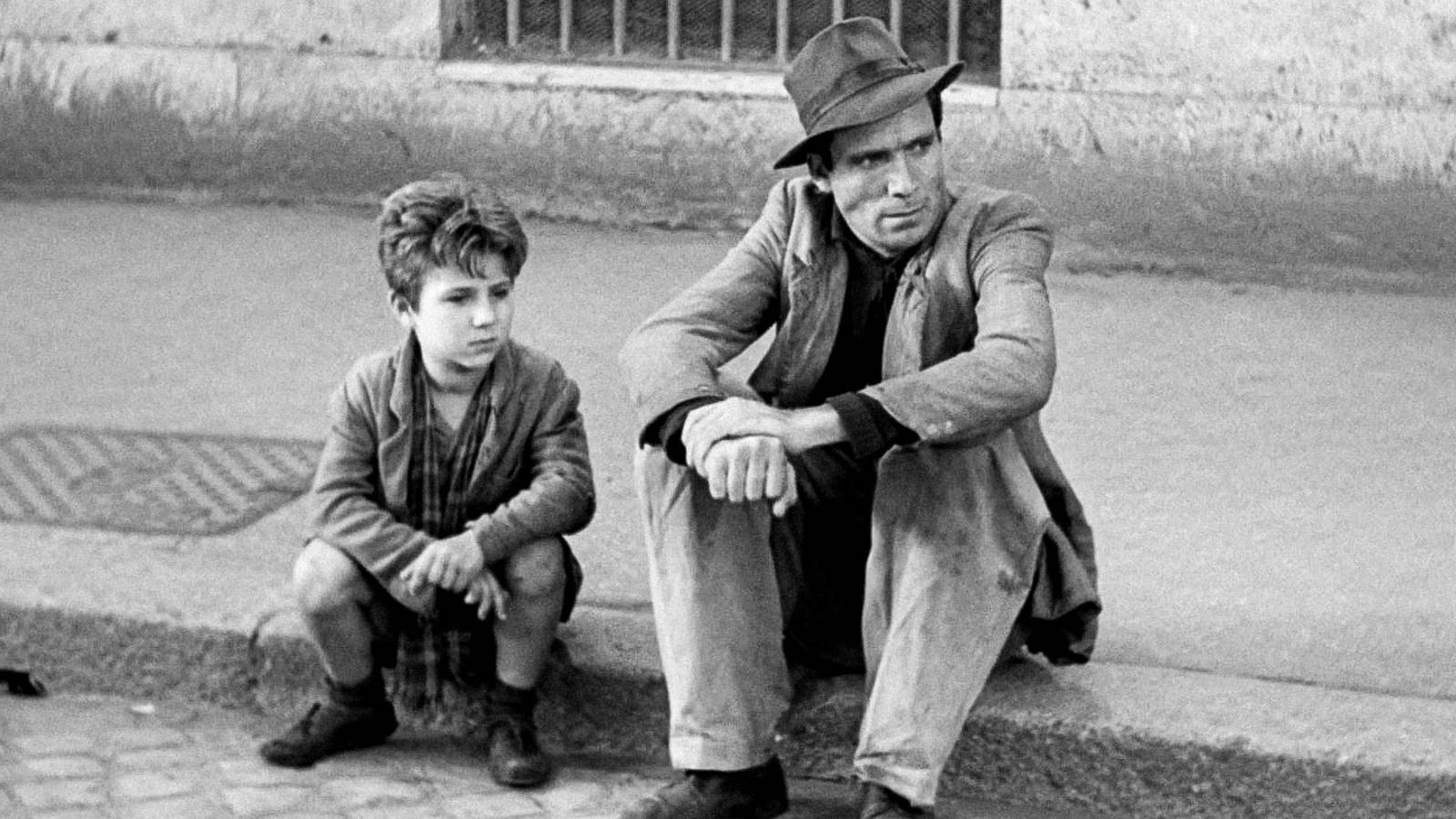
“When you need a bicycle, you don't just need a bicycle.” In post-war Rome, a poor father (Lamberto Maggiorani) finally lands a job requiring a bicycle, only to have it stolen on his first day. His desperate search with his young son (Enzo Staiola) becomes a heartbreaking journey through the city. Director Vittorio De Sica strips cinema to its barest elements, using non-professional actors and real locations to create painfully authentic scenes. This pioneering work of Italian neorealism influenced filmmakers worldwide, proving that profound drama could be found in ordinary struggles. Bicycle Thieves remains a landmark of cinematic realism and emotional power.
7. 'There Will Be Blood' (2007)
“I drink your milkshake!” Paul Thomas Anderson's magnum opus features Daniel Day-Lewis as Daniel Plainview, an ambitious oilman whose relentless pursuit of wealth leads to conflict with a young preacher (Paul Dano). This is an epic rooted in character rather than plot, with Day-Lewis delivering a fiery, towering performance. Plainview embodies ambition unchecked by empathy, yet he's no mere caricature—his victories feel poisoned by isolation and moral decay. The dynamic with Eli Sunday elevates the film further, as both men recognize aspects of themselves in each other. There Will Be Blood is a masterclass in character-driven storytelling.
6. 'Vertigo' (1958)
“I have a feeling that I've been here before.” Alfred Hitchcock's Vertigo stars James Stewart as a retired detective with acrophobia who becomes obsessed with a woman (Kim Novak) he's hired to follow. The Master of Suspense uses color, camera movement, and lighting with hypnotic precision—greens, reds, and ghostly shadows dominate, while San Francisco becomes part of the psychological landscape. Stewart is vulnerable and emotionally fractured, while Novak is ghostly without being cartoonish. Vertigo is Hitchcock at his most visually stylish and psychologically daring, a film that continues to haunt viewers.
These masterpieces, along with others like The Godfather and Citizen Kane, have shaped our understanding of cinema. For more on recent classics, check out our list of 10 Beloved Movie Masterpieces of the Last 6 Years That Redefined Cinema. And if you're a fan of psychological thrillers, don't miss 5 Psychological Thrillers from the 2010s That Are True Masterpieces. For sci-fi enthusiasts, we've also covered The 2010s Gave Us Only 5 True Sci-Fi Masterpieces—Here They Are.
From the streets of Rome to the oil fields of California, these films remind us why we love movies: they capture the human experience in all its complexity. Whether you're revisiting a favorite or discovering a classic for the first time, these masterpieces are essential viewing.