There's a special heartbreak reserved for war movies that should have become permanent fixtures of the genre conversation but somehow didn't. These are the films that carry duty, mud, hunger, fear, command, resistance, and moral injury so vividly that they should be part of every serious discussion about the form—and yet they've slipped into that awful category of 'you've seen that?'
War cinema has this problem more than people admit. The canon gets sticky. The same titles keep circulating. Meanwhile, a second lineage—harsher, quieter, more morally wounded, more spiritually exhausted—keeps pulsing underneath it. These ten all deserve far more love than they usually get, and the higher you go on the list, the more serious the robbery starts to feel.
10. 'The Bridges at Toko-Ri' (1954)
What I love about The Bridges at Toko-Ri is how sad it is about duty. Not melodramatically sad. Not loudly anti-war in the way later films would become. Sad in that old, heavy, almost classical way, where competent men are asked to do something impossibly dangerous because history has arranged itself into that demand and nobody in the chain of command can pretend otherwise.
The film follows Harry Brubaker (William Holden), who is not a born warrior aching for combat but a reservist called back into danger. He's a man with a wife and children and a civilian life that makes military necessity feel less noble and more obscene the longer you sit with it. That is why the film stays with me. The mission structure is clean, the aerial action still has real force, but the emotional center is not in spectacle. It is in the gap between what these men are asked to destroy and what they know they are sacrificing of themselves in the asking. It mourns the waste built into the system.
9. 'Hell in the Pacific' (1968)
This is one of the most stripped-down war films ever made, and that simplicity is exactly why it cuts so hard. A Japanese soldier (Toshirō Mifune) and an American pilot (Lee Marvin) stranded on an island together sounds like the setup for allegory, and it is, but in the best, harshest sense. The film keeps removing the usual scaffolding—no battle strategy, no broader campaign, no supporting cast to absorb tone—until what remains is war as two men carrying their nations inside them like poison they cannot fully spit out.
Both characters have to build almost the whole movie out of posture, labor, suspicion, aggression, and the occasional exhausted recognition that survival keeps forcing them into proximity. The movie never pretends the stripping away of context magically reveals universal brotherhood. It reveals something messier: need, resentment, curiosity, interdependence that never fully heals ideology. And you see them trapped inside the identities war has made necessary. That is why the movie's ending is so crushing. It reminds you how fragile any private human truce is once the larger machinery of war returns to claim ownership.
8. 'A Midnight Clear' (1992)
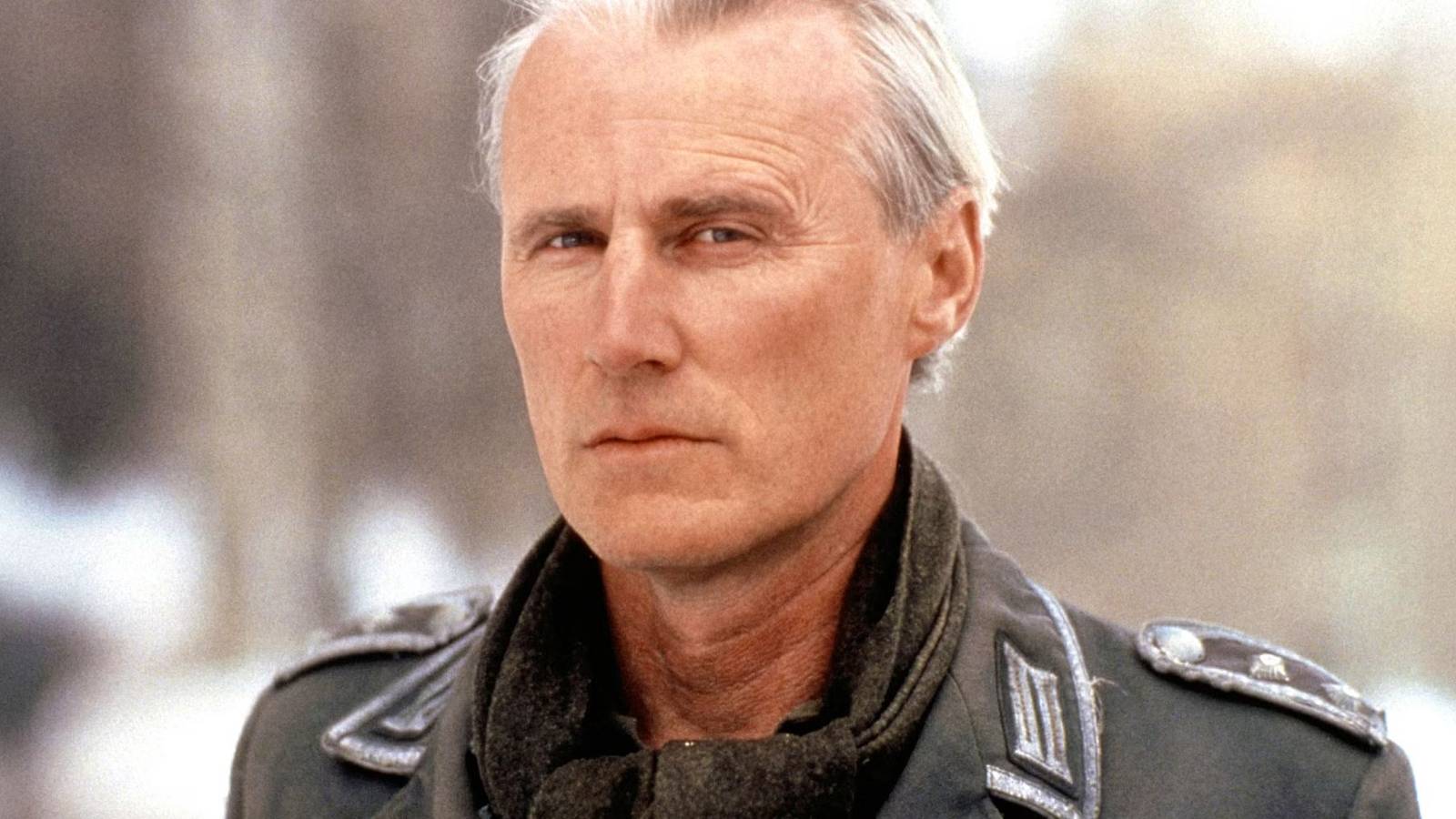
I have always thought A Midnight Clear deserves far more love because it understands one of war's most unbearable tensions: the possibility of mercy and the terrifying fragility of that possibility once military logic, fear, and bad communication start moving again. The setup is deceptively simple—an American intelligence squad in the Ardennes encounters a group of exhausted German soldiers who seem ready to surrender, and for a while the film becomes something almost miraculous. Not peaceful, never that. Just briefly human in a way war is designed to punish.
And that is what makes it hurt. They are men recognizing, through cold and fatigue and proximity to death, that the people aiming guns at them are also trapped in a machine that is spending lives with casual appetite. The snow and stillness make the whole thing feel more doomed, not less. Every attempt at understanding carries the possibility of annihilation right under it. Then when the catastrophe comes, it does not feel like a twist. It feels like the system reasserting its rules with cruel efficiency. A lot of war movies are about heroism under fire. This one is about the awful cost of nearly becoming humane in the middle of hell.
7. 'The Steel Helmet' (1951)
Samuel Fuller's The Steel Helmet feels like it still has battlefield dirt under its nails. That is one of the first things that hits you. It does not have the polished distance of many war films from its period. It feels rough, irritated, and morally scratched up. Set during the Korean War, it starts with a massacre and follows a small group of American soldiers trying to survive and hold position in and around a Buddhist temple. That sounds narrow. It is.
Fuller uses that narrowness the right way, to trap all kinds of ugly human friction inside a space that should feel sacred and cannot protect anyone from what war brings in with it. The film is great because it is so bluntly alive to contradiction. Sergeant Zack (Gene Evans) is hard, racist, funny, improvisational, and absolutely not arranged into some clean heroic template. The Korean child attached to him changes the emotional current without sentimentalizing it. Conversations about race, ideology, and military purpose erupt right in the middle of combat tension, giving the film a dangerous immediacy. It feels like people under pressure saying the things they would rather not hear themselves say. It's a great film.
6. 'The Hill' (1965)
The Hill is one of the greatest anti-glamour war films because it barely needs the battlefield to make its point. The hill in the title is a brutal sand mound in a North African military prison where soldiers are forced to march under a scorching sun as punishment. The film is a psychological pressure cooker, directed by Sidney Lumet with the same claustrophobic intensity he brought to 12 Angry Men. Sean Connery stars as a defiant prisoner who refuses to break, but the real star is the system itself—a military machine that punishes men for the very instincts it cultivated in them during combat.
The film strips away any pretense of noble sacrifice. Instead, it exposes the cruelty that can fester within military discipline when it becomes an end in itself. Every march up that hill is a small death, and the film refuses to let you look away. It's a forgotten masterpiece that deserves a spot alongside the best prison dramas ever made.
For more hidden gems, check out our list of forgotten soft sci-fi shows that also deserve a second look.
If you're a fan of intense cinema, you might also enjoy our ranking of the most intense thrillers ever made.