Romantic comedies often get pigeonholed by their surface-level tropes: the meet-cute, the misunderstanding, the mad dash to the airport, the perfect happy ending. But some of the genre's most enduring films are secretly about something much heavier—grief. They use love as a vehicle to explore loss, whether it's a death, a divorce, or the slow fading of a memory. With About Time and Sleepless in Seattle arriving on Netflix on September 1st, it's the perfect moment to revisit why these movies have staying power that flashier, more conventional rom-coms lack.
Grief gives these films emotional stakes that the typical obstacle-to-love plot can't match. It forces characters to change in ways that a simple misunderstanding never could. The comedy is still there, but it's smarter, more sporadic, and often tinged with melancholy. Look closely at these seven films, and you'll see that romance is rarely the engine driving the story—it's the setting where characters finally confront what they've been avoiding.

Notting Hill (1999)
On the surface, Notting Hill is a classic fish-out-of-water romance between a humble bookshop owner and a movie star. But William Thacker (Hugh Grant) is a man shaped by loss long before Anna Scott (Julia Roberts) walks into his shop. He's divorced, his bookshop is barely surviving, and his tight-knit group of friends is a substitute family for a life that didn't go as planned. His hesitation throughout the film isn't really about Anna's fame or the tabloid chaos—it's about a man who's been disappointed before and has built his entire world around avoiding that pain again.
That quiet resignation is what gives the film's sweeping moments their weight. William's journey is about relearning to risk loss after already absorbing one. The famous garden scene at the end resonates so deeply because it's a triumph over real, lived-in grief. Divorce rarely gets this much screen time in a genre built on first loves.
About Time (2013)
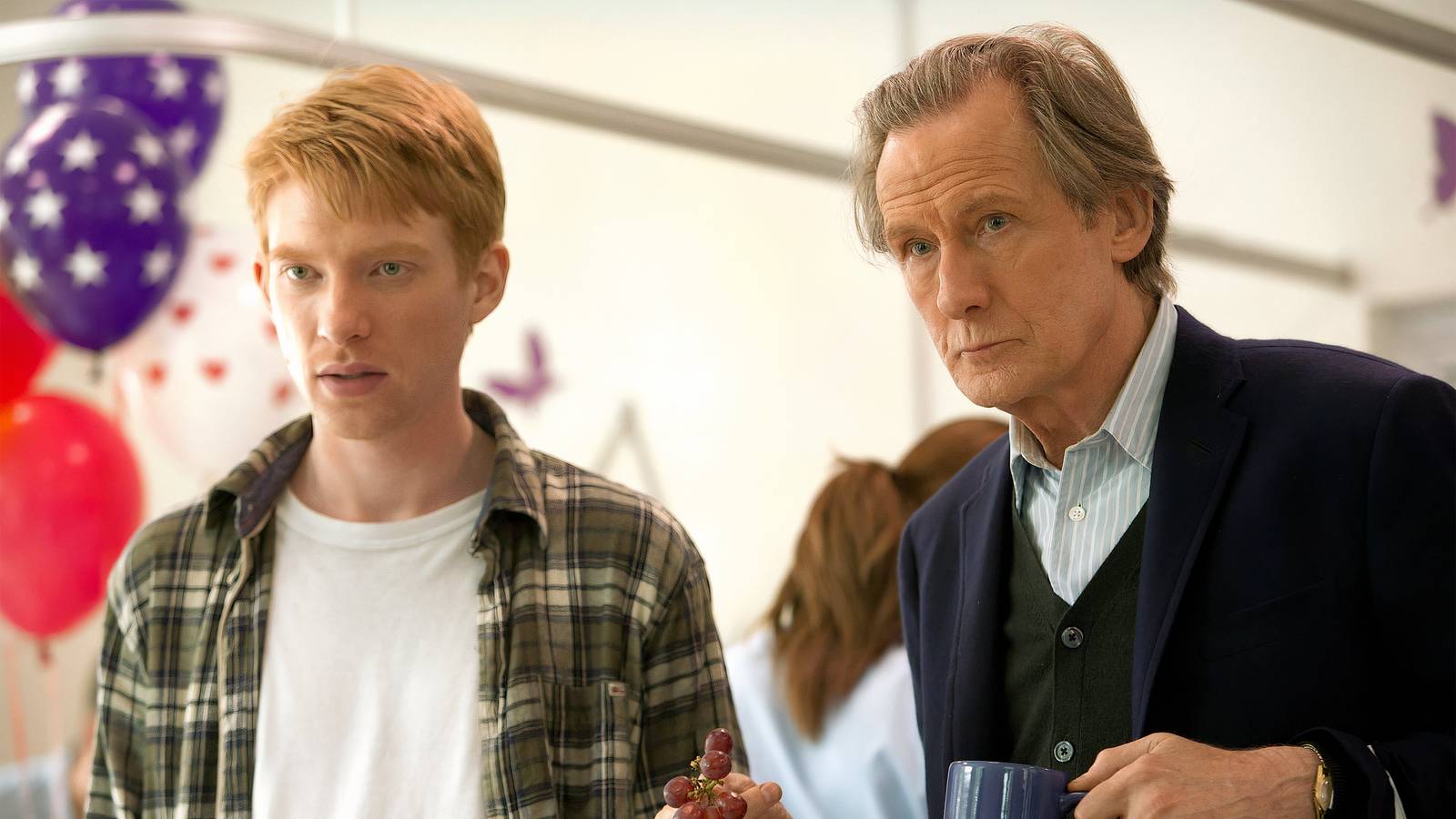
About Time presents itself as a time-travel romance, but its true emotional core is the relationship between Tim (Domhnall Gleeson) and his father (Bill Nighy). The romance with Mary (Rachel McAdams) is sweet, but it's the backdrop for Tim's real journey: learning to appreciate ordinary moments before they're gone. The devastating gut punch comes when Tim realizes he can no longer travel back once his father dies. The film's back half is devoted to reliving simple days—playing ping pong, walking on the beach—before saying goodbye for good.
Richard Curtis uses the rom-com structure as a Trojan horse, delivering a meditation on mortality and fatherhood instead of a traditional love story. Audiences walk in expecting a romance and walk out crying over a father-son bond.
The Big Sick (2017)
The Big Sick complicates its own love story by putting its female lead in a medically induced coma for much of the film. Kumail (Kumail Nanjiani) is forced to bond with Emily's parents while confronting the real possibility she might die. Based on the real courtship of Nanjiani and Emily V. Gordon, the film turns a culture-clash romance into a meditation on anticipatory grief. It never lets you forget how close the central relationship comes to ending before it truly begins.
These films, along with others like Sleepless in Seattle, Eternal Sunshine of the Spotless Mind, 50 First Dates, and P.S. I Love You, share a common thread: love doesn't erase grief. Instead, it becomes the space where characters finally let themselves feel what they've been avoiding. That's why they've stayed in the cultural zeitgeist long after their peers have faded. Revisiting them with this lens changes everything about how their famous scenes land.
For more on how grief shapes storytelling, check out our preview of a ghostly punk mystery that blends grief with the supernatural. And if you're in the mood for laughs, our list of comedies that get funnier with time might be just what you need.