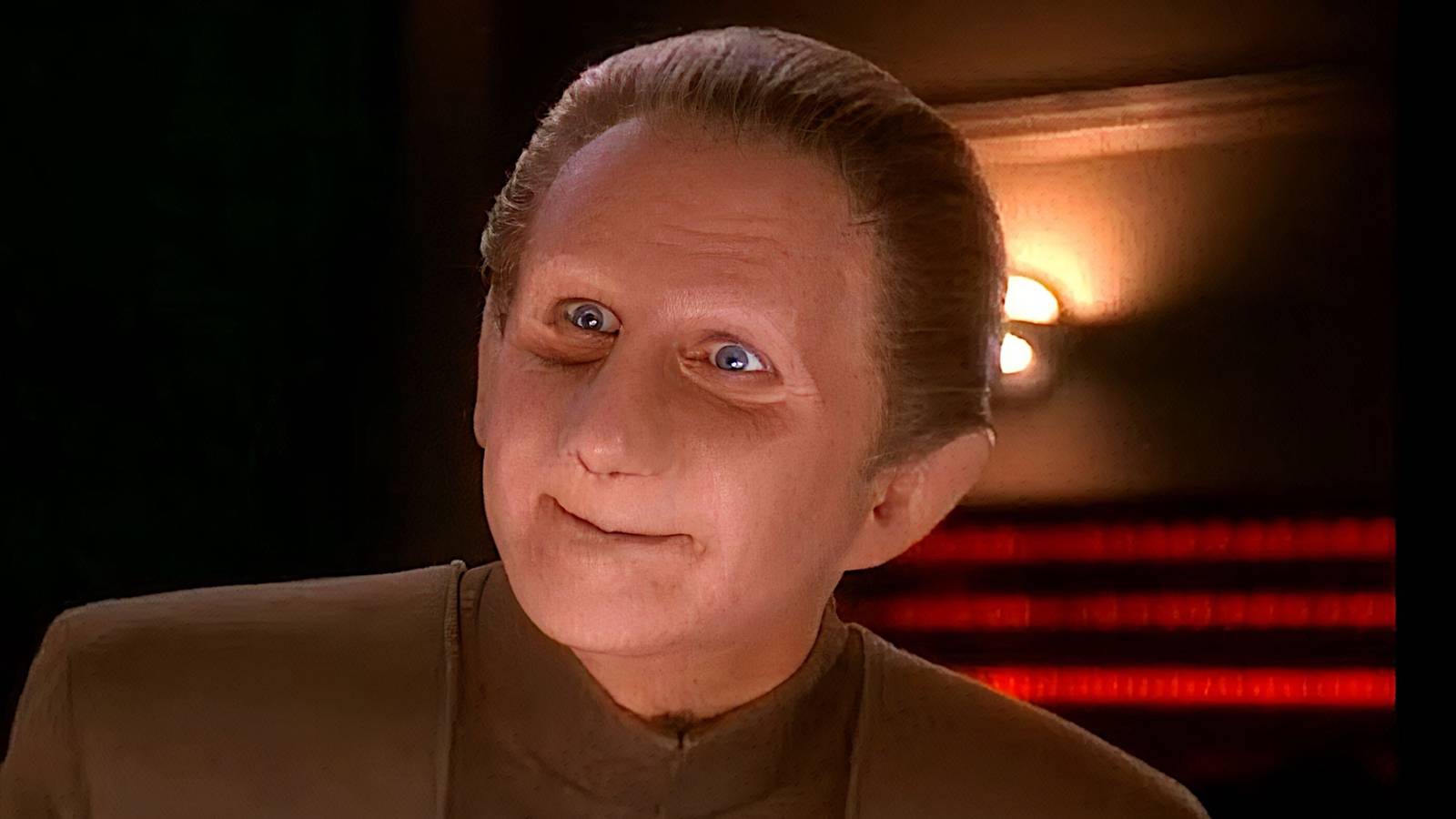
In the sprawling universe of Star Trek, Deep Space Nine has always been the outlier—the gritty, morally ambiguous installment that swapped starship exploration for a stationary space station and a web of political intrigue. Premiering in 1993, it dared to challenge Gene Roddenberry's optimistic vision, replacing utopian ideals with a world where right and wrong are rarely clear-cut. And no single line captures that spirit better than one uttered by Constable Odo in the show's fourth episode, "A Man Alone."
The moment arrives when Odo (René Auberjonois), the station's shapeshifting security chief, clashes with Ibudan, a smuggler who profited during the Cardassian occupation. While others view Ibudan as a hero, Odo sees a man who let a child die when her parents couldn't pay, and who killed a Cardassian officer without remorse. When Ibudan turns up dead, Odo becomes the prime suspect, and Commander Sisko (Avery Brooks) warns him to stay within protocol. Odo's response is as succinct as it is profound:
"Laws change, depending on who's making them—Cardassians one day, Federation the next. But justice is justice."
At first glance, Odo's words seem like a simple assertion of moral absolutism. But within the context of Deep Space Nine, they resonate far deeper. The station has just transitioned from Cardassian rule to joint Federation-Bajoran administration, and Odo has served as law enforcement under both regimes. He's witnessed firsthand how laws shift with the whims of those in power, yet he clings to the belief that justice itself is immutable—a standard that transcends any legal code.
History, of course, supports Odo's view. From Nazi Germany to countless other authoritarian regimes, laws have often contradicted basic morality. But as the series progresses, Odo's black-and-white worldview is repeatedly tested. He's forced to confront situations where following the law leads to injustice, and where true justice requires breaking it. The station's gray morality chips away at his certainty, revealing the complexity beneath his stoic exterior.
The quote gains even darker irony when Odo discovers his origins as a Changeling in the Season 3 premiere, "The Search." His people, the Founders, also believe in absolute order—but for them, that order means control, not justice. Odo's sense of justice, it turns out, is learned, not innate. It's what ultimately drives him to reject his own kind and return to the station, making his earlier words tragically prophetic: justice, for the Changelings, is merely control.
But Odo's line isn't just about his personal arc—it's the thematic backbone of Deep Space Nine itself. The series repeatedly explores how laws bend in the face of survival and the greater good. Perhaps the most striking example is Captain Sisko's actions in "In the Pale Moonlight," where he lies, schemes, and even accepts the assassination of a Romulan senator to bring the Romulans into the Dominion War. It's a chilling illustration of Odo's point: that justice often demands breaking the very laws meant to uphold it.
This willingness to embrace moral complexity is what sets Deep Space Nine apart from its Star Trek siblings. It's a show that doesn't offer easy answers, and Odo's quote encapsulates that ethos perfectly. Thirty-three years later, it remains the franchise's most resonant line—a reminder that true justice is rarely found in the letter of the law, but in the courage to do what's right, even when it's wrong.
For fans who want to revisit this pivotal episode, it's available on streaming platforms, and for those new to the series, this defense of DS9's underrated gems offers a great starting point. And if you're in the mood for more Star Trek moral dilemmas, Voyager's 'Year of Hell' gets a new interactive twist that's worth checking out.