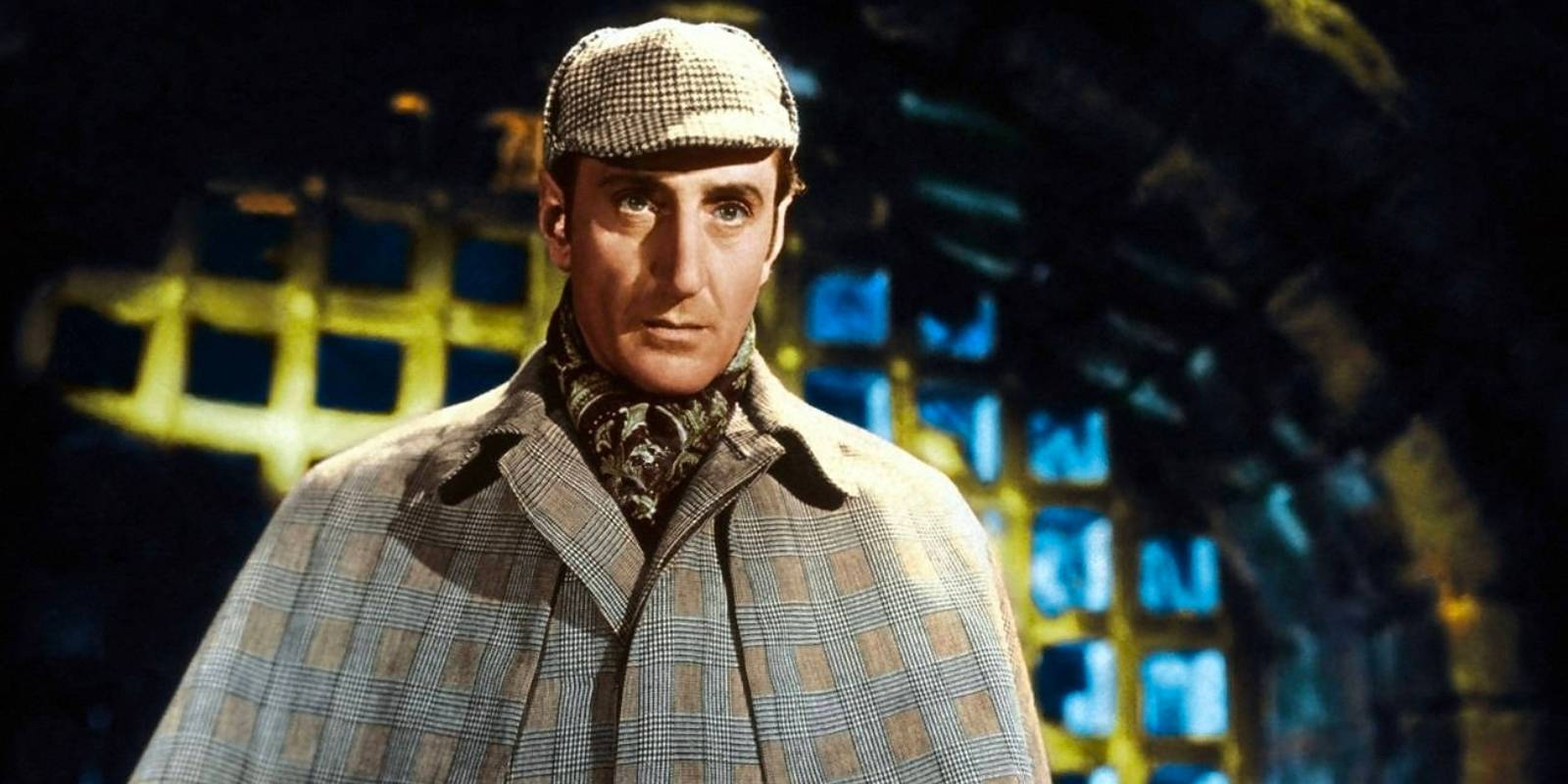
Sherlock Holmes has proven to be one of the most enduring characters in entertainment history. From the silent film era to modern streaming hits, the detective has been reimagined countless times. Recent projects like Netflix's Enola Holmes and Prime Video's Young Sherlock (developed by Guy Ritchie, who previously directed the Robert Downey Jr. films) keep the franchise alive. Yet, amid all these adaptations, one phrase—first spoken on screen in 1929—still encapsulates the essence of Holmes: "Elementary, my dear Watson."
A Phrase Born of Hollywood, Not Conan Doyle
Surprisingly, Sir Arthur Conan Doyle never wrote that exact line in any of his four novels or 56 short stories. The closest he came was in The Adventure of the Crooked Man (1893), where "elementary" and "my dear Watson" appear 52 words apart, and in The Adventure of the Missing Three-Quarter (1904), where Holmes says, "Exactly, my dear Watson." The phrase's true origin is often attributed to actor William Gillette, who may have ad-libbed it in his 1899 stage play, though this remains unverified.

The first confirmed cinematic use came in the 1929 film The Return of Sherlock Holmes, delivered by Clive Brook. But it was Basil Rathbone who cemented the line in popular culture. Starting with The Hound of the Baskervilles (1939), Rathbone's portrayal—complete with deerstalker cap and pipe—set the standard for all future Holmes adaptations. He first uttered the famous phrase in The Adventures of Sherlock Holmes (1939) and would repeat it across 14 films. Ironically, Rathbone grew to resent the line, feeling it trivialized the depth of Conan Doyle's work and typecast him.
Why the Quote Captures Holmes Perfectly
The genius of "Elementary, my dear Watson" lies in its simplicity. "Elementary" conveys Holmes's effortless brilliance, while "my dear Watson" expresses his affection for his partner. Together, they capture two fundamental aspects of the character: his intellectual superiority and his loyalty to his friend. The delivery, however, is what makes it adaptable to any interpretation.
In portrayals where Holmes is more gentlemanly—like Rathbone or Henry Cavill in Enola Holmes—the line sounds like a patient mentor explaining his reasoning. In more abrasive takes, such as Benedict Cumberbatch's Sherlock or Hugh Laurie's House, it becomes a condescending jab at others' lack of perception. This flexibility ensures the quote works across all versions, even if the exact words are never spoken.
The Legacy Endures
Though the phrase hasn't been used verbatim in recent adaptations, its spirit lives on. The 2012 series Elementary used the word alone to signal its Holmes connection. The quote's power lies in its ability to evoke the character instantly, even for those who've never seen a Sherlock Holmes film. It has become shorthand for deductive genius and the unique bond between Holmes and Watson.
As the franchise continues to evolve—with new projects like the adult animated series Animated Sherlock on the horizon—"Elementary, my dear Watson" remains the touchstone. It's a testament to how a single line, even one never written by the original author, can define a character for generations. For fans, it's more than a catchphrase; it's the essence of Sherlock Holmes.