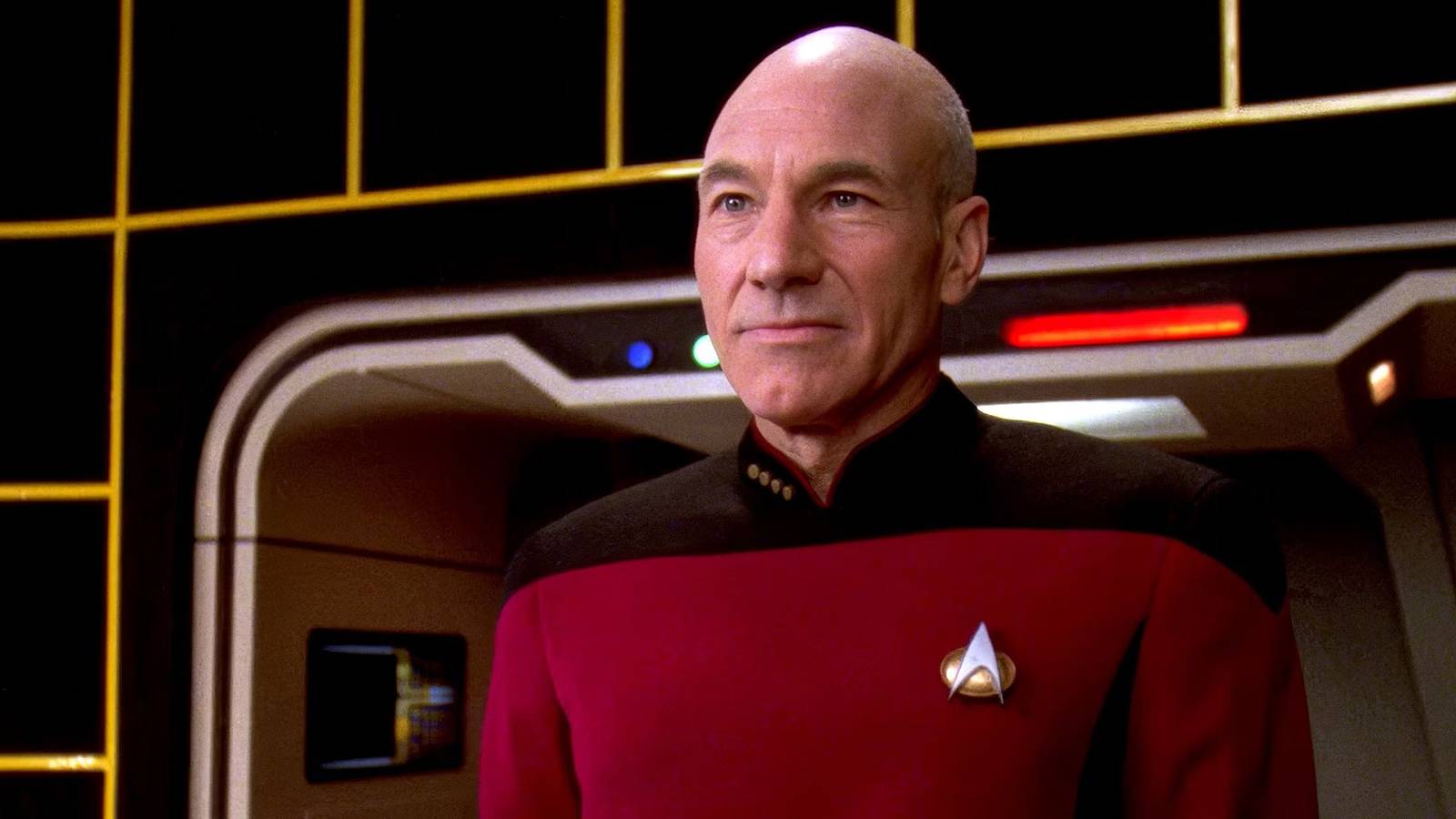
Jean-Luc Picard, the erudite captain of the USS Enterprise, has never been short on memorable lines. From Shakespearean soliloquies to diplomatic one-liners, Patrick Stewart's portrayal gave us a leader who could quote poetry and throw a punch with equal conviction. But among all his pearls of wisdom, one stands out as the ultimate distillation of what Star Trek—and Picard himself—represents.
That moment arrives in the Star Trek: The Next Generation episode "Peak Performance," a Season 2 gem that pits the Enterprise against a wargame designed to test Starfleet's readiness against the Borg threat. The scenario places Commander Riker on an aging vessel with a skeleton crew, facing off against Picard's state-of-the-art ship and tactical brilliance. But the episode's real conflict is internal, centering on Lieutenant Commander Data, the android who has never known failure.

When Data loses a strategy game to the arrogant Zakdorn tactician Sirna Kolrami, his world shatters. He resigns his post, retreats to his quarters, and runs endless diagnostics, convinced that a programming flaw is to blame. His inability to accept a loss—even one that defies logic—reveals a vulnerability he never knew he had. It's a crisis of identity for a being who prides himself on perfection.
Enter Picard, who finds Data spiraling in self-doubt. The captain's response is not a lecture or a pep talk, but a simple, devastating truth: "It is possible to commit no mistakes and still lose. That is not weakness. That is life." In three sentences, Picard dismantles Data's binary thinking and offers a philosophy that resonates far beyond the starship.
This line is quintessential Picard—wise, empathetic, and grounded in a deep understanding of the human condition. It acknowledges that the universe is not fair, that outcomes are not always within our control, and that failure is not a reflection of our worth. For Data, who yearns to be human, it's a lesson in accepting imperfection. For viewers, it's a reminder that resilience lies not in avoiding defeat but in how we rise after it.
The episode's conclusion sees Data return to the bridge, his perspective shifted. He faces Kolrami again, this time playing to a stalemate—a deliberate choice that honors Picard's words. He doesn't need to win; he needs to accept that losing is part of the game. It's a subtle but powerful character beat that cements the episode's legacy.
Patrick Stewart's delivery elevates the line to iconic status. His calm, measured tone carries the weight of a man who has seen his share of losses—both personal and professional. It's no wonder that this quote has become a touchstone for fans, often cited as the moment that defines Picard's leadership style and the ethos of Starfleet itself.
In a franchise filled with grand speeches and epic battles, "Peak Performance" offers something quieter but no less profound. It's a reminder that the best leaders are not those who never fail, but those who teach us how to navigate failure with grace. As we continue to explore new worlds and revisit old favorites, Picard's words remain a guiding light—a testament to the enduring power of a single, well-crafted quote to define a universe.
For those who grew up with The Next Generation, this line is more than just dialogue; it's a life lesson. And for those discovering Picard for the first time, it's the perfect introduction to a captain who taught us that science fiction can speak to our deepest truths. In a galaxy of endless possibilities, Picard's wisdom remains as relevant as ever.