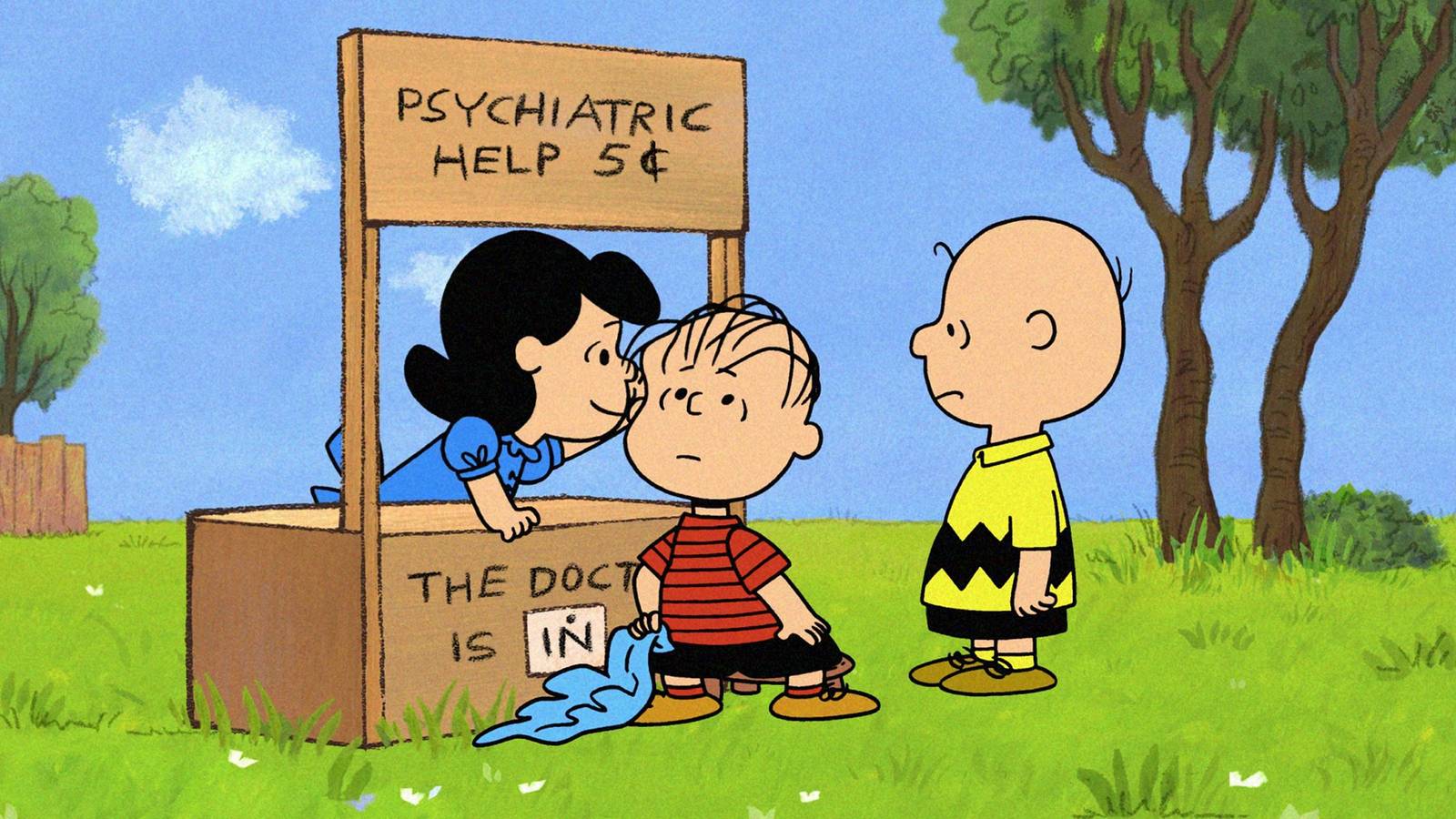
For a comic strip built around a remarkably small cast, Peanuts went through a surprising number of characters before Charles M. Schulz settled on the ensemble everyone knows today. Charlotte Braun was one of those early experiments — a loud, aggressively confident counterpart to Charlie Brown who arrived in November 1954 and disappeared just 10 appearances later. Her short tenure is barely a footnote in Peanuts history, but the way Schulz handled her exit is almost impossible to forget.
Charlotte’s disappearance was a result of a reader who wrote to the cartoonist complaining about the character, and Schulz decided to take the suggestion. Then he did something considerably more memorable than simply stopping the character’s appearances: he jokingly told the reader she would have to live with Charlotte’s “death” on her conscience and drew the character with an ax stuck in her head. The original letter, now preserved by the Library of Congress, remains one of the strangest pieces of Peanuts memorabilia around.

Charlotte Braun Was Supposed To Be Charlie Brown’s Opposite
Charlotte’s introduction on November 30, 1954, made her purpose fairly obvious. Her name was a play on Charlie Brown’s, and she even introduced herself as “Good ol’ Charlotte Braun.” Where Charlie Brown was timid, anxious, and perpetually resigned to whatever indignity the universe had planned for him, however, Charlotte was loud.
The contrast gave Schulz an easy setup. Charlotte could walk into a conversation, overwhelm everyone with her volume, and leave Charlie Brown to deal with the aftermath. Several of her strips revolve around essentially the same joke: Charlotte speaks at an absurd volume, someone points it out, and Charlotte responds by insisting that she’s entitled to be heard. Sometimes the joke works, but often, it feels like Schulz is still trying to figure out what else she can do. Ultimately, Charlotte had a trait, but she didn’t have much of a character beyond it.
It is important to note that in Peanuts, even the most exaggerated personalities tend to have multiple angles. Lucy can be bossy, cruel, vulnerable, insecure, confident, and surprisingly perceptive depending on the situation; Linus has his blanket, but he’s also philosophical and anxious, imaginative and thoughtful. Even Charlie Brown’s defining misery is practically an entire personality engine. Charlotte, meanwhile, kept turning up the volume.
Charlotte Braun’s Biggest Problem Was That Lucy Already Worked Better
There was also an unfortunate timing issue. Charlotte was introduced during the period when Schulz was still experimenting with the Peanuts cast, trying different personalities and seeing which ones generated enough material to justify keeping them around. The eventual ensemble wasn’t handed down fully formed.
Charlotte’s loud, bossy personality also pointed toward territory that another character would soon make much better use of. Lucy, who initially had a considerably different personality, developed into one of Peanuts’ defining characters as the strip evolved. Charlotte’s basic function — the loud girl who wasn’t particularly concerned with whether anyone liked her — looked much less necessary, which helps explain why Charlotte feels so thin in retrospect. She was occupying a role that Peanuts would eventually have a more versatile character fill.
Her final appearance came on February 1, 1955. After only 10 appearances, Charlotte was gone. Schulz didn’t give her a dramatic farewell or establish some elaborate reason she had moved away; she just stopped appearing. Schulz’s correspondence with one reader turned that otherwise forgettable disappearance into an unforgettable experience.
Charles Schulz Gave Charlotte Braun the Axe... Literally
On January 5, 1955, Schulz responded to Elizabeth Swaim, the reader who had written to complain about Charlotte. He told Swaim that he would eventually discard the character, adding that any further appearances would only come from strips already completed or from someone writing in to say they liked her.
Schulz told Swaim that she and her friends would have “the death of an innocent child” on their conscience and asked whether they were prepared to accept that responsibility. At the bottom of the letter, he drew Charlotte with an ax embedded in her head. The Library of Congress catalogs the drawing, dated January 5, 1955, as "The ax," and identifies Charlotte as an ill-fated Peanuts character.
It’s a wonderfully dark joke from a cartoonist whose work is often remembered primarily for its warmth. And it was very much a joke: Charlotte wasn’t literally murdered in a Peanuts storyline. Schulz was playing along with the idea that Swaim had demanded her removal and giving the reader an appropriately theatrical way to imagine what “discarding” a character meant. The letter resurfaced publicly decades later, when Swaim arranged to donate it to the Library of Congress in 2000, shortly after Schulz’s death. Swaim died three weeks later. According to her sister, the framed response had hung in Swaim’s bathroom — a pretty fitting place for one of the most bizarre pieces in Peanuts history.
Swaim apparently wasn’t the only reader who disliked Charlotte. Harry L. Katz, then curator of popular and applied graphic art at the Library of Congress, said other readers had also wanted her gone, criticizing the character for lacking the warmth and humor of the rest of the cast. So, while Schulz gave Swaim the credit — or the blame — for Charlotte’s demise, it’s unlikely that one letter alone determined the character’s fate. Schulz was already experimenting with his cast, and Charlotte hadn’t exactly established herself as essential.
For more on the enduring legacy of Peanuts, check out Charlie Brown's most memorable quotes and the tear-jerking final strip. And if you're a fan of forgotten gems, you might enjoy our list of forgotten thrillers.