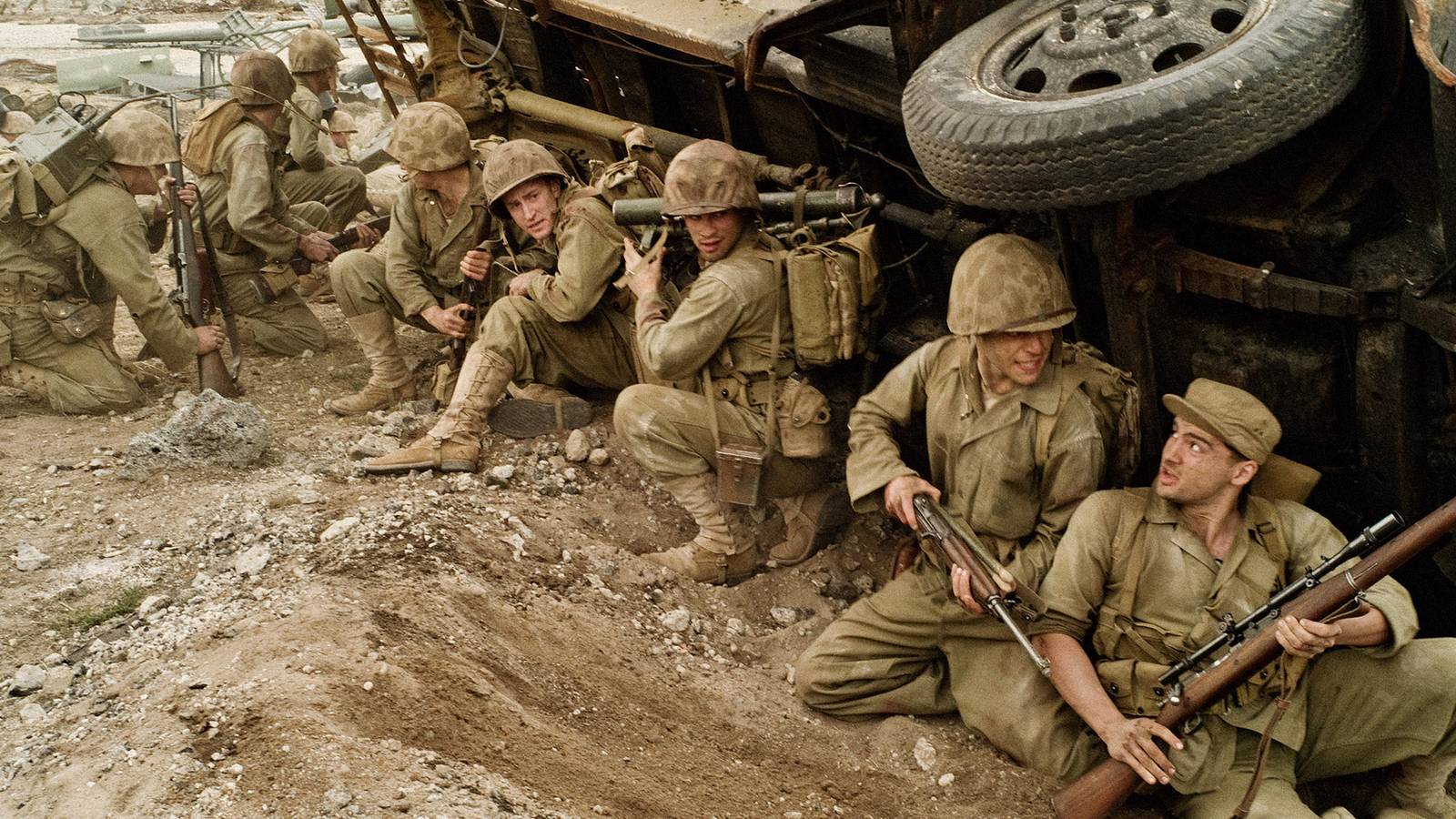
Before Saving Private Ryan, Steven Spielberg and Tom Hanks had already proven their mettle in war storytelling, but it was their 2001 miniseries Band of Brothers that redefined the genre on television. Over two decades later, their collaboration has grown into an unofficial trilogy of acclaimed WWII dramas, with The Pacific (2010) and Masters of the Air (2024) following in its footsteps. While Masters of the Air took the action to the skies, The Pacific remains the darkest of the trio—and its grim realism is rooted in the extraordinary true experiences of the Marines it portrays.
Based on Real Heroism
Unlike Band of Brothers, which centered on a single company, The Pacific zooms in on three distinct soldiers: Robert Leckie (James Badge Dale), Eugene Sledge (Joseph Mazzello), and John Basilone (Jon Seda). Each served in different Marine divisions—Leckie in the 1st, Sledge in the 5th, and Basilone in the 7th—allowing the series to paint a broader picture of the Pacific Theater. The show drew from Sledge's memoirs With the Old Breed and China Marine, Leckie's Helmet for My Pillow, and Chuck Tatum's Red Blood, Black Sand, which detailed Basilone's actions at Iwo Jima. Real interviews with veterans were also woven into the broadcast, adding a layer of authenticity that historians praised.
A Darker Take on War
While Band of Brothers offered a clear-cut good-versus-evil narrative, The Pacific presents a more morally complex view. The true villain here is war itself. The series doesn't shy away from the psychological toll, showing Sledge's transformation from an optimistic recruit to a desensitized, haunted veteran. It's a stark reminder that the cost of conflict goes far beyond the battlefield.
Scope and Impact
The miniseries also expands its scope by showing the soldiers' lives before the war—Sledge's family skepticism, Basilone's Christmas dinners—making their eventual sacrifices even more poignant. The aftermath is equally explored, as seen in Sledge's struggles to readjust to civilian life. This comprehensive approach, combined with its record-breaking budget (the most expensive miniseries ever at the time), makes The Pacific a landmark in war television.
For those who want to dive deeper into the era, classic thrillers from the 1980s offer a different kind of tension, but nothing matches the raw power of The Pacific. And if you're curious about other HBO epics, the upcoming Welcome to Derry season promises its own brand of darkness.
Ultimately, The Pacific stands as a testament to the bravery of those who fought in the Pacific Theater—and a sobering reminder of what they endured. It's a must-watch for anyone who appreciates history told with unflinching honesty.