It's one thing for a movie trilogy to be great. Who could possibly deny that Francis Ford Coppola's Godfather trilogy—containing two of the most universally acclaimed movies in history—is one of the greatest trilogies of all time? It's a whole other thing, however, for a trilogy to be truly consistent. We're talking about movie trilogies that don't see any noteworthy dips in quality at any point, whose three installments are all, at the very least, great.
People looking for an exceptional new movie trilogy to watch but who'd rather not get into one that has at least one less-than-remarkable installment, these incredibly consistent series are proof that it's perfectly possible to make a trilogy and never miss a beat. From arthouse classics like the Three Colours trilogy to blockbuster franchises like the Planet of the Apes reboot series, we're exclusively talking about films that are absolutely exceptional from start to finish.
9. The Three Colours Trilogy
Krzysztof Kieślowski was arguably the greatest Polish filmmaker to have ever lived, a brilliant auteur behind some of the greatest European arthouse movies of the 20th century. Case in point: his Three Colours trilogy, a series of psychological dramas each focusing on one of the French Revolutionary ideas. Blue is about liberty, White is about equality, and Red is about fraternity.
Thematically, narratively, and stylistically, the Three Colours series is one of the most perfectly-structured movie trilogies in history. Though Red is almost universally agreed to be the best of the bunch and White is typically deemed to be the weakest, the difference isn't dramatic whatsoever. Kieślowski's perfectly unified creative vision makes for three of the most artistically gorgeous films of the '90s.
8. The Star Wars Original Trilogy
By this point, seeing as it's arguably the single biggest multimedia franchise in history, Star Wars needs pretty much no introduction. Back in 1977, however, expectations were quite low for A New Hope, which would end up taking the world by storm by becoming the highest-grossing film ever. Though neither The Empire Strikes Back nor Return of the Jedi were quite as successful, history has been nothing but kind to this trilogy, which is widely remembered as one of the most beloved in Hollywood history.
All three of the original Star Wars trilogy movies are masterpieces, and though The Empire Strikes Back may be the closest to true flawlessness of the three, they're all among the greatest science fantasy movies the big screen has ever seen. Despite all three films having been directed by different people, the artistic and creative consistency between each installment is remarkable, and the overarching Hero's Journey story of the defeat of the Galactic Empire is one of cinema's most iconic.
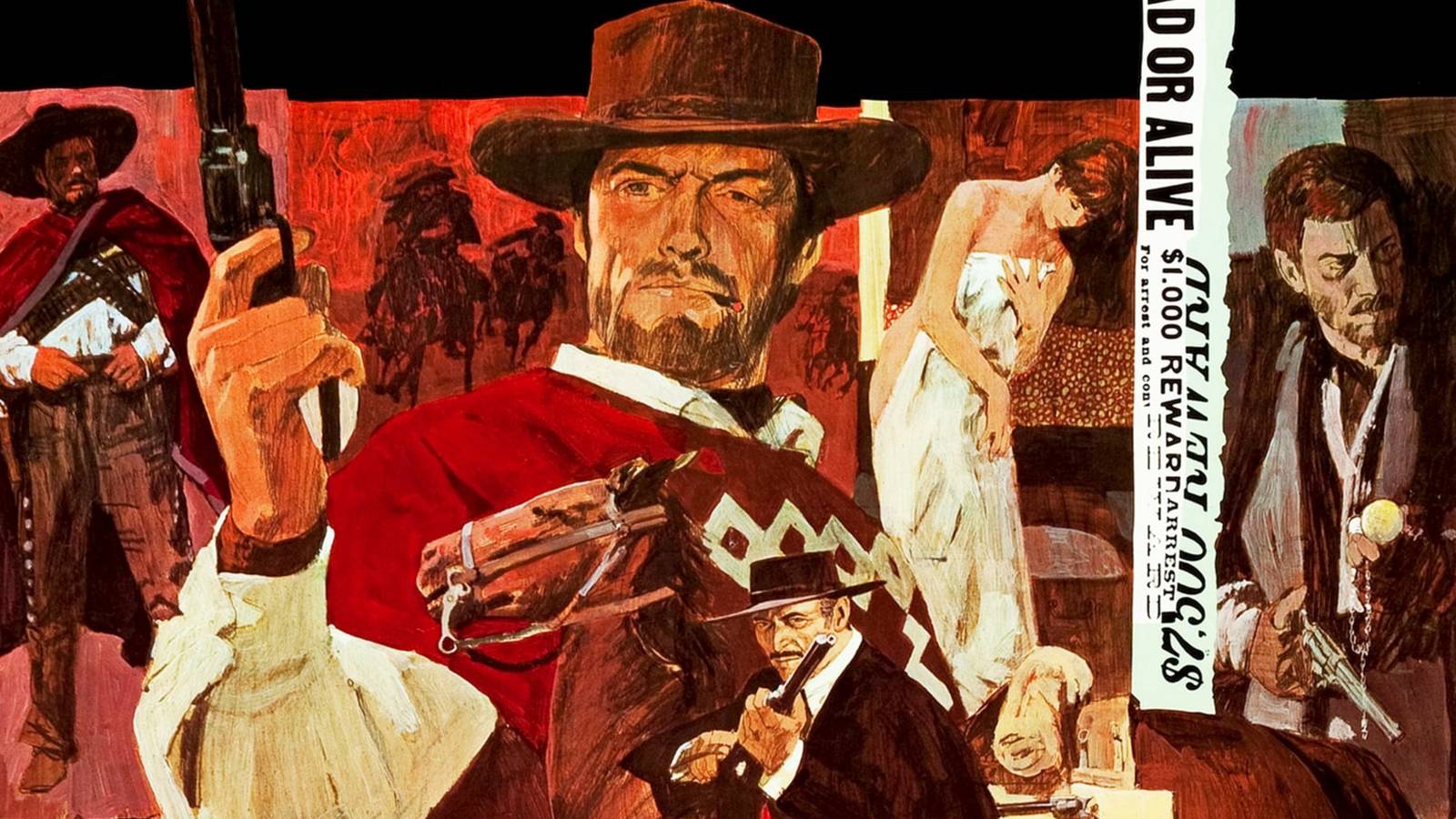
7. The Three Flavours Cornetto Trilogy
It was his sophomore feature effort, Shaun of the Dead, that put him on the map as one of the most exciting comedy filmmakers of his generation. He followed that up with Hot Fuzz, and during that movie's press tour, a journalist pointed out that a Cornetto ice cream cone had appeared in both movies, and asked if Wright was planning to make a trilogy. The joke stuck, and by the time he made The World's End, Wright made sure to include a Cornetto cone to cap off the self-parodying trilogy.
The three films don't share many similarities beyond their cast, crew, and Wright's creative style, but what they do share in common is that they're all among the most fun movies of the 21st century so far. Shaun of the Dead is one of the funniest and most subversive horror movies of the last few decades, Hot Fuzz is a police procedural unlike any other the world has ever seen, and The World's End is one of the most idiosyncratic alien invasion movies in history.
6. The Evil Dead Trilogy
When principal photography for The Evil Dead began back in 1979, Sam Raimi was only 20 years old. The film became an instant cult classic that even the critics lauded, making expectations for any sequels pretty much sky-high. With Evil Dead II and Army of Darkness, Raimi not only further cemented himself as one of the most special horror auteurs of his generation, but he also proved that his trilogy was in no way a one-hit wonder.
We are, after all, talking about three of the most fun horror movies of all time, absolute masterpieces that prove how much artistry there can be in low-budget gore and subversive scares. In terms of genre, tone, and continuity, this is actually one of the most inconsistent movie trilogies out there—but that's precisely where the consistency of its quality comes from. From start to finish, Raimi and his team created three of the most creative horror films the world had (or has) ever seen.
5. The Planet of the Apes Reboot Trilogy
Back in 1968, studio executives were somewhat skeptical of the level of success Planet of the Apes would be able to have. Thankfully, the film was a major critical and commercial hit immediately upon release; however, the franchise that followed it never quite achieved the same level of acclaim. That all changed with the reboot trilogy that began in 2011 with Rise of the Planet of the Apes, continued with Dawn of the Planet of the Apes in 2014, and concluded with War for the Planet of the Apes in 2017.
Each installment was directed by a different filmmaker (Rupert Wyatt, Matt Reeves, and Matt Reeves again), but all three share a remarkable consistency in tone, visual effects, and emotional depth. The motion-capture performances, led by Andy Serkis as Caesar, are groundbreaking, and the story of a planet on the brink of a new order is both thrilling and thought-provoking. This is a rare blockbuster trilogy that only gets better with each entry.
4. The Before Trilogy
Richard Linklater's Before trilogy is a cinematic miracle. It began with Before Sunrise in 1995, a romantic drama about two strangers who meet on a train and spend one night in Vienna. Nine years later, Before Sunset caught up with them in Paris, and another nine years after that, Before Midnight found them in Greece, now a married couple with children. The films are shot in near real-time, with long conversations that feel utterly authentic.
What makes this trilogy so consistent is its unwavering commitment to realism and emotional truth. Ethan Hawke and Julie Delpy deliver career-best performances, and Linklater's direction is so assured that each film feels like a natural extension of the last. There are no action set pieces or plot twists—just two people talking, and it's absolutely riveting.
3. The Lord of the Rings Trilogy
Peter Jackson's adaptation of J.R.R. Tolkien's epic fantasy is often cited as the gold standard for movie trilogies. Released in three consecutive years (2001, 2002, 2003), The Fellowship of the Ring, The Two Towers, and The Return of the King were all massive critical and commercial hits, with the final film sweeping the Oscars, including Best Picture. The trilogy is a monumental achievement in filmmaking, with groundbreaking visual effects, a sweeping score, and a cast that brings Middle-earth to life.
What's remarkable is how consistent the quality is across all three films. Each one is a masterpiece in its own right, and together they form a cohesive narrative that is both epic and intimate. Jackson's passion for the source material shines through in every frame, and the trilogy remains a benchmark for fantasy cinema.
2. The Godfather Trilogy
Francis Ford Coppola's Godfather trilogy is often considered the greatest in cinema history, and for good reason. The first two films are universally regarded as masterpieces, with The Godfather Part II often cited as one of the greatest sequels ever made. The third film, The Godfather Part III, is sometimes seen as the weakest of the three, but even it is a powerful and emotionally resonant conclusion to the Corleone saga.
What makes this trilogy so consistent is its exploration of power, family, and corruption, all anchored by Marlon Brando, Al Pacino, and Robert De Niro's iconic performances. Coppola's direction is flawless, and the films are filled with unforgettable scenes and dialogue. While the third film may not reach the heights of the first two, it's still a worthy conclusion to one of the greatest stories ever told on screen.
1. The Dark Knight Trilogy
Christopher Nolan's Dark Knight trilogy redefined the superhero genre and set a new standard for what comic book movies could be. Batman Begins (2005) rebooted the franchise with a gritty, realistic origin story, The Dark Knight (2008) elevated it to a crime epic with Heath Ledger's iconic Joker, and The Dark Knight Rises (2012) brought the saga to a powerful close. Each film is a masterclass in storytelling, with complex characters, moral dilemmas, and stunning action sequences.
What makes this trilogy the most consistent is its unwavering focus on Bruce Wayne's journey, from fear to hope, and the philosophical questions it raises about justice and chaos. Nolan's direction is impeccable, and the performances—especially Christian Bale's Batman and Ledger's Joker—are legendary. The trilogy is a rare example of a franchise that not only maintains its quality but actually improves with each installment.
These trilogies prove that consistency is possible in filmmaking, and they offer a perfect binge-watch for anyone looking for a satisfying, high-quality cinematic experience. For more great movie lists, check out our ranking of flawless thrillers or our apocalypse movies list.