Imagine a time when missing a single episode of a TV show meant waiting months—or forever—to find out what happened. No DVR, no on-demand, no "Are you still watching?" Just the shared experience of millions of people clearing their schedules to follow one story. That was the era of the network miniseries, and it was glorious.
These weren't just TV shows; they were cultural events. Families gathered around the set, coworkers debated plot twists at the water cooler, and fictional tragedies sparked real conversations. The productions were massive gambles, often spanning weeks and covering decades of story. While the special effects and fashion may have aged, the emotional power of these stories hasn't faded one bit. Here are the five greatest network miniseries of all time, ranked.

5. The Thorn Birds (1983)
Set against the sweeping Australian outback, The Thorn Birds tells the story of Meggie Cleary (Rachel Ward) and her lifelong, forbidden love for Father Ralph de Bricassart (Richard Chamberlain). Ralph is a Catholic priest torn between his devotion to God and his undeniable feelings for Meggie. Their relationship spans decades, complicated by Meggie's wealthy aunt Mary Carson (Barbara Stanwyck), who dangles a fortune in front of Ralph as a cruel temptation.
What makes this miniseries so compelling is the agonizing push-and-pull between the two leads. Chamberlain makes Ralph's indecision infuriating—you can see his love for Meggie, but he can't give up his ambition. Ward, meanwhile, gives Meggie a fierce dignity that keeps her from being a mere victim. The Australian landscapes are stunning, but it's the intimate, heartbreaking exchanges that linger. Every reunion between these two is weighted with the years they've lost, making The Thorn Birds a classic of the genre.
4. Shōgun (1980)
Before there was a hit FX series, there was the 1980 NBC miniseries Shōgun. Richard Chamberlain stars as John Blackthorne, an English navigator shipwrecked in feudal Japan. He's thrown into a world of samurai, political intrigue, and a language he doesn't understand. As he becomes entangled with the powerful Lord Toranaga (Toshiro Mifune), his fate becomes tied to a struggle for power that could get him killed.
One of the boldest choices of the original was to present much of the Japanese dialogue without subtitles, leaving viewers just as confused as Blackthorne. It's a brilliant move that puts you in his shoes. Mifune is commanding as Toranaga, and Yoko Shimada is unforgettable as Mariko, the interpreter who becomes Blackthorne's emotional anchor. Their connection is both tender and tragic, caught between duty and desire. Shōgun is a sweeping epic that respects its source material and delivers a truly immersive experience.
3. War and Remembrance (1988–1989)
This massive adaptation of Herman Wouk's novel picks up where The Winds of War left off, following the Henry family through the horrors of World War II. Robert Mitchum stars as Victor "Pug" Henry, a naval officer whose duties take him to the front lines, while his son Byron (Hart Bochner) desperately tries to rescue his Jewish wife Natalie (Jane Seymour) and their son from Nazi-occupied Europe.
The miniseries is unflinching in its depiction of the Holocaust, and producer-director Dan Curtis even filmed at Auschwitz itself, adding a chilling authenticity. The contrast between the grand military strategy and the intimate struggle of a family trying to survive is devastating. Watching Natalie and her uncle Aaron (John Gielgud) navigate the tightening noose of Nazi persecution is almost unbearable. War and Remembrance is a monumental achievement that reminds us of the human cost of war.
2. Lonesome Dove (1989)
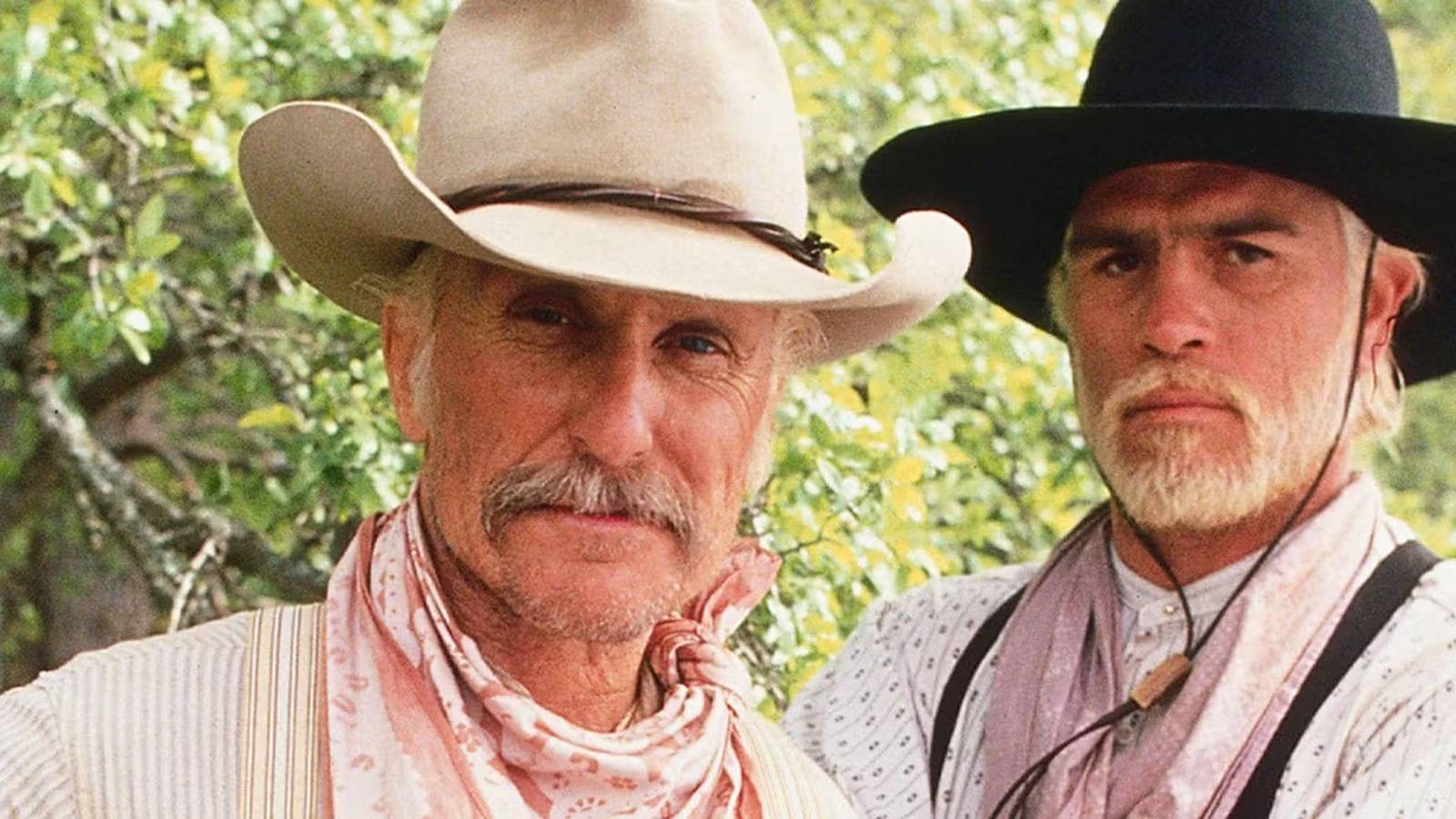
Based on Larry McMurtry's Pulitzer Prize-winning novel, Lonesome Dove is the quintessential Western miniseries. Robert Duvall and Tommy Lee Jones star as Gus McCrae and Woodrow Call, two retired Texas Rangers who decide to drive a cattle herd from the dusty border town of Lonesome Dove all the way to Montana. Along the way, they're joined by a colorful cast of characters, including the loyal scout Deets (Danny Glover) and the young cowboy Newt (Ricky Schroder).
What makes Lonesome Dove so special is the chemistry between Duvall and Jones. Gus is a talkative, romantic dreamer, while Call is stoic and practical. Their friendship is the heart of the story, and their banter is a joy to watch. But the frontier is unforgiving, and the journey takes a heavy toll. The miniseries doesn't shy away from the brutality of the Old West, making the triumphs and losses feel earned. It's a sprawling, character-driven epic that remains the gold standard for TV Westerns.
1. Roots (1977)
No list of great miniseries would be complete without Roots. This groundbreaking adaptation of Alex Haley's novel traced his family's history from slavery in Africa to freedom in America. It was a cultural phenomenon, watched by over 130 million people and sparking a national conversation about race and history.
Roots was more than just a TV show; it was a reckoning. It forced America to confront the brutal reality of slavery in a way that had never been done before. The performances, led by LeVar Burton as Kunta Kinte, are powerful and heartbreaking. The story spans generations, showing the resilience and strength of a family determined to survive. Roots didn't just entertain; it educated and changed the way we think about television's potential. It remains the most important miniseries ever made, and its impact is still felt today.
These five miniseries proved that network TV could deliver epic, emotionally resonant storytelling. They were events that brought people together, and they set the standard for the limited series we love today. If you haven't seen them, they're well worth your time—even if you have to wait a week for the next episode.