For decades, the "funny pages" have been a daily ritual for millions, but calling them just funny undersells the artistry and depth these tiny panels can hold. Comic strips have a unique power: they build entire universes in a few inches of space, using just a handful of panels and speech bubbles. They arrive with your morning coffee, become part of your routine, and before you know it, you're invested in the lives of characters who feel like old friends. The best strips don't just make you laugh—they make you think, feel, and see the world differently. Here are the five greatest comic strips of all time, ranked.
5. Calvin and Hobbes
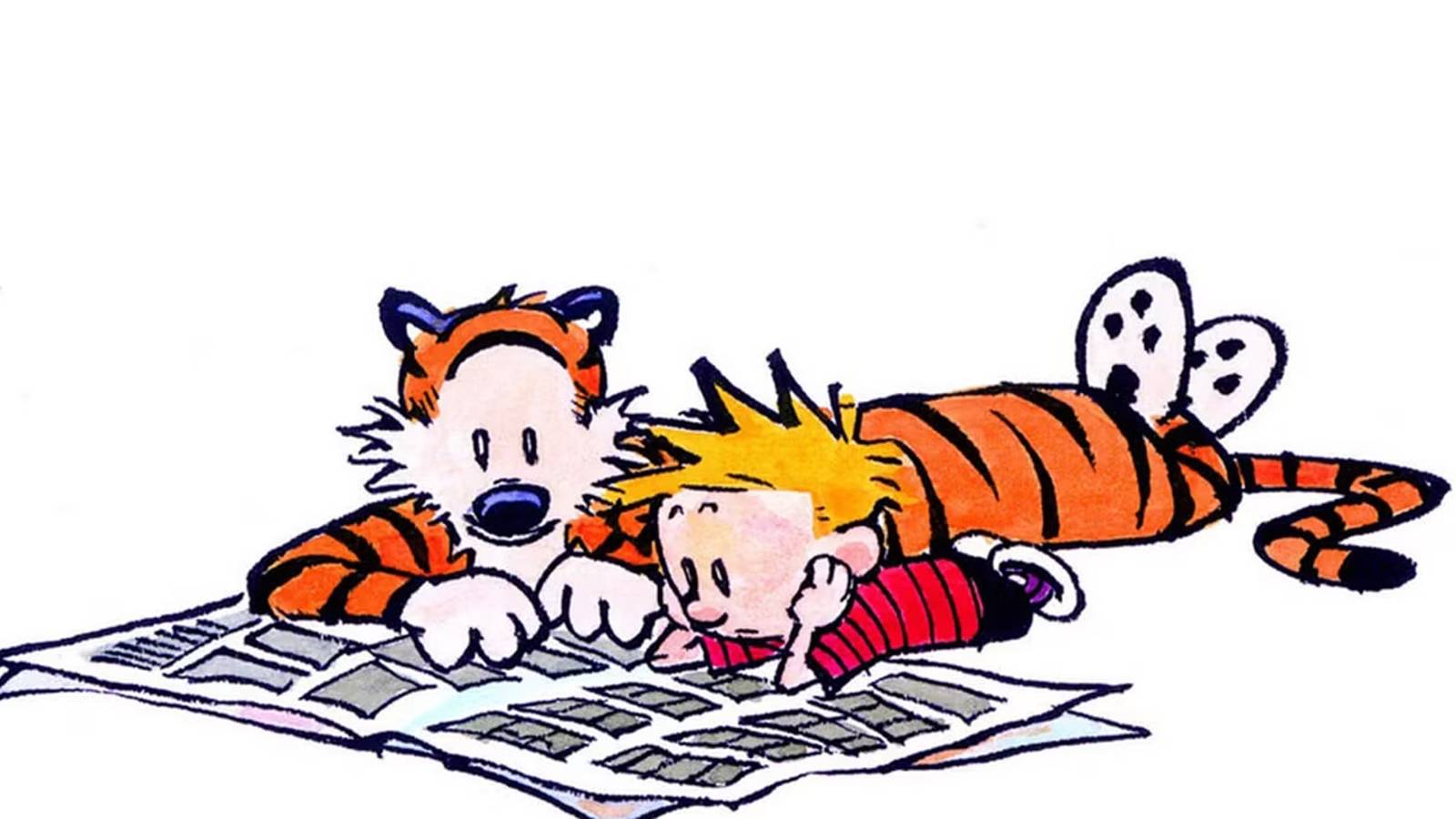
Bill Watterson's Calvin and Hobbes ran for just a decade, but in that time, it packed in more ideas than most strips manage in a lifetime. The story follows six-year-old Calvin and his stuffed tiger Hobbes, who springs to life only when they're alone. Is Hobbes real, or just a figment of Calvin's wild imagination? Watterson never tells us, and that ambiguity is the heart of the strip. We see the world through Calvin's eyes—a place where snowmen become monsters and cardboard boxes turn into time machines—and we're invited to laugh with him, not at him.

The artwork is just as revolutionary as the writing. Watterson fought against the rigid grid of standard newspaper panels, especially in his Sunday strips, where he'd let a single, breathtaking scene sprawl across the page. Each strip looked different because it reflected Calvin's ever-changing imagination. The series ended on a perfect note, with Calvin and Hobbes heading into a pristine, snow-covered landscape—a symbol of all the adventures still waiting for them.
4. Peanuts
Charles Schulz's Peanuts gave us Charlie Brown, the lovable loser who never gives up, no matter how many times Lucy pulls the football away. But the strip is so much more than that. It's a deep, often melancholy look at childhood anxieties—the fear of not being liked, the sting of rejection, the quiet hope that tomorrow might be better. Each character carries their own insecurities, and Schulz never offers easy fixes. Instead, he suggests that disappointment is just part of life, and that's okay.
Snoopy provides the comic relief, but even he has layers. The strip's simple, clean art style—with lots of white space and minimal detail—became its signature, making it instantly recognizable for nearly 50 years. More than 75 years after its debut, Peanuts continues to spawn new TV specials and movies, proving that Schulz's little neighborhood is truly timeless. If you're looking for more comfort viewing, check out our list of joyful TV shows from the 2000s.
3. Mafalda
At first glance, Mafalda seems like a cute strip about a curious little girl, but Argentine cartoonist Quino used her to deliver sharp social commentary on everything from war and poverty to racism and politics. Mafalda sees the absurdity in the adult world, and her innocent questions expose how ridiculous our grown-up problems really are. She constantly challenges the assumptions of her parents and friends, but Quino never turns it into a lecture—it's just kids talking, and that's what makes it so powerful.
Her friends each represent a different worldview: one is obsessed with business, another dreams of marriage, and one is insufferably self-important. This mix lets Quino explore big ideological debates while keeping the strip grounded in the rhythms of childhood conversation. Translated into 26 languages and selling over 20 million books, Mafalda has become an international symbol of social criticism, and its relevance hasn't faded a bit.
2. Gasoline Alley
Frank King's Gasoline Alley changed the game by introducing real-time continuity to comics. It started as a strip about car enthusiasts, but in 1921, everything changed when baby Skeezix was left on the doorstep of Walt Wallet. From then on, the strip followed Skeezix as he grew up, aged, and started a family of his own—in real time. This was revolutionary, and it made readers feel like they were growing up alongside the characters.
The strip's warmth and humanity set it apart. It wasn't just about gags; it was about the everyday joys and struggles of ordinary people. Gasoline Alley ran for over a century, a testament to its enduring appeal. It's a reminder that sometimes the most powerful stories are the ones that simply reflect our own lives back at us.
1. The Far Side
Gary Larson's The Far Side is a masterclass in single-panel absurdity. It's a world where cows plot revenge, dinosaurs smoke cigarettes, and the laws of physics are mere suggestions. Larson's surreal humor is unlike anything else in comics, and it's earned a devoted following that still quotes his gags decades later. The strip's genius lies in its ability to find the bizarre in the mundane, making us laugh at the strangeness of existence.
Whether it's a caveman inventing the wheel or a duck pondering the meaning of life, The Far Side never fails to surprise. It's a strip that rewards rereading, and its influence can be seen in countless comedians and cartoonists. For a taste of its wilder side, check out our roundup of The Far Side's wildest dinosaur comics. It's no wonder it tops our list—it's simply the best.
These five strips prove that comics are more than just a quick laugh. They're art, commentary, and companionship. Whether you're a fan of Calvin's imagination, Charlie Brown's resilience, Mafalda's wit, Skeezix's journey, or Larson's weirdness, there's a strip here for everyone. And if you're in the mood for more ranked lists, we've got plenty more, like the most bingeable miniseries or the best one-season sitcoms.