Science fiction has a way of making the impossible feel dangerously real. A scientist promises to end suffering, and you're already bracing for the fallout. The best of the genre doesn't just dazzle with big ideas—it grounds them in the messy, stubborn, all-too-human choices that follow. These five miniseries do exactly that, ranking from the merely excellent to the absolutely essential.
5. Devs (2020)
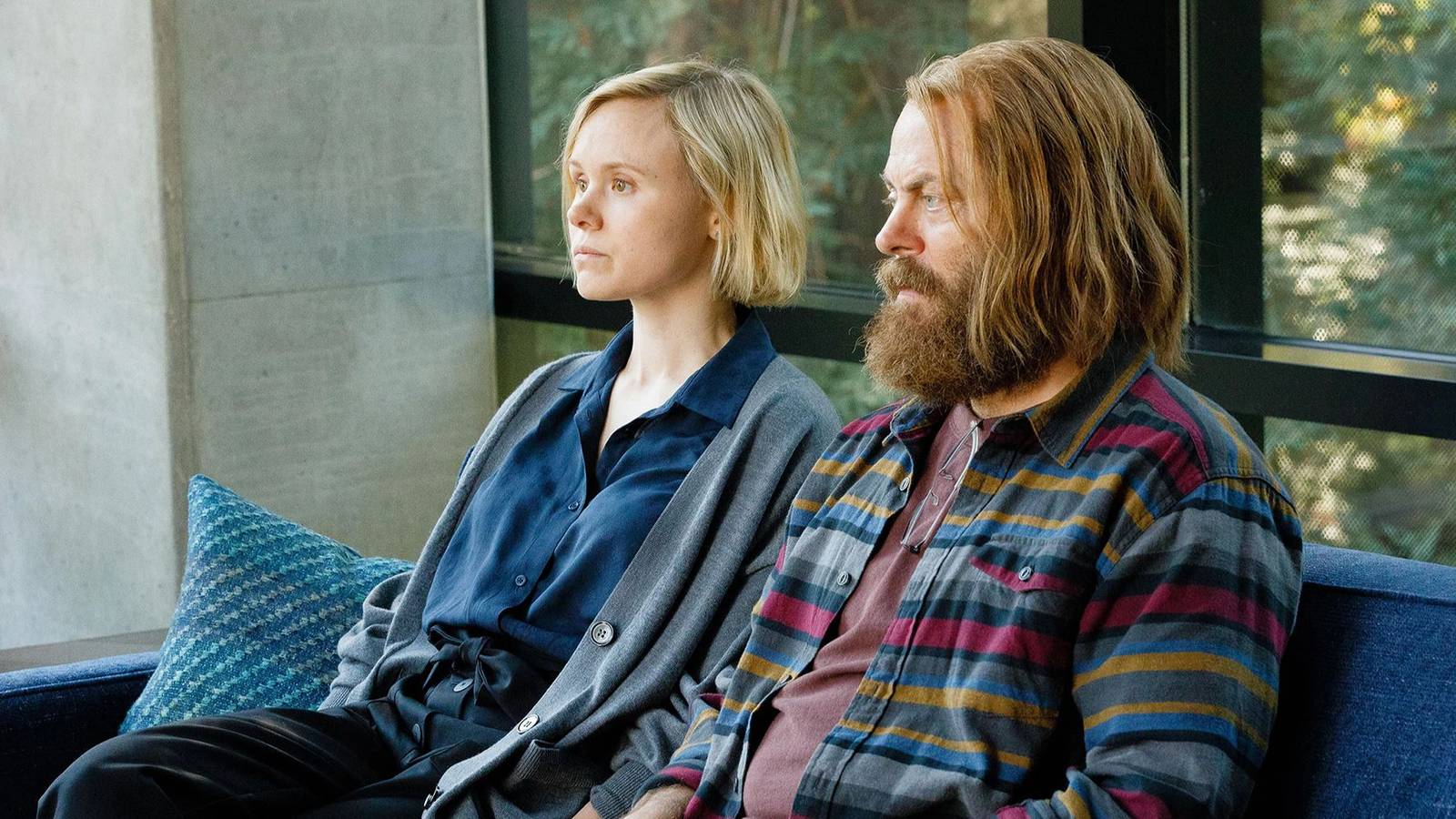
Alex Garland's Devs starts as a corporate mystery and spirals into a profound meditation on free will. When software engineer Lily Chan (Sonoya Mizuno) loses her boyfriend Sergei shortly after he joins a secretive division at tech giant Amaya, she digs into the company's inner sanctum. There, she confronts CEO Forest (Nick Offerman), whose quantum computer can predict—or even replay—the past and future.
Forest is a fascinating antagonist because his godlike ambition springs from a father's grief. He's lost his daughter and can't accept a universe without her. Garland shoots the research facility like a cathedral, and the philosophical clash between Forest's determinism and Lily's defiant agency becomes achingly personal. A simple walk across a room carries the weight of existence. It's a slow burn that rewards patience, and it's a must-watch for fans of mind-bending psychological thrillers.
4. 11.22.63 (2016)
What if you could step through a diner's back door and land in 1960, with a mission to stop the Kennedy assassination? That's the premise handed to English teacher Jake Epping (James Franco) in this Stephen King adaptation. But as Jake immerses himself in the past, he discovers history pushes back—and that his mission may cost him everything.
The real hook is Jake's romance with school librarian Sadie Dunhill (Sarah Gadon). Suddenly, saving the world isn't the only thing at stake. Every day he spends building a life with Sadie makes the mission harder. Bridget Carpenter's adaptation turns time travel into a love story, and the final choice is gut-wrenching. It's a reminder that the biggest battles are often the ones we fight with our own hearts.
3. Maniac (2018)
In Maniac, a malfunctioning computer is the least of your worries. Annie (Emma Stone) and Owen (Jonah Hill) are two broken souls who volunteer for a pharmaceutical trial that promises to cure their psychological pain. The treatment drops them into elaborate simulated realities—one involving a stolen lemur, another a noir crime saga—where they confront their deepest traumas.
Director Cary Joji Fukunaga gives each simulation its own wild personality, but the emotional core stays steady. Annie grieves her sister; Owen feels invisible to his family. Their friendship, forged in the chaos of the experiment, becomes the real cure. It's a weird, wonderful, and surprisingly moving journey that proves connection beats technology every time.
2. Station Eleven (2021–2022)
When a pandemic wipes out most of humanity, young actress Kirsten Raymonde (Matilda Lawler) is taken under the wing of a stranger named Jeevan (Himesh Patel). Twenty years later, an adult Kirsten (Mackenzie Davis) travels with a Shakespeare troupe, performing for scattered survivors. The series weaves between these timelines, linking characters through art, memory, and a mysterious comic book.
The standout episode, "Goodbye My Damaged Home," finds Jeevan, Kirsten, and his brother Frank (Nabhaan Rizwan) sheltering in an apartment while the world collapses. Frank raps along to A Tribe Called Quest, and for a few minutes, they're just three people enjoying a moment. That memory becomes devastating later. Patrick Somerville's adaptation of Emily St. John Mandel's novel is a tender, hopeful meditation on what we carry forward. It's no surprise it's been hailed as one of the best miniseries of the decade.
1. The Leftovers (2014–2017)
Okay, it's not technically a miniseries—it ran three seasons—but it's the perfect sci-fi story about the aftermath of an impossible event. Two percent of the world's population vanishes in an instant, and the show follows those left behind as they grapple with grief, faith, and the search for meaning. Damon Lindelof's masterpiece is less about the mystery and more about the people trying to live with it.
From the haunting opening to the transcendent finale, The Leftovers is a masterclass in emotional storytelling. It asks the hardest questions—why do we suffer, and how do we keep going?—and answers them with raw, unflinching humanity. It's the kind of show that stays with you long after the credits roll, and it's the gold standard for sci-fi that feels achingly real. If you're new to it, prepare for a journey that will break your heart and put it back together.
These miniseries prove that the best sci-fi isn't about the gadgets—it's about the people. Whether they're wrestling with fate, love, or the end of the world, these characters remind us that the most extraordinary stories are the ones that feel human.