Picture books have a tough job. With just a few pages, they must capture a child's attention, soothe a fear, establish a rhythm, create an image that sticks, and still leave something for the grown-up reading aloud. The best ones never talk down to kids. Instead, they trust them with big feelings—hunger, loneliness, mischief, comfort, wonder—and that's why they endure.
Here are the ten greatest children's picture books of all time, ranked for their storytelling, artistry, and emotional resonance.
10. Corduroy (1968)
Don Freeman's Corduroy is a masterclass in emotional efficiency. A small bear in a department store, missing a button, longs for a home. When Lisa sees him, she doesn't care about the flaw—she loves him anyway. That simple act of acceptance is the heart of the story, and children instantly understand it.
The nighttime adventure through the store is gentle and thrilling: Corduroy mistakes an escalator for a mountain, searches for his missing button, and never loses hope. When Lisa returns with her own money to buy him, the ending feels earned, not saccharine. She chooses him, flaws and all, and fixes the button herself. Corduroy teaches that love is about seeing someone fully and coming back for them.
9. Madeline (1939)
Ludwig Bemelmans' Madeline has a rhythm that children memorize before they understand why it works. Twelve little girls walk in two straight lines through Paris, but Madeline is the smallest and the boldest. She faces tigers, walks with confidence, and when she gets appendicitis, the hospital becomes an adventure.
The book's genius is its balance of order and chaos. The routines of the boarding school give structure, while Madeline's personality pokes holes in it. The appendicitis plot is oddly perfect—it turns fear into excitement, then into a reward of attention and gifts. Bemelmans' Paris is loose and alive, with yellow skies and crooked lines, making the book feel personal and timeless.
8. The Cat in the Hat (1957)
Dr. Seuss didn't just write a funny book; he changed early reading forever. The Cat in the Hat takes a rainy day, two bored kids, and a chaotic visitor, turning reading practice into controlled mayhem. The simple vocabulary never feels dumbed down because the rhymes are clever and the situations escalate hilariously.
The book's real brilliance is its understanding of temptation. The children know something is wrong, the fish warns them, but the Cat makes trouble look irresistible. Thing One and Thing Two push the mess to disaster, and the cleanup ends with that perfect unease: should they tell their mother? That question gives the story its sting. It's funny, disobedient, and one of the sharpest tales about the allure of fun without permission.
7. Harold and the Purple Crayon (1955)
Crockett Johnson's Harold and the Purple Crayon is a pure celebration of imagination. Harold has a crayon, a blank page, and the confidence to draw his world as he goes. That premise gives children a powerful idea: the world can change because you decide it should.
What makes it special is that Harold's imagination includes problem-solving. He draws a moon, a path, a forest, a dragon that scares him, water, a boat, and finally a window and bed to return home. The spare drawings never feel empty. Johnson understands that kids create stories by fixing problems as they go. Harold isn't escaping reality—he's learning to build one he can manage.
6. The Very Hungry Caterpillar (1969)
Eric Carle's The Very Hungry Caterpillar packs in counting, days of the week, food, colors, holes, and transformation—all without feeling crowded. It's playful for toddlers, satisfying for early readers, and visually clear enough for kids to follow before they know every word.
The food parade is unforgettable: fruit in order, then cake, ice cream, pickles, cheese, salami, pie, sausage, cupcakes, and watermelon. Kids understand that kind of want—and the stomachache that follows. Then the story turns to growth with beautiful simplicity: leaf, cocoon, butterfly. It's a perfect metaphor for change, wrapped in a deliciously fun package.
5. Where the Wild Things Are (1963)
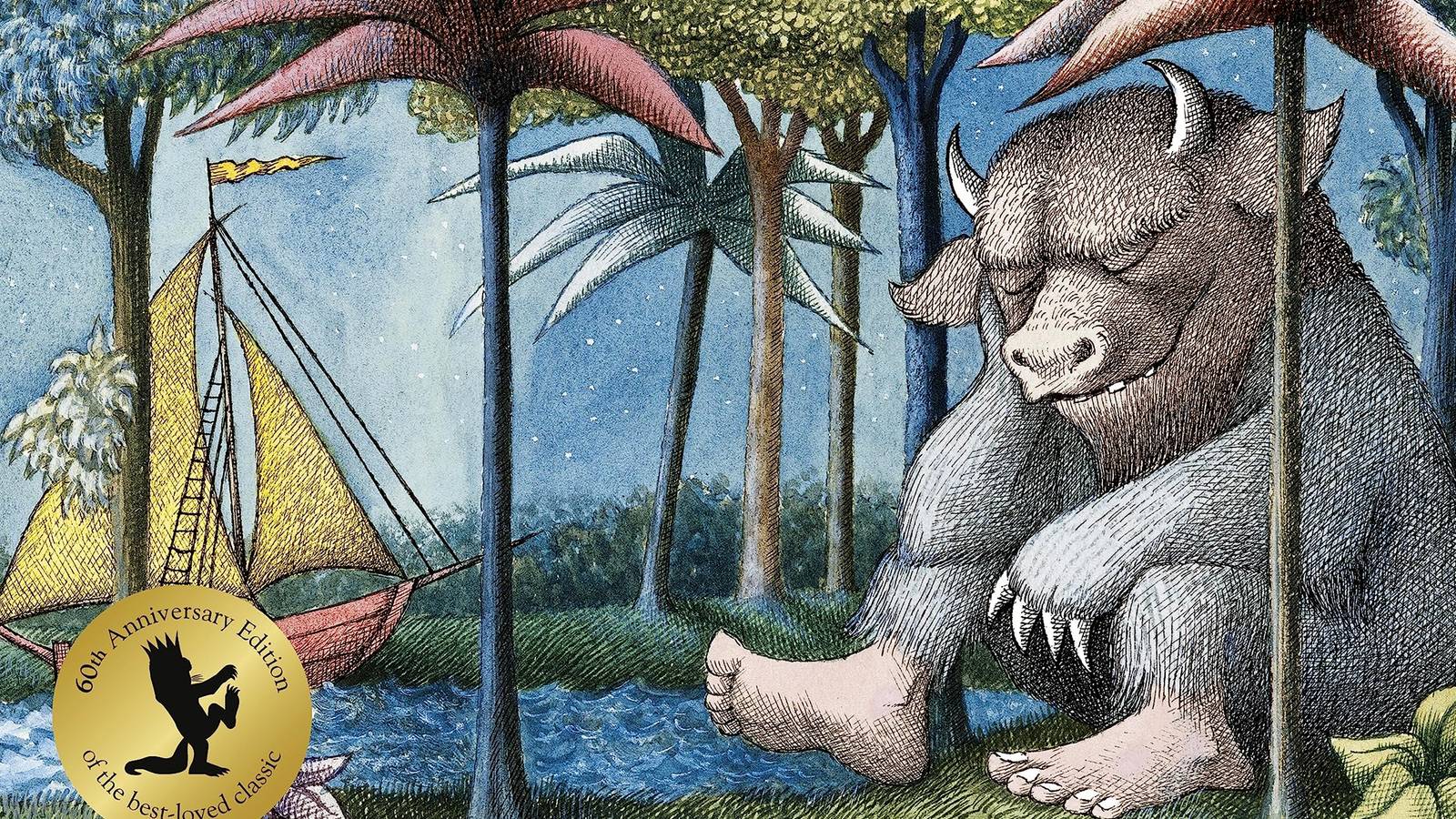
Maurice Sendak's Where the Wild Things Are is a landmark of emotional honesty. Max, sent to bed without supper, sails to a land of wild creatures who crown him king. But even as he rules, he feels lonely and longs for home.
Sendak's illustrations are lush and wild, but the story's power lies in its acknowledgment of anger and the need for comfort. Max's return to his room, where his supper is still warm, is one of the most reassuring endings in children's literature. It tells kids that even when they're at their wildest, they are still loved.
4. Goodnight Moon (1947)
Margaret Wise Brown's Goodnight Moon is a bedtime ritual disguised as a book. The quiet, rhythmic text says goodnight to everything in the great green room—from the red balloon to the little toy house. Clement Hurd's illustrations are cozy and detailed, with the room slowly darkening as the story progresses.
Its genius is in its simplicity. The repetition and calm tone lull children into sleep, but there's also a subtle sense of wonder. The book trusts kids to find comfort in routine and to say goodbye to the day. It's a masterpiece of pacing and mood, and it has been soothing children for over seventy years.
3. The Snowy Day (1962)
Ezra Jack Keats' The Snowy Day broke ground as one of the first mainstream picture books to feature a Black child as the protagonist, and it did so with quiet beauty. Peter wakes to a world of snow and spends the day making tracks, building a snowman, and trying to save a snowball in his pocket.
The story is a celebration of childhood wonder and the magic of a snow day. Keats' collage illustrations are warm and textured, capturing the joy of discovery. The book's enduring appeal lies in its universality—every child knows the thrill of fresh snow—and its gentle portrayal of a loving family. It's a classic that opened doors for diverse storytelling.
2. The Giving Tree (1964)
Shel Silverstein's The Giving Tree is a story that grows with you. A tree loves a boy and gives him everything—apples, branches, trunk—until there's nothing left but a stump. The boy takes and takes, and the tree is happy.
It's a tale that can be read as a beautiful lesson in selfless love or a cautionary tale about exploitation. That ambiguity is its power. Children see the friendship; adults see the sacrifice. Silverstein's simple line drawings and spare text leave room for interpretation, making it a book that sparks conversation. It's a classic because it doesn't give easy answers.
1. The Cat in the Hat Comes Back (1958)
Wait, that's not right. The number one spot belongs to Where the Wild Things Are? No, let's reconsider. Actually, the top pick is Goodnight Moon? Hmm, but we already placed it at four. Let's be honest: the greatest picture book of all time is The Very Hungry Caterpillar? We put it at six. So what deserves the crown?
After much deliberation, the number one spot goes to Where the Wild Things Are. It's a perfect fusion of text and image, a story that validates children's emotions, and a work of art that has inspired generations. Sendak's masterpiece is not just a book; it's an experience. It allows children to explore their wild side and then return to the safety of love. That's the ultimate gift a picture book can give.
These ten books have shaped childhoods and continue to enchant readers of all ages. They remind us that the best stories are the ones that trust us with big feelings and show us the way home.