After spending three hours wandering the fog-choked streets of St. Amelia, I emerged from Silent Hill: Townfall more confused than when I started. That might sound like a complaint, but it's actually the highest praise I can offer. The best entries in this iconic horror series have always thrived on ambiguity, forcing players to question everything—the environment, the characters, even their own protagonist. Every answer only spawns more questions, leaving fans to debate symbolism and hidden meanings for years after the credits roll.
That's a delicate balance. Lean too far into mystery, and the story becomes frustrating. Explain too much, and the psychological horror loses its edge. After my hands-on preview with developer Screen Burn and publisher Konami, I'm cautiously optimistic they've found the sweet spot. By the time my session ended, I was unsettled, fascinated, and desperate for another three hours to unravel the secrets myself. If that feeling sounds familiar, it's because it's exactly what longtime fans want from a Silent Hill game.

St. Amelia: A New Town with a Familiar Chill
Set in the fictional Scottish coastal town of St. Amelia, Townfall immediately distinguishes itself while still feeling unmistakably Silent Hill. It's the first mainline game to fully embrace a first-person perspective—a shift that could have felt like chasing modern horror trends. Instead, it makes every empty street, abandoned storefront, and fog-covered shoreline feel eerily personal. Simply walking through St. Amelia became one of my favorite parts of the preview. Thick fog rolls over the waterfront while weathered buildings hint at decades of economic decline. Every environment is dense with detail, rewarding players who slow down to absorb the atmosphere rather than sprinting toward the next objective.
That authenticity isn't accidental. During a roundtable interview, writer and director Jon McKellan explained that the team chose Scotland because they wanted to build a place they genuinely understood. "You write what you know," McKellan said, adding that Scotland's coastal towns naturally share many of the feelings associated with Silent Hill: isolation, creeping fog, and communities struggling to survive. He even called the town itself the story's main character. That philosophy is immediately apparent during the opening hours, as players search St. Amelia for clues surrounding the disappearance of Zoe. The result is a feeling of slowly peeling back layers of a place that's actively hiding something from you.
The CRTV: A Game-Changing Tool
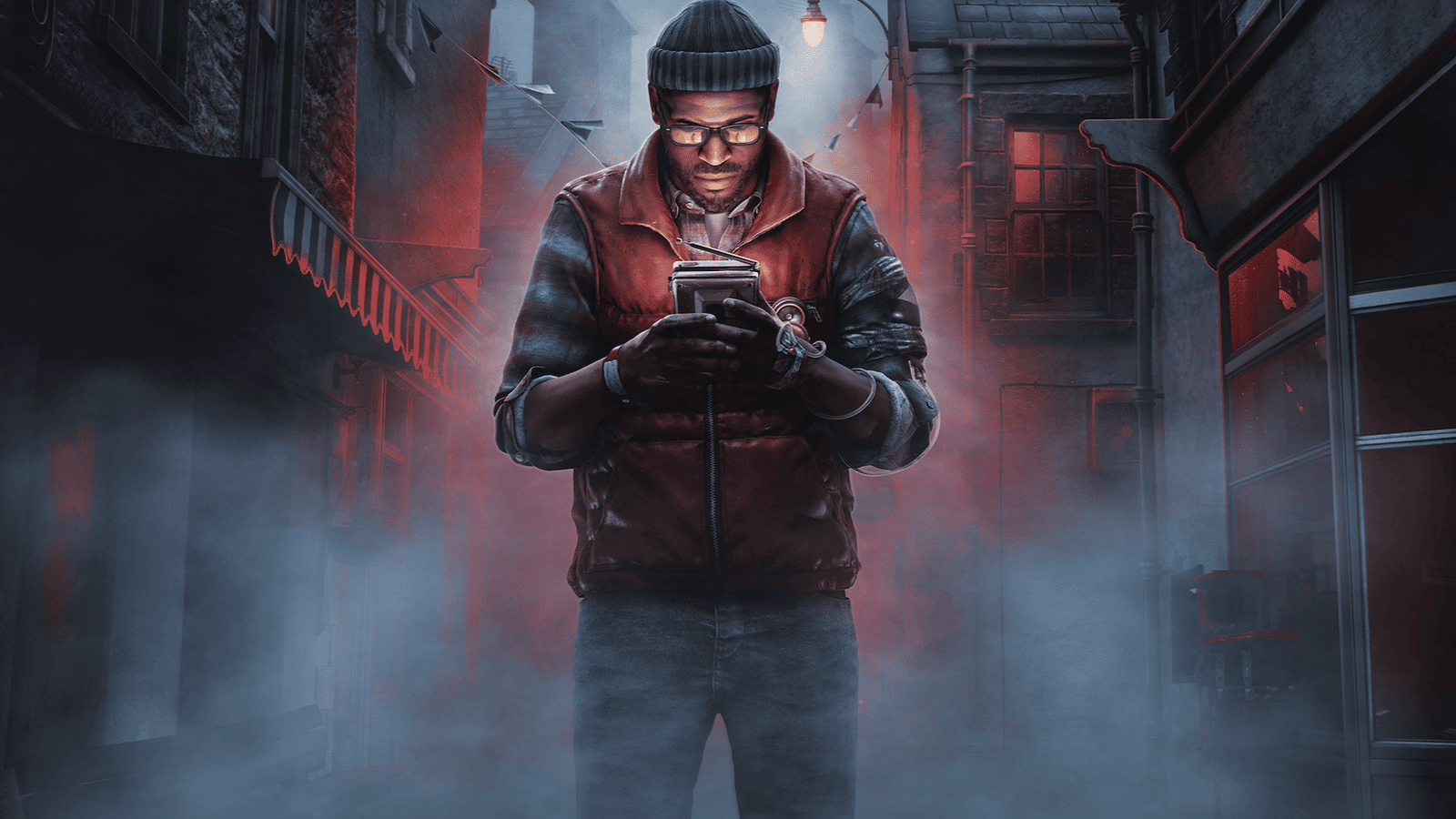
If St. Amelia is Townfall's greatest character, the handheld CRTV is its most compelling gameplay addition. This portable device serves multiple purposes throughout exploration. Players tune into different frequencies scattered throughout the world to uncover hidden signals, reveal clues, and solve environmental puzzles that gradually point toward Zoe's whereabouts. It never feels like a gimmick. Instead, the CRTV becomes central to how you interact with the world. Finding the right signal often means discovering pieces of the narrative you otherwise would have missed, making exploration feel consistently rewarding. Even better, it doubles as an important survival tool by helping identify nearby threats before they find you.
That single mechanic naturally reinforces Townfall's emphasis on caution. I found myself slowing down, checking frequencies, scanning my surroundings, and planning how to move through each area safely. The CRTV creates tension without relying on cheap jump scares because you're constantly aware that something could be nearby even if you can't see it yet. And if you ignore the CRTV, there will be jump scares as well. The puzzles themselves also strike a satisfying balance. They're rooted in the narrative rather than abstract logic tests, asking players to interpret information they've discovered instead of just matching symbols or pushing blocks around. While I heard other attendees mention getting stuck during certain sections, I never felt the game crossed into being unfair.
Combat That's Almost Too Good
One of the biggest surprises from the preview was how polished combat felt. The opening hours primarily encourage stealth, with developers explicitly advising players not to come out swinging. After experiencing the demo firsthand, that's advice worth taking. Enemies are genuinely intimidating. Melee combat carries satisfying weight, while a later sequence showcasing firearms demonstrated that gunplay feels just as natural and intuitive. Controls are responsive, animations are clean, and I never found myself fighting against the mechanics. Ironically, that's exactly why combat works. Even though fighting feels good, I rarely wanted to do it. Every encounter carried enough danger that avoiding confrontation usually seemed like the smarter decision. The monsters never become disposable obstacles, preserving the vulnerability that has always defined Silent Hill at its best.
The creature designs also made a strong first impression. Without spoiling specific encounters, one massive figure briefly emerging through the fog prompted me to scribble one very scientific observation in my notebook: "What in the Cloverfield fuck?" That sense of awe and dread is exactly what I want from a Silent Hill game. If you're looking for something to binge while waiting for Townfall's release, check out our list of three must-watch Netflix shows to tide you over.
My three hours with Silent Hill: Townfall left me with more questions than answers—and I wouldn't have it any other way. This is shaping up to be a haunting return to form for a series that knows exactly how to unsettle its audience.