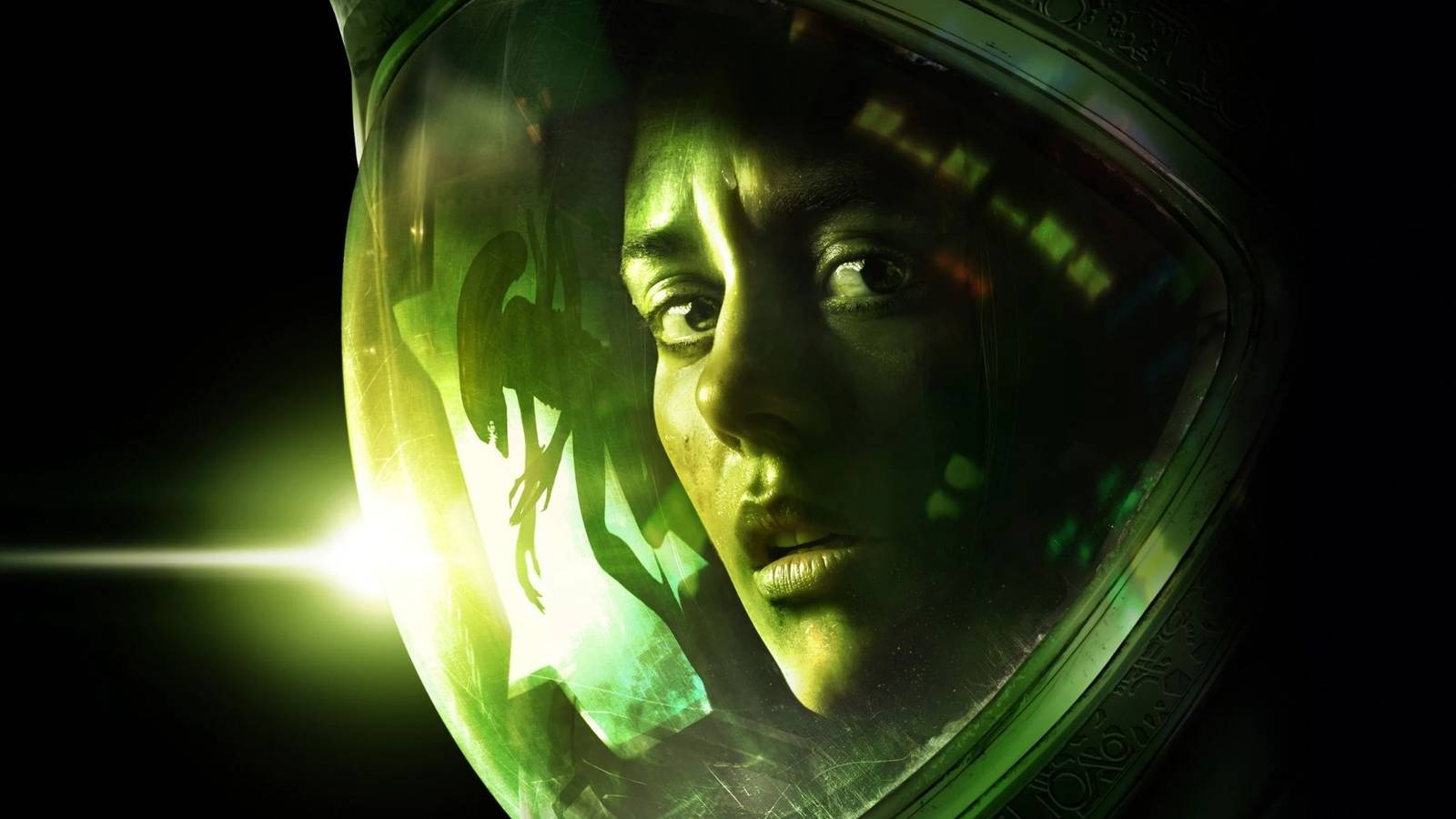
Science fiction has always been a genre of dual purpose. On one hand, it's a thrilling escape—a ticket to distant galaxies, parallel dimensions, or far-off futures where humanity grapples with extraordinary technology. On the other, it's a cerebral workout, a chance to stretch your brain around concepts that defy everyday logic. The best sci-fi doesn't just entertain; it challenges you to question the very fabric of existence.
Science is rooted in reason, but fiction dares to take those principles into uncharted territory, exploring what happens when theories are pushed to their breaking points. It's one thing to study physics in a lab, but quite another to imagine a world where the laws of nature themselves are up for grabs. These books do exactly that, forcing readers to think beyond the familiar and speculate about futures that could be. From a planet with three suns to the unsettling idea that consciousness might be holding us back, here are the most mind-bending sci-fi books of all time, ranked.

5. Solaris (1961)
Stanisław Lem's Solaris has inspired multiple film adaptations, including those by Andrei Tarkovsky and Steven Soderbergh—and for good reason. The story follows psychologist Kris Kelvin as he arrives at a research station orbiting the planet Solaris, which is almost entirely covered by a mysterious, living ocean. For decades, scientists have tried to communicate with this alien entity, but no one has come close to understanding it. Then, the ocean begins creating physical replicas of people from the researchers' memories. For Kelvin, that means confronting Harey, his deceased lover whose suicide still haunts him.
Sci-fi fans are used to aliens as strange creatures or advanced civilizations with their own languages and customs. Solaris flips that idea by imagining an intelligence that is a vast ocean—no humanoid form, no recognizable communication. Lem explores the possibility of a mind that operates completely differently from ours, leaving readers to interpret the visions it produces. The ocean's consciousness might be spread across its entire planetary body, making concepts like thought, communication, and self-awareness almost impossible to apply.
4. Blindsight (2006)
In Peter Watts's Blindsight, it's 2082, and humanity's first contact with extraterrestrial life comes as thousands of mysterious objects burn through Earth's atmosphere. A crew of five transhuman specialists, led by a genetically resurrected vampire, boards the antimatter-powered ship Theseus to investigate a strange alien signal near the edge of the solar system. They discover Rorschach, a massive alien structure inhabited by highly intelligent organisms called Scramblers. But these creatures seem to function without self-awareness, challenging everything we think we know about intelligence and evolution.
The novel tackles a profound philosophical question: Is intelligence truly dependent on consciousness? The title refers to a real neurological condition where people with visual cortex damage can respond to visual stimuli without consciously seeing them. Watts takes this idea further, suggesting that consciousness might not be necessary for survival. It's a classic logic-versus-emotion debate, but with a darker evolutionary twist. The book challenges the notion that self-awareness makes humans superior, proposing that a species without ego or conscious thought could actually outcompete us. It presents human consciousness as a potential evolutionary disadvantage rather than the advantage we've always assumed.
3. The Three-Body Problem (2008)
Now a hit Netflix series, Liu Cixin's The Three-Body Problem begins during China's Cultural Revolution, when astrophysicist Ye Wenjie becomes involved in a secret military project searching for extraterrestrial life. After receiving a message from an alien civilization on a planet called Trisolaris, she makes a decision that endangers humanity's future. Centuries later, Earth discovers that an alien invasion is on the way—and the Trisolarans have already found a way to interfere with human scientific progress, preventing us from preparing for what's coming.
The three-body problem is a real concept in classical physics, describing how three objects like planets or stars affect each other through gravity. Liu takes this idea to a cosmic scale by imagining a planet with three suns instead of one. Their gravitational pull creates chaotic movements, causing the planet to swing between extreme heat and freezing cold. Unlike Earth's stable orbit around a single sun, a planet caught between three competing suns would struggle to maintain a livable climate. One sun is already precarious enough for humanity, let alone three chaotic ones.
2. Anathem (2008)
Neal Stephenson's Anathem is a dense, sprawling novel that blends philosophy, mathematics, and alternate realities. Set on a world where scientists and philosophers live in isolated monasteries, the story follows a young avout named Erasmas as he uncovers a conspiracy that threatens not just his world, but the entire universe. The book explores concepts like quantum mechanics, the nature of consciousness, and the possibility of multiple universes, all while weaving in a gripping narrative about a mysterious alien artifact.
What makes Anathem so mind-bending is its willingness to dive deep into complex scientific and philosophical ideas, treating them as integral to the plot rather than window dressing. Stephenson creates a world where knowledge is both revered and feared, and where the boundaries between reality and abstraction blur. It's a challenging read, but one that rewards patience with profound insights about the nature of existence.
1. Dune (1965)
Frank Herbert's Dune is often hailed as the greatest sci-fi novel ever written, and for good reason. Set on the desert planet Arrakis, the story follows Paul Atreides as he becomes embroiled in a struggle for control of the planet's most valuable resource: the spice melange, which grants extended life and heightened awareness. But Dune is more than just a political thriller; it's a deep exploration of ecology, religion, and human potential.
Herbert's world-building is unparalleled, creating a universe where every detail—from the sandworms to the Bene Gesserit sisterhood—feels meticulously crafted. The novel challenges readers to think about the consequences of messianic figures, the dangers of absolute power, and the delicate balance of ecosystems. Its themes are so layered that each reread reveals new depths, making it the ultimate mind-bending sci-fi experience.
These books are not just stories; they're intellectual adventures that push the boundaries of what we think is possible. Whether you're a seasoned sci-fi fan or new to the genre, each of these novels offers a unique and thought-provoking journey. For more great reads, check out our list of thriller novels since 2000 or top Stephen King books.