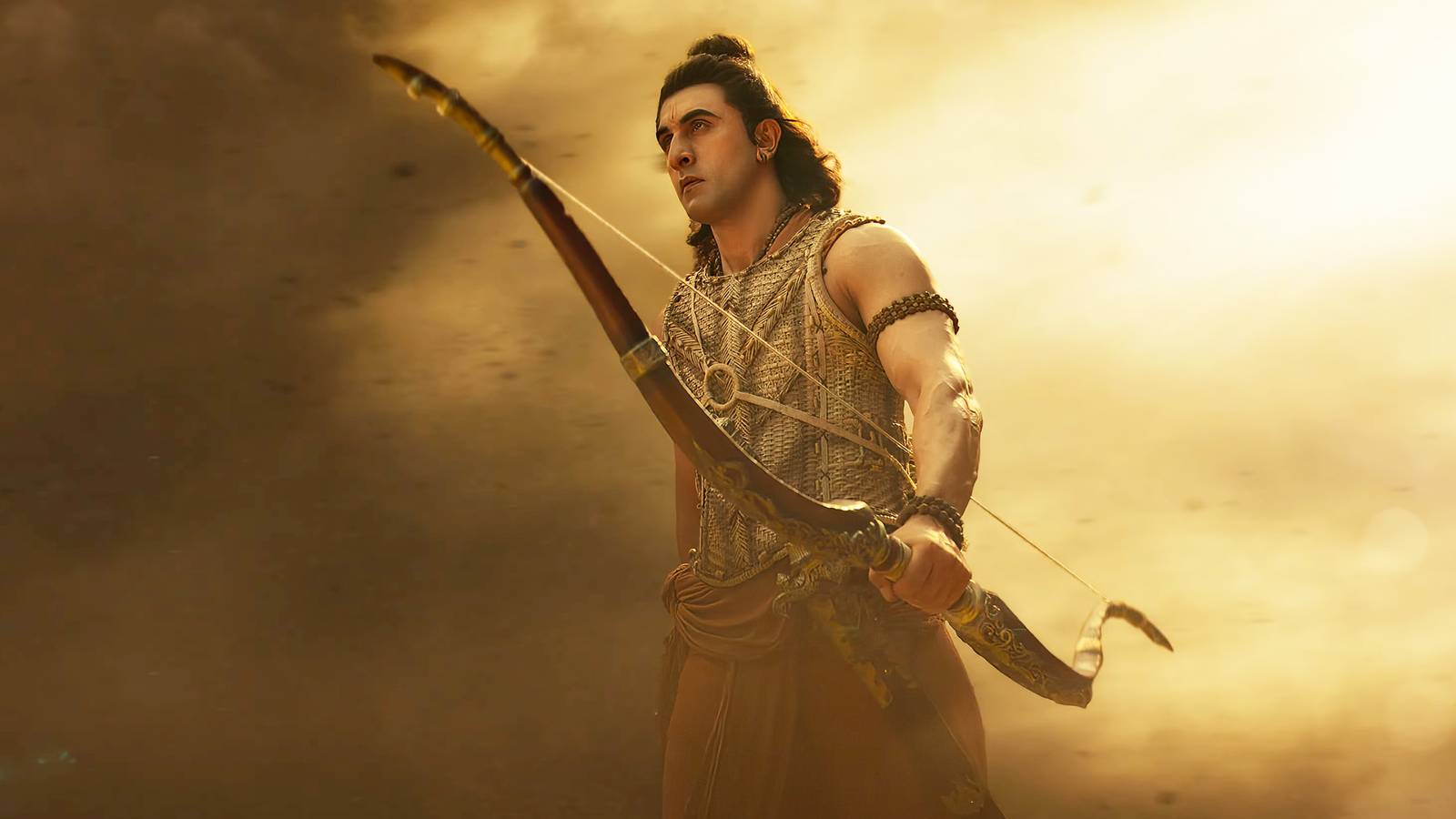
India's most ambitious cinematic venture yet, Ramayana: Rise of a Legend, has hit theaters with a splash—but perhaps not the kind its backers were hoping for. The two-part mythological epic, which carries a reported production price tag of $200 million for this first installment, managed to collect roughly $55 million worldwide during its opening weekend. That figure, while impressive for many films, represents just over a quarter of its budget, leaving industry watchers questioning whether the project can recoup its massive investment.
The film, directed by Nitesh Tiwari—known for helming the global blockbuster Dangal—claimed the fifth spot on the domestic box office chart, sandwiched between international titles. It landed behind Japan's Godzilla Minus Zero, which took the top slot with a record-breaking performance. The kaiju sequel, a follow-up to the Oscar-winning Godzilla Minus One, continues to defy expectations, having already grossed over $110 million worldwide against a modest $10 million budget. Its predecessor's success, including a Best Visual Effects Academy Award and a 99% critics' score on Rotten Tomatoes, has set a high bar; the new film currently holds a 90% critics' score.

For Ramayana, the numbers tell a more complicated story. Domestically, it earned $12 million over the weekend, with the bulk of its global haul coming from India, where it was strategically released to coincide with the Diwali festival. The film's producer, Namit Malhotra, has revealed that the entire two-part project carries a combined budget of around $400 million, with the sequel already slated for a 2028 release. Whether the first chapter's performance justifies moving forward with that plan remains an open question.
Audience reactions, however, have been notably warmer than the box office returns might suggest. Ramayana holds a “Verified Hot” 93% audience score on Rotten Tomatoes, alongside a 76% critics' score based on 50 reviews. This disconnect between critical reception and commercial performance echoes a pattern seen with other recent releases, such as the Jimmy Stewart biopic, which also struggled despite positive word-of-mouth.
The film adapts the ancient Hindu epic, following Lord Rama after his exile from Ayodhya, accompanied by his brother Lakshman and wife Sita. The narrative culminates in the demon king Ravana's abduction of Sita, setting the stage for the climactic battle between good and evil that will unfold in the sequel. Ravana's defeat, a cornerstone of the story, is celebrated by Hindus worldwide as Dussehra, while Rama's eventual return home marks Diwali—a timing choice that added cultural significance to the release.
Despite the financial uncertainty, Ramayana has found an audience in North America, where it is playing in nearly 1,500 theaters. The film's visual spectacle and epic scale have drawn comparisons to fantasy franchises like The Lord of the Rings, though its box office trajectory so far suggests it may not reach those heights. As the industry watches closely, the question remains: can this mythological saga turn its fortunes around, or will it become a cautionary tale about the risks of massive budgets? Only time—and the sequel's fate—will tell.