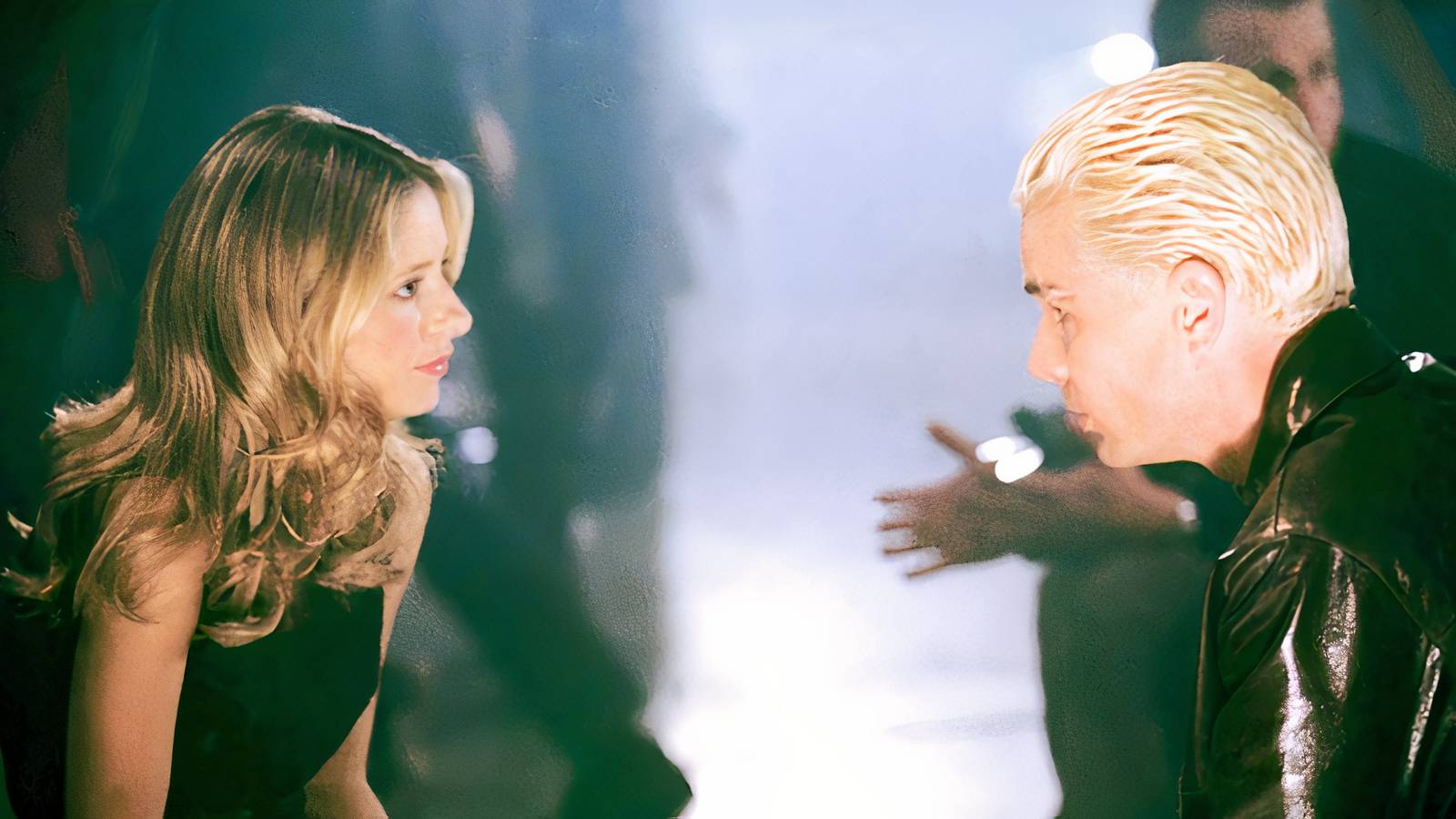
James Marsters, who played the beloved vampire Spike on Buffy the Vampire Slayer, has long been a fan favorite. But at a recent Fan Expo Boston, he shared a fascinating insight that might change how you see the entire series. Speaking with Collider's Steve Weintraub, Marsters revealed that his favorite sci-fi show is, unsurprisingly, Buffy—but not just because he was in it. He believes the show is a deliberate reworking of Shakespeare's Hamlet, and he's here to explain why.
For Marsters, the connection between Buffy and Hamlet is all about the themes of youth, despair, and finding a reason to keep fighting. "My favorite sci-fi show is Buffy the Vampire Slayer, because Buffy is an intentional reworking of the themes of Hamlet," he said. "It's an intentional reworking of Hamlet because it is basically an argument against teen suicide."
He went on to explain that Hamlet, at 18, is confronted with a world that seems utterly broken—his uncle has murdered his father and married his mother. "This is an 18-year-old watching that," Marsters noted. "In the middle of the play, he basically turns to the audience in the 'To be or not to be' speech and says, 'Hey, guys, I'm thinking of killing myself. I need help.'"
But where Hamlet ultimately ends in tragedy, Buffy offers a different message. Marsters pointed out that Hamlet eventually decides to fight back, to "take arms against a sea of troubles," and dies a hero. "It's a happy ending," he said, with a wry smile. "The problem with Hamlet is that its argument is geared toward adults. Buffy takes the same theme and gears it toward teenagers."
That's the key, according to Marsters. Buffy tells young people that life is hard, the world is imperfect, but you have to keep going. "Find something to fight for," he said. "It might be taking care of your grandmother. It might be marching in the streets. Whatever you want to do, find the thing and don't give up on it." He summed it up with the show's enduring mantra: "What would Buffy do?"
Marsters also shared his favorite sci-fi movie, and it's a classic: Star Wars. He sees it as a subversive critique of the Vietnam War, inspired by George Lucas's love of Apocalypse Now and Joseph Conrad's Heart of Darkness. "It's about a technologically superior culture using air power to try to quell an indigenous population," he explained. "It's about the inherent evil of empire." He praised Lucas for embedding these ideas so deeply that many viewers don't even realize they're being influenced.
For fans of Buffy, this new perspective adds another layer to a show already celebrated for its depth. If you're in the mood for more vampire-centric viewing, check out our list of the greatest vampire films ever made. And if you're curious about other shows that tackle heavy themes, you might enjoy why Guillermo del Toro's 'The Strain' is the vampire thriller you need to binge.
Marsters' insights remind us why Buffy remains a cultural touchstone. It's not just about slaying vampires; it's about finding hope in a messed-up world. And that's a message that never gets old.