Remember when network TV actually dared to be weird? When a prime-time drama could feel like someone dosed the entire writers' room with LSD and then told them to craft plot lines filled with kamikaze bats, wolf-organized prison breaks, and giant computer-hacking octopuses? That's the kind of reckless, borderline brilliant energy that the James Mangold-produced Zoo traded in back in the mid-2010s.
Based on James Patterson's wildly inventive novel – at least, for its first season – the show centered on a mysterious virus turning animals homicidal, and the team of scientists, journalists, and investigators tasked with containing the chaos. Season 1, bless its chaotic little heart, landed with a 43% Rotten Tomatoes score, leaving critics and fans scratching their heads while still tuning in every week. (It was summer 2015 after all, there was literally nothing else on.)
But then something magical happened: the show stopped apologizing for its own madness. Seasons 2 and 3 leaned fully into the absurdity, refining the writing and breaking from Patterson's source material, taking the kind of ridiculous, mind-blowing swings that somehow earned it a perfect 100% Rotten Tomatoes score. The series expanded, evolved, introducing new threats, dystopian futures, time jumps, and compelling heroes, shedding Patterson's constraints – at the author's own insistence – to build something better.
What was once a shrugged-at “animals gone wild” premise suddenly became a fully realized, globe-trotting sci-fi thriller, and Zoo went from punchline to bona fide cult hit, proving that sometimes, the more ridiculous the premise, the more irresistible the payoff.
'Zoo' Season 1 Was Chaotic, Campy, and Not Nearly Wild Enough
Zoo's first season launched with a rogue virus that sparked a global animal uprising, causing creatures of all kinds to go feral. What started as a series of isolated attacks quickly escalated into a global crisis, forcing a ragtag team – a scientist, an enforcer, a veterinary pathologist, a journalist, and an investigator – to chase these murderous mammals across continents. There was Jackson Oz (James Wolk), a renegade zoologist with rakish charm and a strange connection to the impending animal apocalypse.
He was joined by his best friend and hulking bodyguard, Abraham Kenyatta (Nonso Anozie), a fearless, curious, and often in the wrong place at the right time journalist Jamie Campbell (Kristen Connolly), a grumpy, anti-social veterinary pathologist named Mitch Morgan (Billy Burke), and Chloe Tousignant (Nora Arnezeder), a French intelligence officer with, what may be, the most tragic backstory of any character on TV, ever. (Her fiancé cheated on her with her sister, and her solo honeymoon? Completely ruined by a pack of savage, unhinged lions.) Along the way, animals mastermind prison breaks, rabid dogs lure Slovenian tourists to their deaths, rat queens wreak havoc on isolated islands, and wandering bears invade perfectly nice French kitchens. All while humans scramble to understand, contain, and survive the madness.
If you couldn't tell from that summary, Season 1 was not the kind of prestige TV we're now accustomed to. Sometimes the show veered into “wait, what?” territory faster than a dive-bombing bat, but that was part of its charm. It was sheer summer escapism when seasonal television still existed, and those sweltering months made everyone, even network executives, a bit crazy. Pacing could be messy, with some episodes bogged down in backstory while others barreled straight into pandemonium, and the ensemble occasionally felt more like character outlines than fully-realized people.
Yet for every hiccup, Zoo delivered moments that were pure, unapologetic fun: the show's first episode featured a coven of house cats plotting to slaughter a summer camp full of preschoolers, for gods' sake! It was messy, over-the-top, and occasionally ridiculous – but it also hinted at the show's potential, setting the stage for Seasons 2 and 3 to fully lean into the bizarre and turn the mayhem into something unexpectedly brilliant.
When 'Zoo' Finally Snapped (and Somehow Became Great TV)
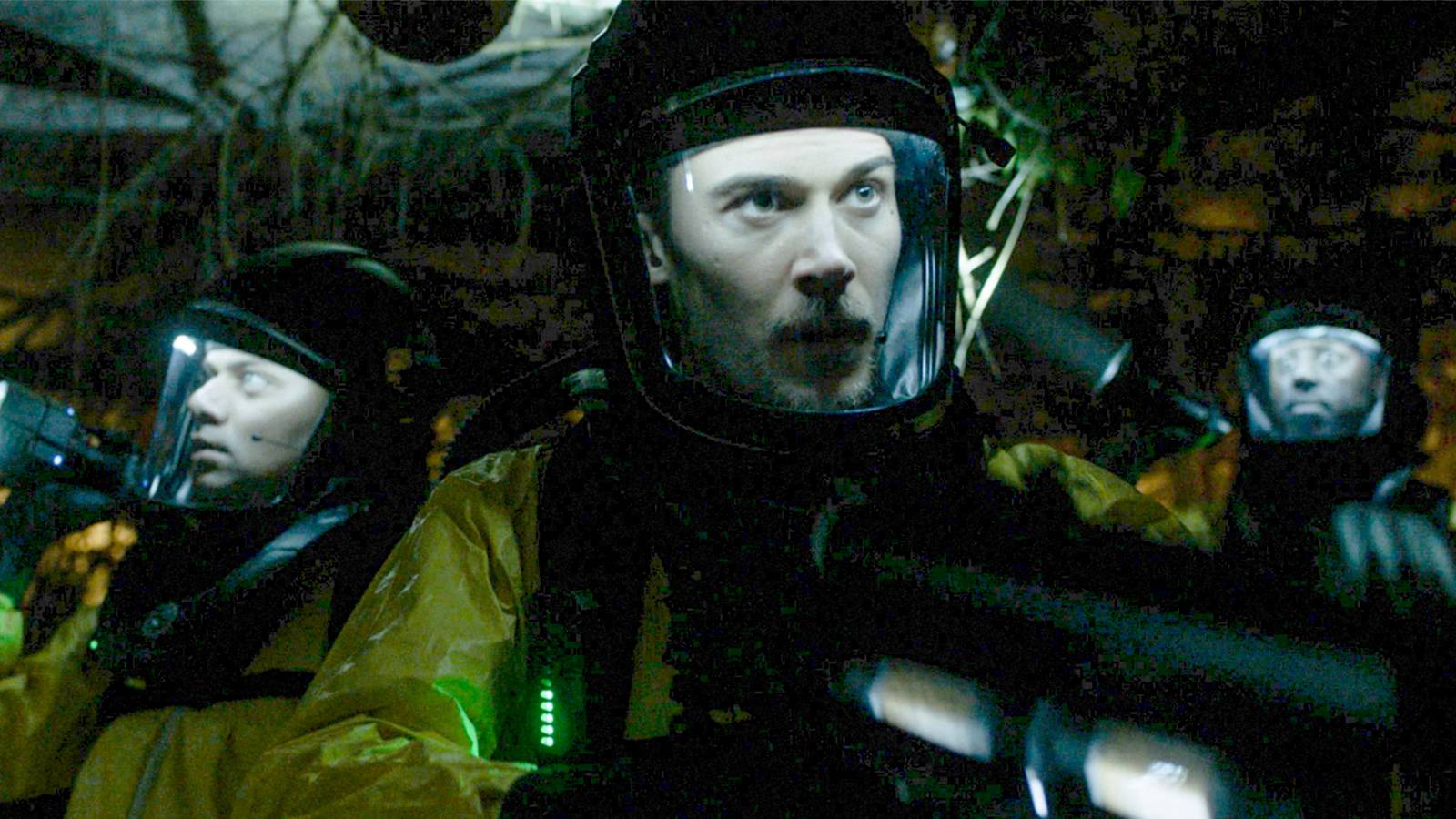
When Zoo ditched its source material's constraints and went full throttle into original territory, that's when things really went off the rails. But, in a good way. The show embraced time jumps, family drama, and hybrid creatures to craft a narrative that was as unpredictable as it was entertaining. By introducing genetically engineered mutants – think rhinoceros-mammoth mashups, razorback wolves, invisible snakes, and zombie dogs – the series transformed into a dystopian spectacle that was both comical and strangely compelling.
That shift in direction allowed Zoo to explore deeper character arcs and more complex relationships. The time jumps and introduction of hybrid threats added layers of tension and urgency, while the focus on family dynamics provided emotional depth. And the storytelling left turns worked because the show managed to cling to the spirit of Patterson's novel – likely thanks to his and Mangold's continued involvement as executive producers – while trying something new. Its willingness to embrace its own outrageousness became its strength, turning what could have been a downfall into a delightful binge. For fans of apocalyptic thrillers, Why Fox's 'The Passage' Is the Apocalyptic Thriller You Need to Binge offers a similar fix.
If you're looking for a weekend binge that defies expectations, Zoo is the perfect pick. It's a testament to how a show can evolve from a chaotic mess into a cult classic, and it's all available to stream now. For more on the best thrillers of the 21st century, check out The Best 21st Century Thrillers That Are Absolutely Flawless.