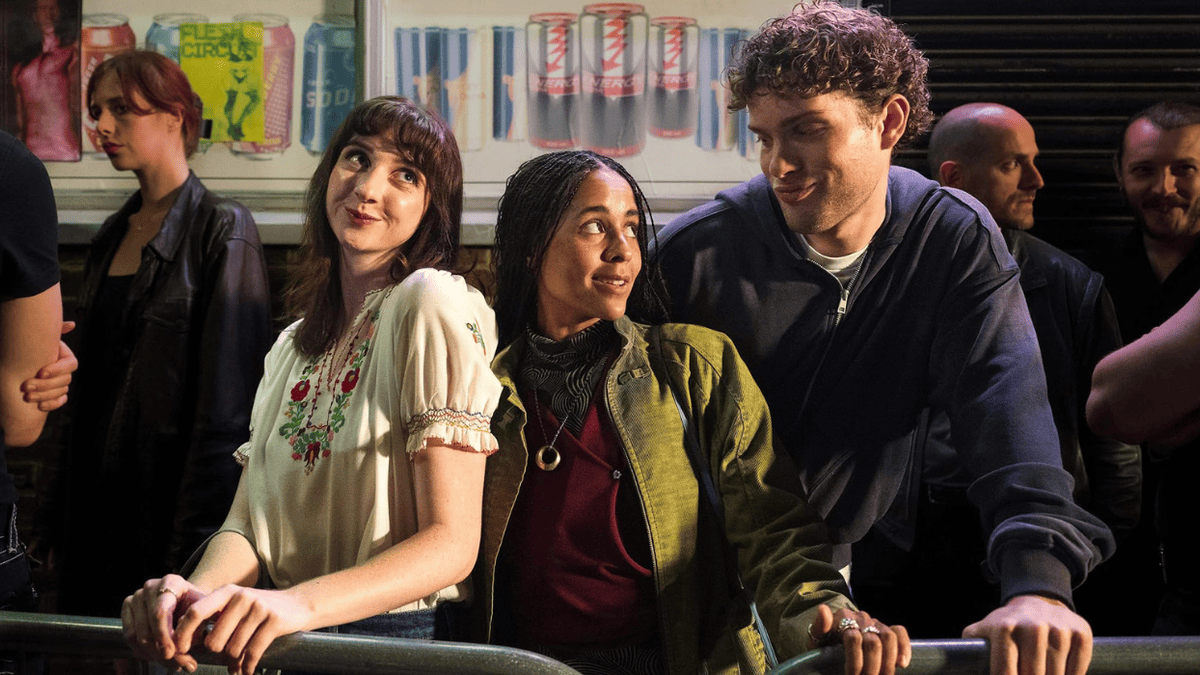
Leo Reich's It Gets Worse is being billed as the Gen Z answer to Girls, but it swaps Lena Dunham's millennial optimism for a much bleaker, more uncomfortable view of twentysomething life. Premiering on Paramount+, this British-Canadian co-production from A24 and Channel 4 is a sex-fueled sitcom that's as sharp as it is cringe-inducing, following three friends in London whose post-grad existence is a mess of toxic relationships, questionable decisions, and a pervasive sense of dread.
The series stars Reich as Ethan, alongside Emily Fairn as Abi and Olive Gray as Sam. A year after moving to the capital, their landlord kicks them out of their first house share, forcing them to find new digs. But the housing crisis quickly becomes the least of their problems. They drift apart, fall into increasingly bad situations, and eventually move back in together, all while wondering if the humiliation they're enduring will ever let up. As the title suggests, it doesn't.
A Far Cry From 'Girls' Millennial Optimism
When Girls premiered in 2012, Dunham was hailed as the voice of her generation, capturing the messy, often self-absorbed lives of young women in New York. Now, with her involvement as a producer on It Gets Worse, it feels like a passing of the torch. But Reich's vision is decidedly darker. This is Gen Z's turn, and their outlook is far less hopeful.
On the surface, the show is about the difficulty of making friends as a young adult, especially when those friendships are built on little more than proximity, partying, and hookups. It captures the reality of moving to a big city for the promise of jobs and excitement, only to find yourself adrift. Reich's scripts are wonderfully wry, never shying away from controversy, and they amplify Gen Z's self-aware, anti-perfectionist vibe. The show is littered with references to MUBI, Monzo, Hinge, ChatGPT, and turmeric shots, grounding it firmly in the present.
Capturing the Horror of Being Young and Directionless
One of the show's more unusual elements is the narration by novelist Zadie Smith, who reads the poetic, abstract writings of Sam's character. At first, you hope these musings will offer some emotional insight into why these friends behave the way they do, but they gradually fade into obscurity, and Ethan later reveals they're not even factual. It's a clever device that mirrors the characters' own confusion.
The series posits that the people you were in university might be the real you, and that the world outside has changed you for the worse. It's a romantic notion, but one that deserves scrutiny. While staying true to yourself is admirable, your university self is also your younger, more naive self, and that's painfully clear from the situations Ethan, Abi, and Sam find themselves in. Growing up inevitably changes people, and It Gets Worse is at its most interesting when it explores which parts of yourself you should leave behind and which are worth holding onto.
The show also loves to make its audience squirm. Andrew Scott, known for his role as the Hot Priest in Fleabag, appears as Brian, Ethan's therapist, who he subsequently hooks up with. The encounter is shocking, with Brian reducing Ethan to a "hole for daddy." Similarly, Sam tutors a young boy preparing for his GCSEs, only for it to emerge that he has a crush on her, leading to an uncomfortable situation at a spoken-word night.
It's this discomfort that makes It Gets Worse a tough sell. It accurately depicts the horror of being a young adult making questionable decisions, but knowing we've all been there doesn't always make for an easy or particularly amusing watch. The characters are more likely to disgust you than endear you, and you'll feel glad you're no longer in your twenties. If you're looking for a more uplifting take on young adulthood, you might want to check out The Sex Lives of College Girls on Netflix, which offers a more fun, if equally messy, perspective.
For those who appreciate the brutal honesty of shows like Girls, It Gets Worse is a worthy successor, but it's not for the faint of heart. It's a show that will leave you feeling uneasy, but also strangely seen. And if you're in the mood for more of Andrew Scott's magnetic presence, you might want to revisit his dream casting in a hypothetical Gilmore Girls revival—though that's a far more whimsical affair.