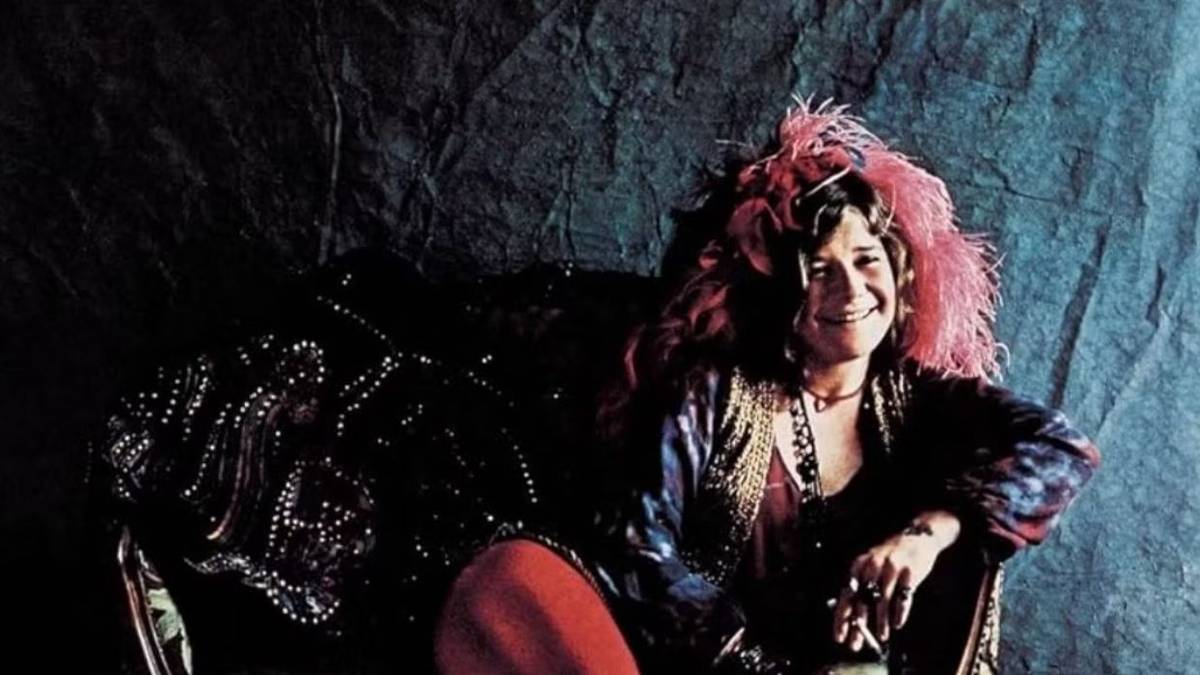
Some songs are so perfectly matched to a singer that it's hard to imagine anyone else performing them. Janis Joplin's rendition of "Me and Bobby McGee" is one of those rare covers that completely redefined a track—so much so that even the songwriter, Kris Kristofferson, admits he can't listen to it without getting emotional. But before Joplin turned it into a posthumous No. 1 hit, the song had a surprisingly quirky origin story.
Kristofferson drew inspiration from several unexpected places. The name "Bobby McGee" came from a Nashville studio secretary named Barbara "Bobbie" McKee. When Kristofferson was introduced to her, he misheard her surname as "McGee," and by the time he realized the mistake, the song was already written. The name stuck, and a legend was born.
The song's emotional core, however, came from a very different source. Kristofferson was deeply moved by the final scene of Federico Fellini's 1954 film La Strada, where the brutish Zampanò (Anthony Quinn) breaks down alone on a beach, overcome with guilt after causing the death of Gelsomina (Giulietta Masina). That raw, lonely despair found its way into the lyrics, especially in lines like "I'd trade all of my tomorrows for one single yesterday, to be holding Bobbie's body next to mine."
Musically, Kristofferson was inspired by a Mickey Newbury song called "Why You Been Gone So Long?" He told Performing Songwriter that he loved its rhythm and started singing "Me and Bobby McGee" in that same meter. The result was a folk-rock gem that first appeared on Roger Miller's 1970 album, followed by versions from Kenny Rogers and Kristofferson himself.
But it was Janis Joplin who truly made the song her own. She recorded her iconic cover in October 1970, just days before her tragic death at age 27. Her voice—raw, soulful, and aching—brought a depth to the lyrics that resonated with her own life story. Like the song's narrator, Joplin was a wanderer, moving between Texas, San Francisco, and countless tour stops. She knew loneliness intimately, once telling a reporter, "I didn't have many friends and I didn't like the ones I had." Her struggles with addiction and a broken engagement gave lines like "freedom's just another word for nothing left to lose" a haunting authenticity.
Released on her posthumous album Pearl in 1971, Joplin's "Me and Bobby McGee" became the second posthumous single ever to top the Billboard Hot 100, following Otis Redding's "(Sittin' On) The Dock of the Bay." It was inducted into the Grammy Hall of Fame in 2002 and remains one of the most beloved covers in music history.
Kristofferson himself was overwhelmed when he first heard Joplin's version. He recalled, "The first time I heard Janis Joplin's version was right after she died. Paul Rothchild, her producer, asked me to stop by his office and listen to this thing she had cut. Afterward, I walked all over L.A., just in tears. I couldn't listen to the song without really breaking up." He later co-wrote a tribute song, "Epitaph," in her honor.
While "Me and Bobby McGee" wasn't written by Joplin, she undeniably made it her own. Her passionate delivery transformed Kristofferson's folk tune into a tragic masterpiece—a farewell that still gives chills more than 50 years later. For fans of classic rock and timeless storytelling, it's a reminder that sometimes the best covers become the definitive versions.
If you're in the mood for more music history, check out our look at how Fleetwood Mac's 'Rumours' still resonates, or dive into the cult classic 'Almost Famous' for another rock-and-roll journey.

