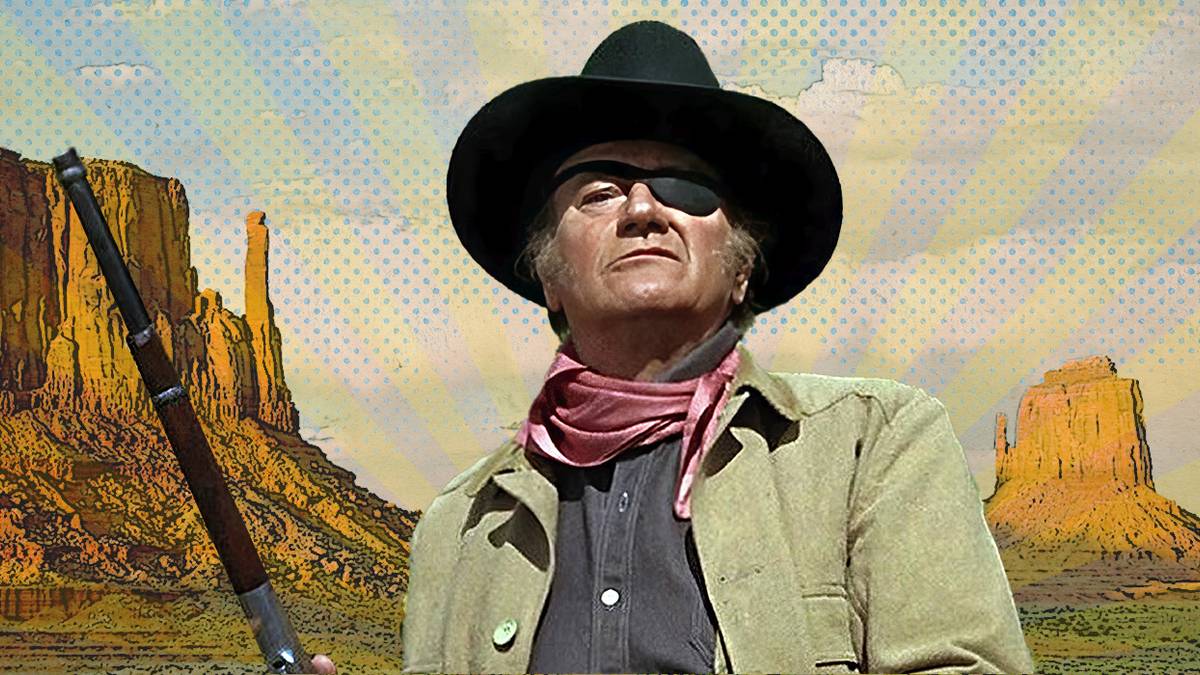
John Wayne stands as a titan of cinema, a Western legend whose shadow looms over the genre like no other. From The Searchers to Rio Bravo, his filmography is a masterclass in frontier storytelling. But it's his 1969 role as Rooster Cogburn in True Grit that offers perhaps his most enduring moment—not in a dramatic showdown, but in a simple, flippant farewell that has come to define the Western's emotional core.
In the film's closing scene, Mattie Ross (Kim Darby), the determined teenager who hired Cogburn to avenge her father's murder, is safe at home. The pair share a tender, awkward goodbye, with Mattie even offering him a plot in her family's burial ground. As he rides off, she teases, "You're too old and fat to be jumpin' horses." Cogburn's reply—"Well, come see a fat old man sometime!"—is delivered with a wink and a leap over a fence, a playful challenge that speaks volumes.
This moment diverges from Charles Portis's novel and the Coen Brothers' 2010 adaptation, but it's precisely this departure that makes it iconic. It's not a grand speech or a solemn vow; it's a joke, a shrug, a promise wrapped in gruff affection. That's the essence of the Western hero—a man of few words who says everything through action.
Rooster Cogburn is a subversion of the classic cowboy. He's overweight, hard-drinking, and prone to bending the rules. He wears an eyepatch and curses more than he should. Yet these flaws make him relatable, even lovable. His final line embraces that imperfection, turning a potential weakness into a badge of honor. When he calls himself a "fat old man," he's not self-deprecating; he's owning who he is, and that authenticity is what makes him a hero.
The Western genre has always prized stoicism over sentimentality. Think of Ethan Edwards in The Searchers, who rescues his niece and then walks away without a word, or J.B. Books in The Shootist, Wayne's final film, who faces death with a nod and a smile. These characters don't need monologues to convey their feelings; their silence, their gestures, their simple words carry the weight. Cogburn's farewell fits this tradition perfectly—it's a line that says, "I'll always be here for you," without ever saying it directly.
In an era of flashy blockbusters and CGI spectacles, the Western endures because of its emotional honesty. And no one embodied that better than John Wayne. His True Grit farewell isn't just a great movie moment; it's a testament to the genre's power to move us with understatement. As Mattie watches him ride off, we know exactly what he means—and we're richer for it.
For more on how the Western continues to evolve, check out our look at Netflix's sci-fi Western that's redefining the genre, or explore how other genres rank their classics. And if you're a fan of great final lines, don't miss Scorsese's take on the crime epic.