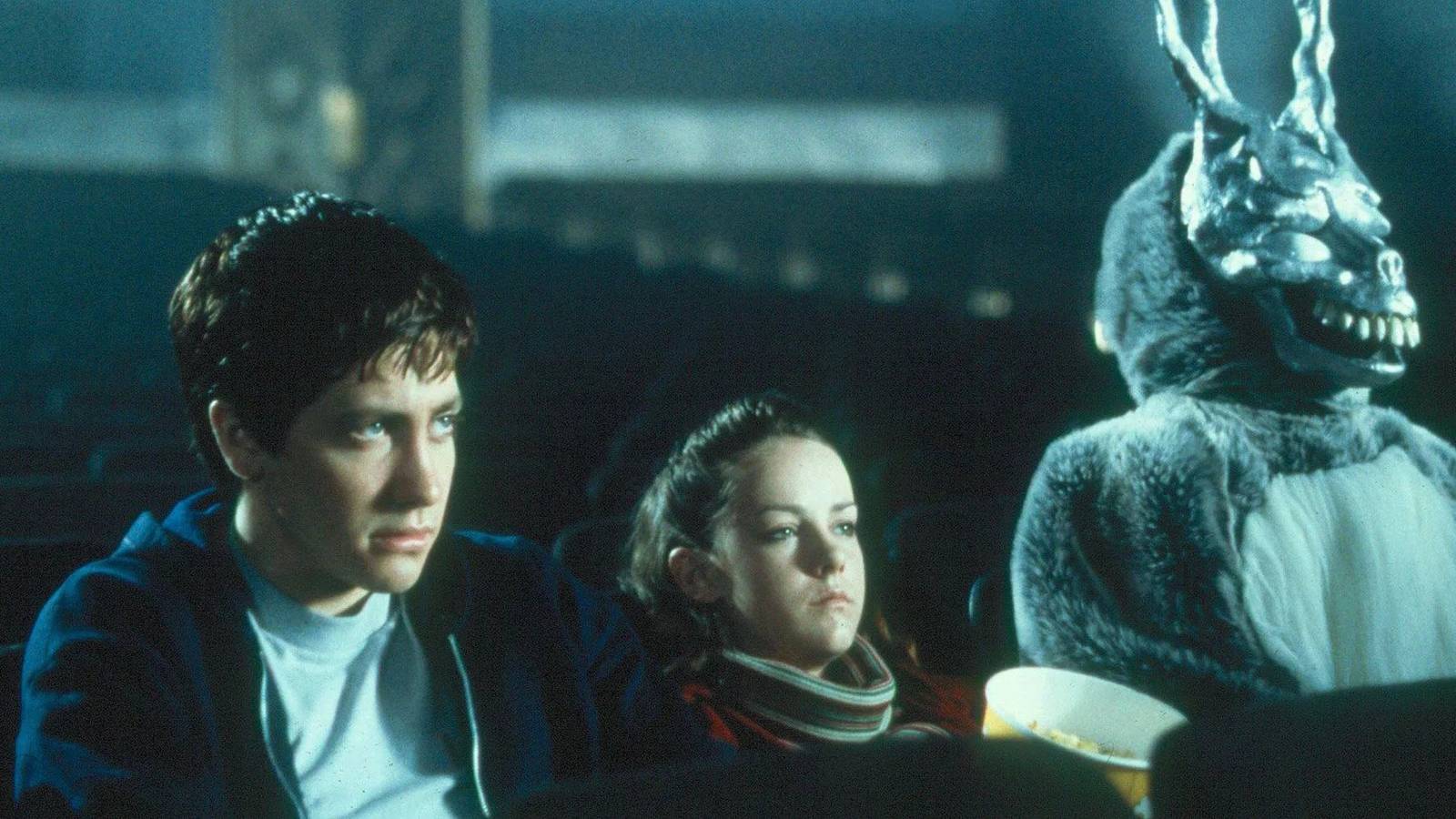
Twenty-five years after its release, most conversations about Donnie Darko still miss the point. People obsess over the tangent universe, debate Frank the rabbit, and spend hours untangling time-travel mechanics as if solving the puzzle explains the film's lasting power. But this Jake Gyllenhaal-led cult classic didn't endure because audiences cracked its code. It became a phenomenon because it captured something science fiction rarely touched at the time: the raw, messy feeling of being a teenager who doesn't fit in.
Beneath the rabbit masks, predestination paradoxes, and apocalyptic visions lies a story about a kid who feels profoundly disconnected. Donnie is angry, lonely, and struggling to understand himself and the world around him. He sees hypocrisy in authority figures, feels alienated from his peers, and spends much of the movie questioning his grip on reality. The film never asks viewers to separate those struggles from its sci-fi framework—instead, it weaves them together. That's why Donnie Darko still resonates. Its mythology remains fascinating, but its emotional core is what continues to connect with audiences. It proved that science fiction could be deeply personal without sacrificing its big ideas. The genre didn't have to choose between emotional truth and speculative storytelling. Donnie Darko found room for both.
Mental Health as More Than a Plot Device
One of the most remarkable aspects of Donnie Darko is how it handles its protagonist's mental health. From the opening scenes, Donnie (Jake Gyllenhaal) is a teenager struggling with issues neither he nor the adults around him fully understand. He attends therapy, takes medication, sleepwalks, and experiences disturbing visions. His parents and doctors are concerned but can't explain what's happening. The movie never provides a simple answer either.
Frank might be a hallucination—or something stranger. The visions could be symptoms of a mental health condition, or evidence that Donnie is entangled in something beyond ordinary understanding. Rather than choosing one explanation and dismissing the other, the film allows both possibilities to coexist. That ambiguity gives the story much of its power. Donnie's struggles are never treated as a twist ending or an easy explanation for the mysteries. His fear, confusion, and isolation feel genuine. Even viewers who have never questioned the fabric of reality can understand the experience of feeling disconnected from those around them. The sci-fi elements don't overshadow those emotions—they give them shape. The film turns anxiety, uncertainty, and alienation into something tangible. Frank becomes more than a creepy figure in a rabbit costume; he becomes a manifestation of the unknown future Donnie is desperately trying to understand.
Trusting Audiences to Embrace Uncertainty
Part of what transformed Donnie Darko into a cult phenomenon was its refusal to explain everything. Many sci-fi movies build toward a moment where every mystery clicks into place. Audiences leave with a clear understanding of the rules, stakes, and answers. Donnie Darko takes a different approach. It provides clues, possibilities, and interpretations but never hands viewers a definitive roadmap. That uncertainty became part of the experience. Viewers didn't leave the movie and move on. They discussed and revisited it, searching for hidden meanings and debating interpretations. The film encouraged active participation long before online fandoms became a dominant force in pop culture.
More importantly, the unanswered questions mirror Donnie's own journey. Teenagers rarely receive perfect explanations for the challenges they face. Anxiety doesn't arrive with an instruction manual. Depression doesn't neatly resolve itself in two hours. The uncertainty surrounding the movie reflects the uncertainty that defines much of adolescence. Donnie spends the story searching for answers that remain frustratingly out of reach. Audiences are invited to share that experience rather than observe it from a comfortable distance.
Over Two Decades Later, the Feelings Still Matter
The most enduring science-fiction stories are rarely remembered for their rules alone. They're remembered for the emotions attached to them. Twenty-five years after its release, people still discover Donnie Darko for the first time and see something of themselves in its protagonist. The details may change from generation to generation, but the feeling of being misunderstood, anxious, and searching for meaning remains universal. That's why Donnie Darko isn't just a cult classic—it's a game changer that proved sci-fi could be as much about the heart as it is about the mind.
For more on how sci-fi continues to evolve, check out our look at Why Netflix's 'Starship Troopers' Is a Sci-Fi War Classic That Nails the Book and Black Mirror's Most Prophetic Quote Still Cuts Deep 15 Years Later.