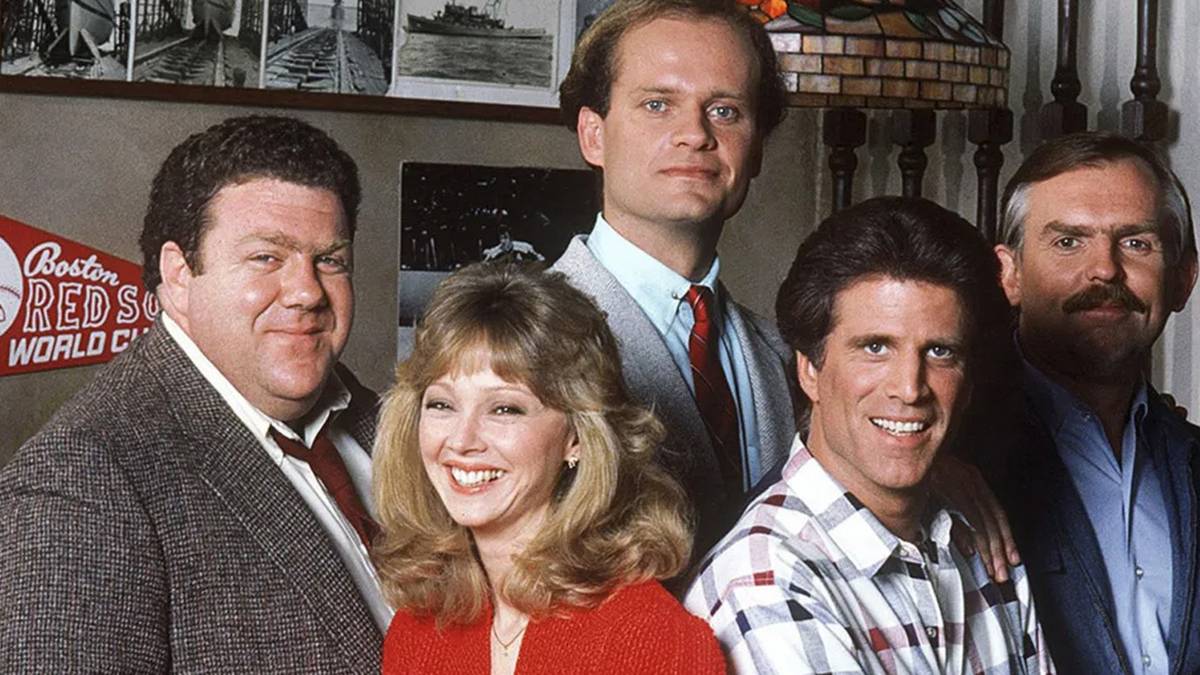
The Cheers universe remains one of television's most cherished franchises, with Frasier standing as its most successful offspring. Kelsey Grammer's spin-off not only matched its parent series' 11-season run but also carved out its own identity, blending sharp wit with heartfelt family dynamics. Central to that charm was Martin Crane, played by the late John Mahoney, whose gruff yet lovable presence anchored the show. But here's the twist: according to Cheers canon, Martin should never have existed at all.
When Frasier premiered in 1993, it faced the daunting task of following a legendary sitcom. While other spin-offs like The Tortellis fizzled quickly, Frasier succeeded by balancing its own comedic voice with nods to its predecessor. The dynamic between Frasier, his brother Niles (David Hyde Pierce), and their father Martin was a key ingredient. Yet, a throwaway line in Cheers Season 8, in the episode “The Return of Tecumseh,” had Frasier telling his bar buddies that both his parents were dead. That revelation, aired years before Frasier went into production, created a glaring plot hole.
Fortunately, the spin-off didn't ignore the inconsistency. In Season 2's “The Show Where Sam Shows Up,” Ted Danson's Sam Malone visits Seattle and spills the beans to Martin. Sam reveals that Frasier had claimed his father was dead, explaining it away as a lie told after a heated argument. To make matters worse, Frasier had also described Martin as a scientist and completely omitted Niles's existence. The scene is a masterclass in comedic payoff, with Frasier's deadpan retort—"You were dead, what did it matter?"—becoming an instant classic.
This clever retcon not only patched the continuity error but also deepened the show's lore, showing that the writers were willing to acknowledge and play with their own history. It's a move that endeared Frasier to fans and critics alike, proving that even the most glaring mistakes can be turned into comedic gold. The episode also served as a mini-reunion, with Sam bringing updates from Boston and reminding viewers of the rich shared universe.
However, one continuity issue remained impossible to fix: John Mahoney himself had previously appeared on Cheers as a different character. In the Season 11 episode “Do Not Forsake Me, O' My Postman,” Mahoney played Sy Flemback, a songwriter hired to pen a tune for the bar. He even shared a scene with Grammer. This dual casting was a common practice in TV, but it became a unique quirk when Mahoney was later cast as Martin Crane—a decision that came about precisely because of his Cheers guest spot.
Producer Peter Casey later revealed on Ken Levine's blog that Mahoney's performance in that episode impressed NBC so much that they offered him the role of Martin without an audition. Mahoney, ever the craftsman, insisted on reading the full pilot script before committing. After finishing it, he enthusiastically signed on, and the rest is history.
While the show never addressed this casting overlap—and couldn't have, given the logistics—fans have come to appreciate it as a happy accident. Mahoney's portrayal of Martin Crane became one of the most beloved characters in sitcom history, earning multiple Emmy nominations and leaving an indelible mark on the genre. His chemistry with Grammer and Pierce was electric, and his character's journey from curmudgeon to beloved patriarch was a highlight of the series.
In the end, Frasier's handling of its Cheers continuity error is a testament to the show's clever writing and willingness to engage with its own mythology. It turned a potential flaw into a memorable moment, and even the unfixable casting coincidence became a point of charm. For fans of the franchise, it's a reminder that sometimes the best stories come from the messiest details. And as the Frasier reboot continues to explore new chapters, Martin's legacy remains a cornerstone of the show's enduring appeal.