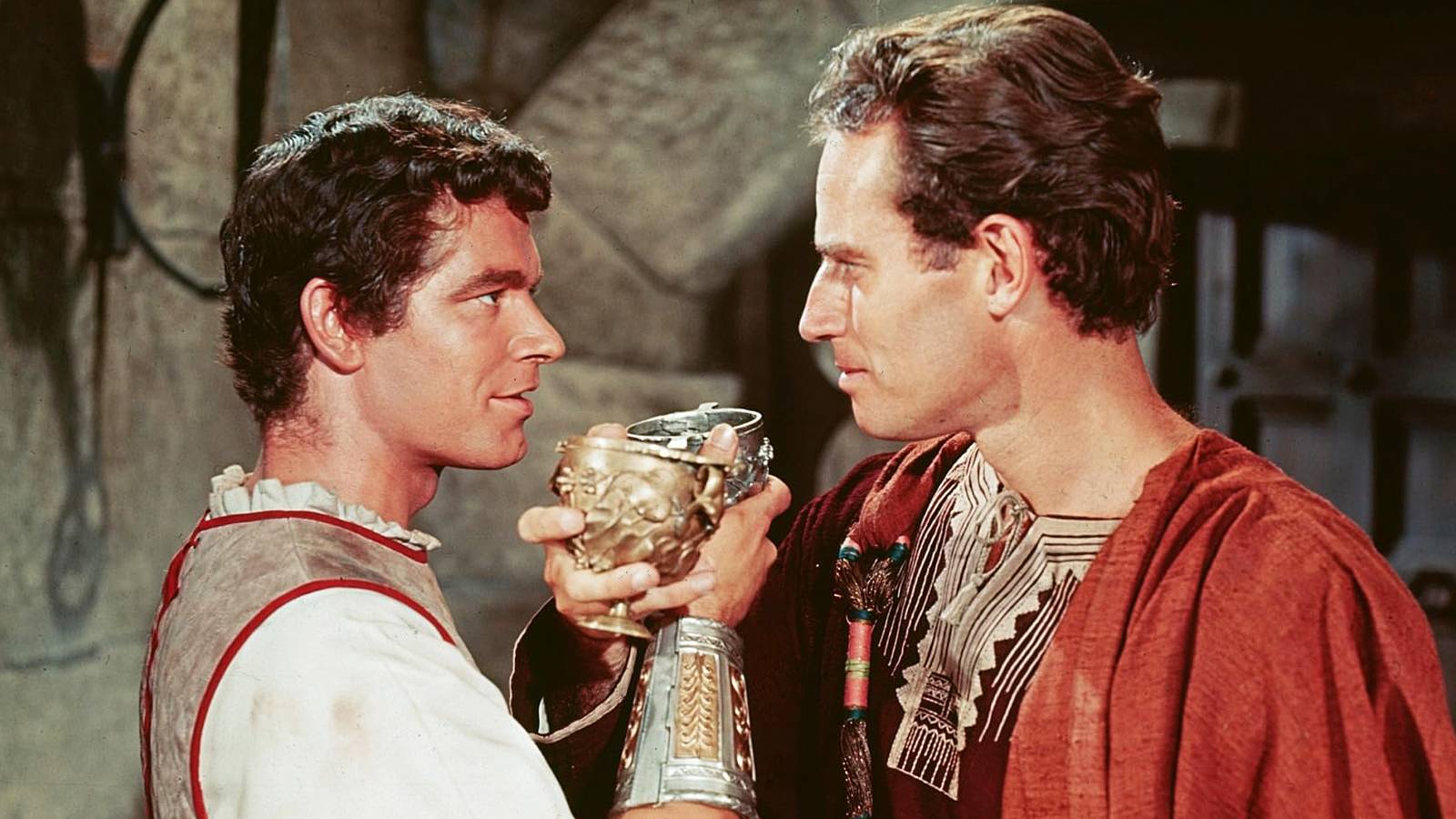
Hollywood's Golden Age gave us epics that still dazzle—massive sets, sweeping costumes, and performances that linger in memory. Among them, the 1959 Charlton Heston film Ben-Hur stands tall. But few realize that this cinematic masterpiece traces its roots not to ancient Rome, but to the dusty frontier of the American West.
The source material, Ben-Hur: A Tale of the Christ, was penned by Lew Wallace, a man whose life reads like a saga itself. A veteran of the Mexican-American War and the Civil War, Wallace later served on the commission investigating Abraham Lincoln's assassination. After backing Republican Rutherford B. Hayes in the contentious 1877 presidential race, Wallace was rewarded with the governorship of the New Mexico Territory. He arrived in Santa Fe in 1878, just as the infamous Lincoln County War was winding down.

Writing an Epic Amid the Wild West
While Wallace was tasked with settling the bloody feud—a conflict that some believe continued until Sheriff Pat Garrett killed outlaw Billy the Kid in 1881—he never stopped working on his novel. According to the General Lew Wallace Study & Museum, he completed the final chapters of Ben-Hur, especially those describing the crucifixion of Christ, while serving as governor. This means that the book was being finished at the same time Wallace was meeting with Billy the Kid, hoping to use the outlaw's testimony against corrupt officials.
Billy the Kid agreed to testify, but only on the condition of a full pardon for three murders he was charged with during the Lincoln County War. Wallace accepted the terms, and the Kid testified. However, the local district attorney refused to honor the deal, leading to Bonney's escape. Wallace was then forced to sign Billy the Kid's death warrant—one of his final acts as governor. It's a twist worthy of a great Western itself.
From Frontier Politics to Literary Fame
Five months after Ben-Hur: A Tale of the Christ was published in 1880, Wallace resigned from his post. His weariness with frontier politics came just in time: the novel soon became a massive success, second only to the Bible in sales for decades, until Margaret Mitchell's Gone with the Wind surpassed it. Wallace left politics behind by 1885, but his literary legacy was secure.
Though Wallace had never visited the Holy Land before writing the book, he spent nearly a decade researching the Ancient Near East. When he finally traveled to Jerusalem in 1882, he was pleased to find that his descriptions matched the reality. The novel's meticulous detail helped it become a cultural phenomenon, inspiring multiple film adaptations—including the 1907 silent picture, the 1925 version, a 2003 animated film, and the 2016 remake.
Today, Western audiences often remember Lew Wallace as the governor who "betrayed" Billy the Kid. Fictional portrayals of Wallace appear in movies like Pat Garrett and Billy the Kid and Young Guns II, as well as TV shows like Death Valley Days. Yet his true monument is Ben-Hur, a tale of faith and redemption that transcends the frontier where it was born.
For fans of epic storytelling, the connection between the Wild West and one of Hollywood's greatest films is a reminder that great art often emerges from the most unexpected places. And if you're looking for more timeless classics, check out our list of the greatest thrillers ever made.