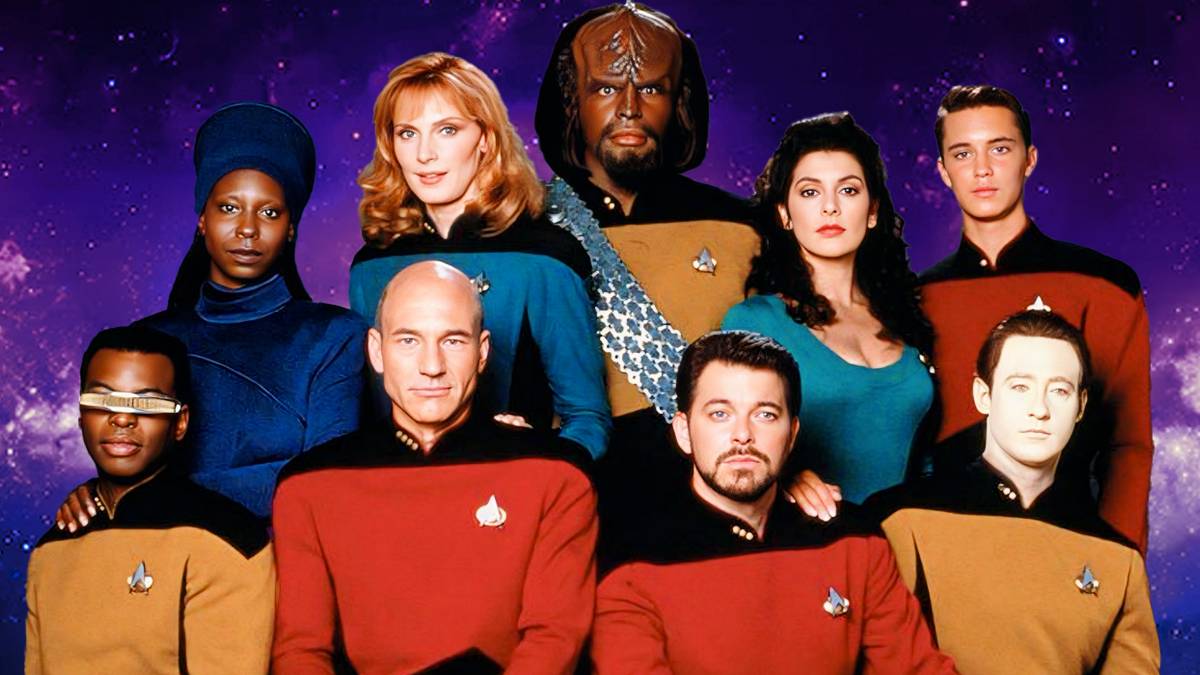
When you think of Star Trek, certain faces immediately come to mind—Spock's pointed ears, Kirk's swagger, and, of course, Worf's proud Klingon brow. Michael Dorn's portrayal of Worf is so iconic that he holds the record for the most appearances in the franchise, with 288 credits spanning The Next Generation, four feature films, Deep Space Nine, and a triumphant return in Picard's final season. But what if we told you that this beloved character almost never made it to the bridge?
According to Mark A. Altman and Edward Gross's comprehensive oral history The 50-Year Mission: The Next 25 Years, Gene Roddenberry himself was the biggest obstacle. The show's creator was initially dead set against developing the Klingons beyond their one-dimensional villainous roots. Creative consultant David Gerrold recalled, "I suggested a Klingon first officer. Gene vetoed it for four months." Even after Roddenberry reluctantly gave in, executive producer Rick Berman revealed that "Michael Dorn wasn't even guaranteed all episodes in the first season."
It's a staggering thought, especially considering how integral Worf became to TNG's identity. In Season 1, he was a background figure—a symbol of Federation-Klingon peace rather than a fully realized character. But once he stepped into the role of chief of security after Tasha Yar's departure, Worf began to shine. He was the prune-juice-drinking, opera-loving, poetry-reciting warrior who struggled to reconcile his Klingon heritage with his human upbringing. His arc would eventually lead him to Deep Space Nine and, decades later, to a white-haired, tea-sipping intelligence officer in Picard.
The turning point came in Season 3's "Sins of the Father", written by Ronald D. Moore and W. Reed Moran. This episode didn't just give Worf the spotlight—it revolutionized how Star Trek portrayed the Klingons. For the first time, we saw their homeworld, Qo'noS, and delved into their complex political and spiritual life. The Klingons were no longer just warriors; they were a culture with deep traditions, a feudal government, and a rigid honor code.
The plot centers on Worf's long-lost brother, Kurn (played by Tony Todd), who arrives on the Enterprise with devastating news: their father, Mogh, has been posthumously accused of treason. Duras, a rival house leader, has framed Mogh to cover up his own father's crimes. Worf, bound by Klingon honor, vows to clear his father's name, even as Chancellor K'mpec and the High Council conspire to keep the truth buried to avoid civil war.
What follows is a masterclass in storytelling. Worf's struggle isn't just about proving innocence—it's about confronting a system that values stability over justice. He ultimately accepts discommendation, a ritual shaming that strips him of his honor, to save his brother's life. It's a gut-wrenching moment that redefined Worf's character and set the stage for years of Klingon-centric stories, including the beloved Deep Space Nine arc that explored the Klingon-Cardassian war.
Moore's work on "Sins of the Father" proved he had a knack for Klingon culture, a talent he'd later bring to Battlestar Galactica. The episode's legacy is undeniable—it paved the way for Worf to become the most decorated character in Star Trek history. And it all happened because a creative team dared to push back against the show's creator. As we look forward to the mirror universe's return in 2027, it's worth remembering that some of Trek's greatest moments came from challenging the status quo.
So the next time you watch Worf growl "Today is a good day to die," take a moment to appreciate the journey. He wasn't just a character—he was a testament to the power of persistence. And for that, we owe a debt of gratitude to the writers, producers, and especially Michael Dorn, who made Worf unforgettable.