The concept of moving through time has captivated storytellers for generations, offering a unique lens to examine history, destiny, and the human condition. While we've seen fantastic adaptations like Outlander and the mind-bending series Dark, the literary world holds some of the most profound and perfectly executed explorations of temporal journeys. These aren't just tales of adventure; they're narratives that use the mechanism of time travel to ask deep questions about society, identity, and our place in the universe.
1. The Ministry of Time (2024)
Kaliane Bradley's brilliant debut, The Ministry of Time, blends espionage, romance, and speculative fiction into a stunning whole. In a near-future Britain, a secret government project plucks historical figures from moments just before their deaths to study their integration into modern life. The story follows a civil servant assigned as a "bridge" to live with and monitor one such expat: Commander Graham Gore, rescued from Sir John Franklin's doomed 1845 Arctic expedition. As a forbidden connection blossoms between the bridge and her 19th-century charge, the true, unsettling purpose of the ministry emerges, forcing a choice that could unravel time itself. This New York Times bestseller captivates with its focus on displacement and belonging rather than technical jargon.

2. Kindred (1976)
Octavia E. Butler's seminal work, Kindred, remains a towering achievement. On her 26th birthday, Dana, a Black woman in 1976, is violently pulled back to a Maryland plantation in 1815. She discovers she must repeatedly save the life of Rufus, the white son of the plantation owner, to ensure her own ancestor's survival—and thus her own existence. Butler uses time travel not for escapism but as a brutal, unavoidable tether to America's horrific past. The novel forces readers to confront the lingering scars of slavery and systemic racism, a narrative so powerful it inspired an FX television adaptation in 2022.
3. The Time Machine (1895)
No list is complete without H.G. Wells' genre-defining classic. The Time Machine didn't just popularize the concept; it invented the very term. Wells' Victorian scientist voyages to the distant year 802,701 AD, discovering a world where humanity has split into two species: the gentle, surface-dwelling Eloi and the monstrous, subterranean Morlocks. This isn't merely an adventure; it's a sharp critique of class disparity and industrial society. The traveler's desperate quest to retrieve his stolen machine from the Morlocks' underworld explores themes of evolution and societal decay that feel eerily relevant today, proving the timeless power of Wells' vision.
4. The Midnight Library (2020)
Matt Haig's international phenomenon, The Midnight Library, offers a poignant twist on the concept. Between life and death exists a library where each book represents a different path one's life could have taken. Nora Seed, overwhelmed by regret and depression, explores these infinite variations of her existence, searching for the perfect one that will make her want to live. The novel uses the framework of parallel realities to deliver a powerful message about hope, resilience, and the beauty of an imperfect life. It's a testament to how sci-fi concepts can explore the most intimate human emotions.
5. 11/22/63 (2011)
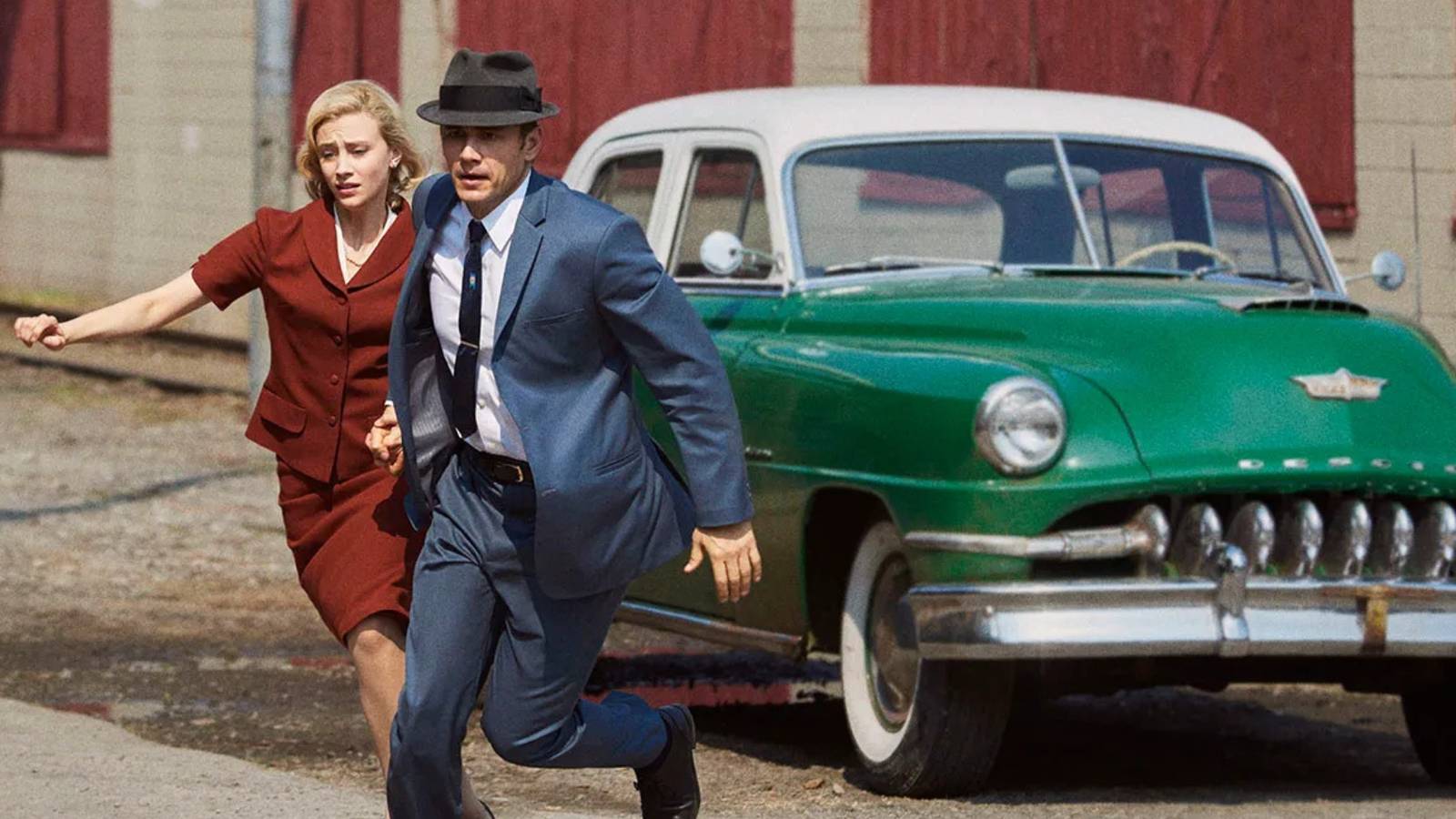
Stephen King's epic is a masterclass in historical suspense. A high school teacher discovers a portal that leads to 1958. Given the chance to prevent the assassination of President John F. Kennedy, he embarks on a years-long mission embedded in the past. King meticulously recreates the era, but the novel's heart lies in its exploration of the "butterfly effect"—the unintended, often devastating consequences of altering history. It's a gripping thriller that questions whether the past should, or even can, be changed, much like the complex causality explored in shows such as Prime Video's 'Night Sky'.
6. A Wrinkle in Time (1962)
Madeleine L'Engle's beloved Newbery Medal winner introduced generations to theoretical physics through the concept of a "tesseract"—a wrinkle in spacetime. Young Meg Murry, her brother Charles Wallace, and friend Calvin O'Keefe embark on a universe-spanning quest to rescue Meg's missing father from the grip of a cosmic evil. More than a simple adventure, the book is a profound exploration of love, faith, and the battle between conformity and individuality. It stands as a foundational text that proves sci-fi ideas can be both intellectually stimulating and deeply heartfelt.
7. Recursion (2019)
Blake Crouch's Recursion is a modern, breakneck thriller that weaponizes memory as a form of time travel. When a terrifying new illness called False Memory Syndrome emerges—where people become haunted by lives they never lived—NYC detective Barry Sutton and neuroscientist Helena Smith uncover a dangerous technology that allows people to not just revisit, but rewrite their pasts. The novel brilliantly tackles the paradoxes of memory and identity, asking what remains of us if our history is malleable. It's a concept as mind-bending as the cosmic mysteries in projects like the potential 'Interstellar' follow-up teased by Jonathan Nolan.
These seven titles demonstrate that the best time travel stories are about much more than mechanics. They are vessels for exploring history, ethics, love, and loss. They challenge our perception of cause and effect, and ultimately, reflect our own desires to fix mistakes, understand our roots, and imagine different futures. In their pages, the genre finds its perfect expression.