For over a decade, filmmaker Duncan Jones (Moon) has chased his directorial white whale: a proper adaptation of the 1981 2000 AD comic strip Rogue Trooper. At this year's Annecy International Animation Film Festival, where the film finally celebrated its world premiere, Jones sat down with Collider to unpack the long journey—and the surprising inspirations behind it.
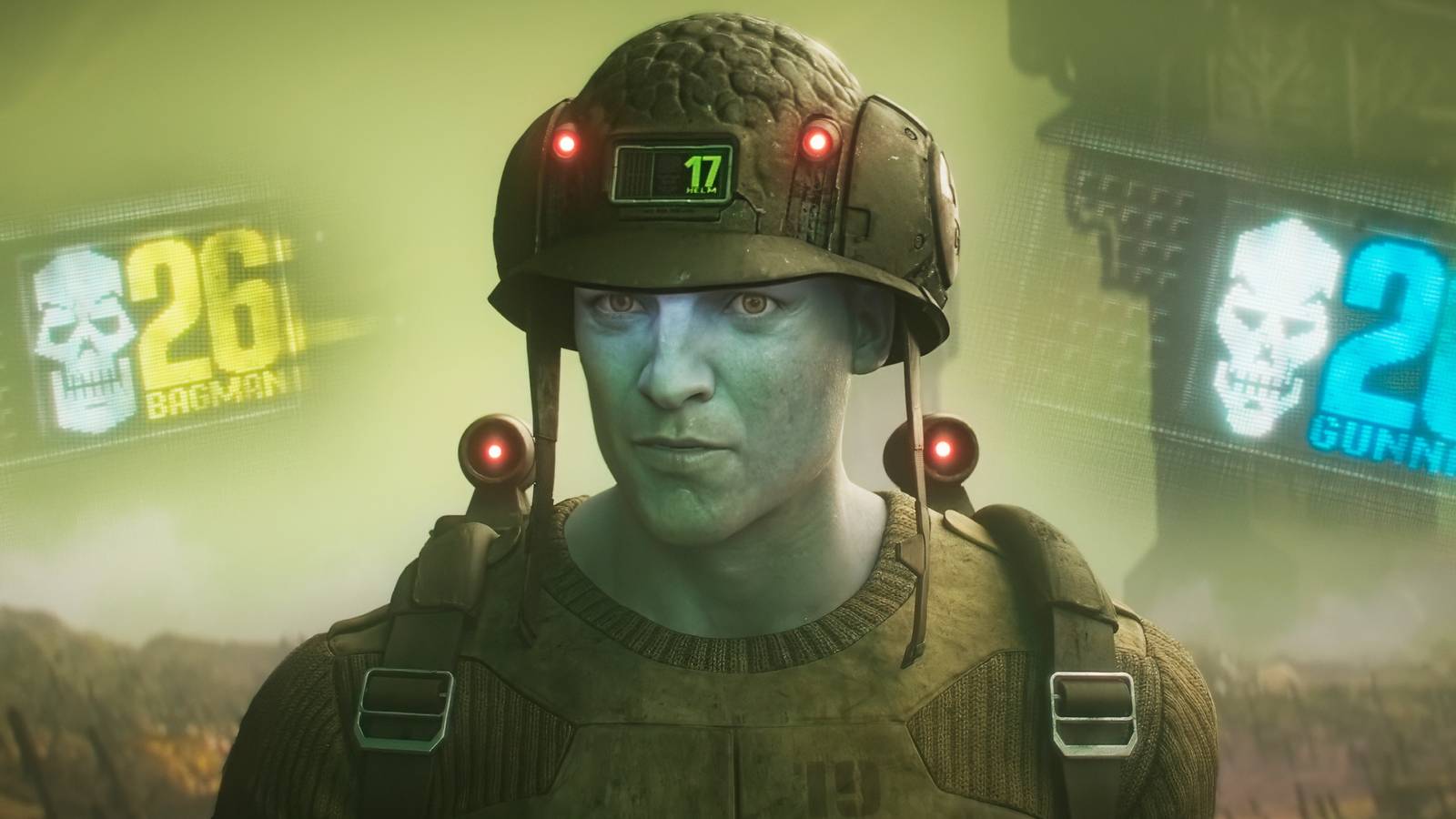
Jones explains that while he admires Hollywood's greatest World War II epics, it was the core group of buddies at the heart of the UK comic that truly drove him. Rogue Trooper follows a genetically engineered soldier (voiced by Aneurin Barnard) navigating enemy territory with only the biochips of his fallen comrades—Gunnar (Jack Lowden), Helm (Daryl McCormack), and Bagman (Reece Shearsmith)—for company. The voice cast also includes comedians Jemaine Clement, Matt Berry, Diane Morgan, Al Murray, and Henning Wehn, alongside Sean Bean and Hayley Atwell as the treacherous Venus Bluegenes.
Jones teases "a couple of little Easter eggs" for comic fans, but for newcomers, he emphasizes clarity: "Really, for an audience who doesn't know about the biochips, it's making sure they understand that the chips are in people's heads, that their personalities are recorded on those chips when they die."
How 'Rogue Trooper' Was Made Using Unreal Engine 5 (Sort of)
Jones admits the production hit a major snag: "We didn't know how the film was going to get made when we started." Initially planning to use Unreal Engine 5, the team pivoted after two and a half years when they realized the tech wasn't ready. They switched to Maya and other software, then reimported everything for path-traced rendering. "It was maybe a little crazy of us to go ahead when we didn't really know how we were going to do it," Jones laughs.
The director credits the comic's visual style—particularly Dave Gibbons and Will Simpson's War Machine—as the target: "Lots of beautiful rendered fog and a watercolor kind of feel." The four-year production became a lesson in indie filmmaking. "You can make big-world movies in independent cinema now," Jones insists. "There is no AI in this movie. We didn't want AI. You can still do this without using AI."
Budget and British Identity
When asked about the budget, Jones is coy but revealing: "I don't know any theatrical animated films that have been made at this budget." Unlike Disney or Pixar's $100 million-plus productions, Rogue Trooper operates on a fraction of that. "It's a very British film, as well," he adds, noting the distinct aesthetic and the influence of WWII classics like A Bridge Too Far.
The film also retains 2000 AD's political edge, with Jones working closely with the comic's team to refine the story. Composer Bear McCreary (Battlestar Galactica, The Walking Dead) provides the score, and Jones pays tribute to the original creators Gerry Finley-Day and Dave Gibbons.
For aspiring indie animators, Jones's advice is pragmatic: "You need to get the expertise around you. The technology is moving so fast." He believes that with the right combination of tools, independent filmmakers can create visually ambitious worlds without studio backing—a message that resonates as the industry debates the role of AI in animation.
With its world premiere behind it, Rogue Trooper now awaits distribution. Jones remains confident: "We felt like we had something." For fans of the comic and newcomers alike, this long-gestating adaptation finally delivers the gritty, buddy-driven sci-fi epic it always deserved.