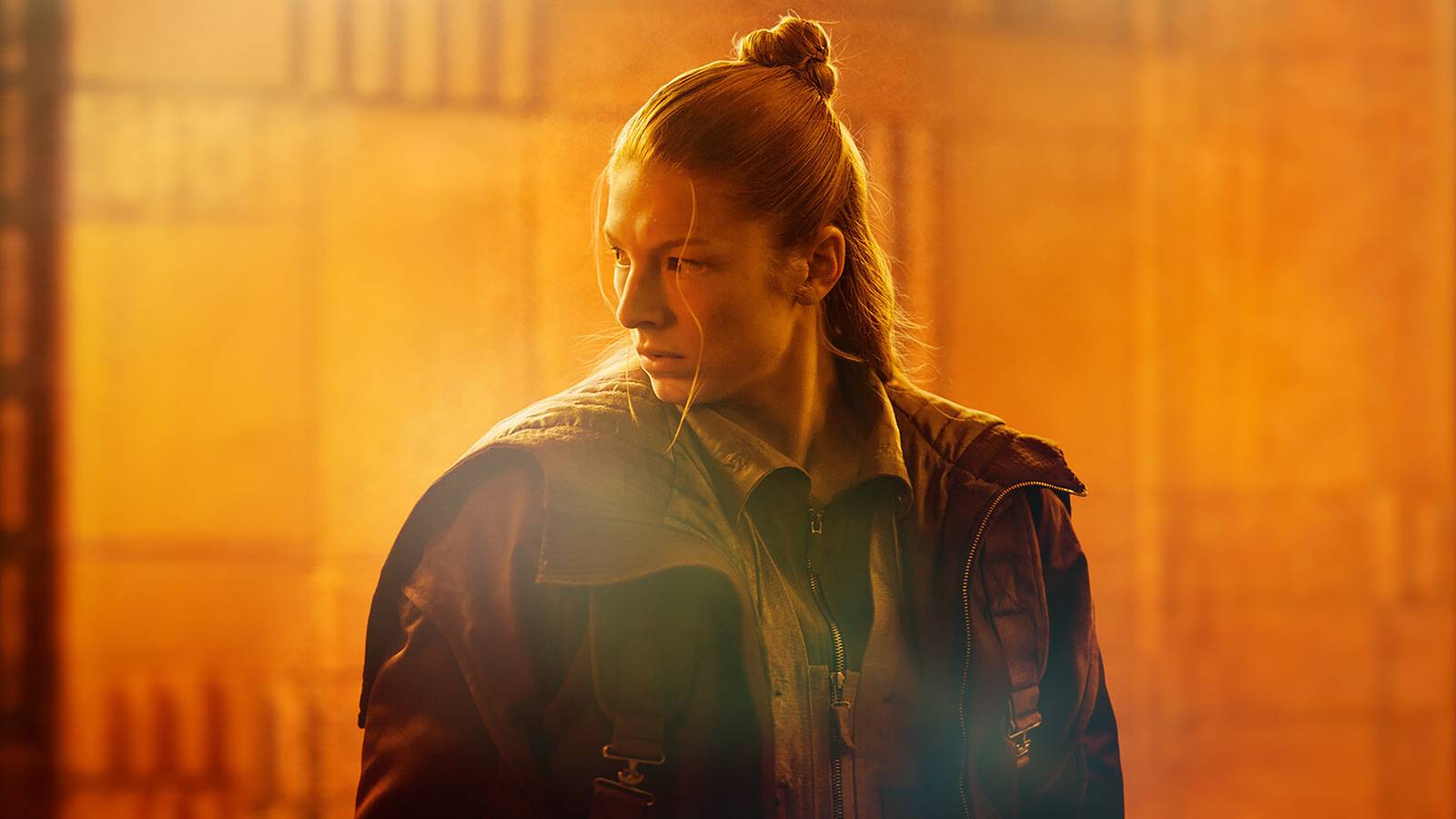
Nearly half a century after Ridley Scott's Blade Runner first painted a neon-drenched, rain-soaked vision of Los Angeles, and almost a decade since Denis Villeneuve's Blade Runner 2049 expanded that world, Prime Video's Blade Runner 2099 arrives with a bold new twist. The series flips the familiar dynamic: replicants now walk the streets as the dominant class, while humans are relegated to second-class status. It's a clever inversion that immediately sets the show apart, even if it risks alienating purists who expect the original's human-centric perspective.
At its core, Blade Runner 2099 follows Cora (Hunter Schafer), a human desperate to escape a precarious life with her brother Elias (Lewis Gribben). She accepts a dangerous offer to impersonate a replicant Blade Runner, hoping for a better future. Paired with Olwen (Michelle Yeoh), a replicant Blade Runner nearing the end of her lifespan, Cora must hunt down Marek (Johnny Harris), a rogue replicant with a shared history with Olwen. As their mission unfolds, the line between human and replicant blurs, and the two women form an unlikely bond.
Schafer delivers a standout performance, capturing Cora's internal turmoil while projecting a steely determination to maintain her cover. Yeoh, in contrast, brings a quiet, contemplative energy to Olwen, making their partnership the emotional heart of the series. Their chemistry is palpable, and the show is at its best when it focuses on their evolving relationship and the philosophical questions it raises about identity, mortality, and what it truly means to be human.
Visually, Blade Runner 2099 is a feast for the eyes. The series leans into the gritty, analog aesthetic of Scott's original, with practical sets and a smoky, jazz-infused score by Leopold Ross that evokes Vangelis's iconic work. The golden sunlight that now bathes Los Angeles is a striking departure from the perpetual gloom of earlier installments, yet it still feels authentically Blade Runner. The production design is meticulous, and the world feels lived-in and tactile, a welcome change from the over-polished CGI landscapes of many modern sci-fi shows.
However, the show's ambition becomes its undoing in the streaming format. With eight episodes to fill, Blade Runner 2099 struggles to balance its sprawling lore with the need for episodic structure. The series frequently dumps exposition about the Tyrell Corporation and the origins of Nexus replicants, creating tonal whiplash as it shifts between slow-burn character moments and info-heavy plot developments. The central mystery involving the Nexus-1s is intriguing, but it often leads to unnecessary subplots that dilute the narrative's focus.
The pacing issues are most apparent in the middle episodes, where the show seems unsure whether it wants to be a contemplative character study or a fast-paced thriller. While the slower moments allow the atmosphere to breathe, they also highlight the series' inability to fully commit to either approach. The result is a show that feels stretched thin, with some episodes dragging while others rush through key revelations.
Despite these flaws, Blade Runner 2099 remains a visually stunning and thematically rich addition to the franchise. It's a show that clearly respects its source material while daring to reimagine it for a new generation. Fans of the original films will find plenty to appreciate, from the nods to classic imagery to the philosophical underpinnings that have always defined the series. For newcomers, it offers an accessible entry point into a world that has captivated audiences for decades.
Ultimately, Blade Runner 2099 is a series that aims high but is held back by the very format it's presented in. The streaming model, with its emphasis on bingeable episodes and cliffhangers, doesn't always serve the kind of slow-burn, cinematic storytelling that the Blade Runner universe demands. Yet, for those willing to embrace its imperfections, the show offers a compelling, if uneven, journey through a world that remains as thought-provoking as ever.
If you're a fan of the franchise, it's worth diving into Blade Runner 2099 for the performances and visuals alone. And if you're curious about how it stacks up against other Prime Video offerings, you might also want to check out what's currently dominating the platform. For those who prefer a more traditional take on the dystopian genre, Netflix's brutal western might be more up your alley. But for now, Blade Runner 2099 stands as a bold, if flawed, attempt to bring a cinematic icon to the small screen.