Before 'prestige sci-fi' became a buzzword, before Charlie Brooker's Black Mirror made us dread our smartphones, and before The X-Files turned paranoia into prime time, there was a grainy, black-and-white series that whispered from the static. The Outer Limits premiered in 1963, when TV still smelled of vacuum tubes and America was more excited about moon shots than mushroom clouds. It didn't offer tidy morals like The Twilight Zone or heroic resolutions. Instead, it gave viewers something colder: a creeping sense that the future wasn't going to save us.
If you've binged Black Mirror and wondered where that unease came from, look no further. The Outer Limits was doing it decades earlier, with rubber monsters and a budget that barely covered the electricity bill. Today, you can stream both seasons free on Tubi — and it's the perfect time to let that old signal back into your living room.
Cold War Paranoia Disguised as Sci-Fi
The Outer Limits didn't wink at you. It didn't offer comforting epilogues or heroes who always figured things out. The show was haunted by the Cold War, and it showed. Every episode felt like it was made by people who'd stared at atomic clouds and wondered what kind of god they'd become. That atmosphere — of invisible pressure, of something watching from inside the screen — is what made it so different from anything else on TV at the time.
Take episodes like 'O.B.I.T.', where a government surveillance machine records people's private thoughts long before social media existed. Or 'The Architects of Fear', where scientists stage a fake alien invasion to unite humanity — only to discover that fear doesn't make people rational; it makes them feral. These weren't simple cautionary tales. They were confessions, whispered in static.
The Creatures That Haunted a Generation
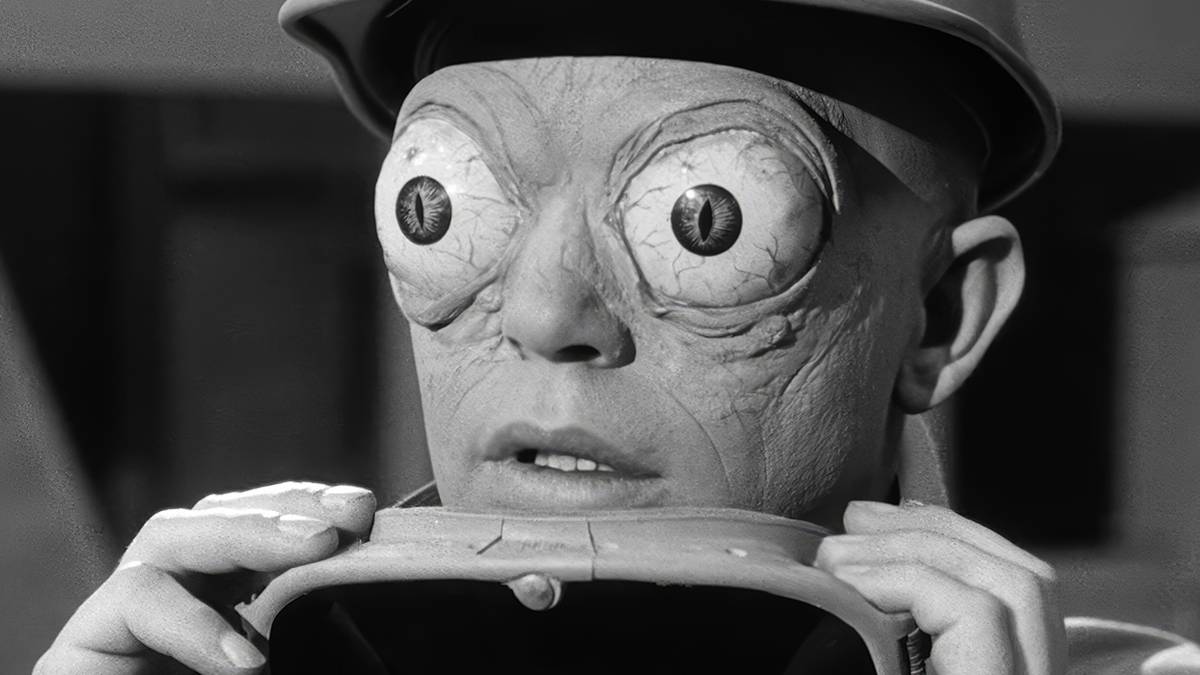
What people remember most about The Outer Limits — beyond that hypnotic opening, 'There is nothing wrong with your television set…' — are the creatures. They were tragic, grotesque, oddly graceful things, built from latex and metaphor. Unlike the smug aliens of 1950s B-movies, these weren't invaders from Mars. They were us, twisted by the things we'd made.
In 'The Sixth Finger', a Welsh miner (played by a young David McCallum) becomes the next stage of human evolution — all forehead and telepathic power, radiating contempt for the species he's leaving behind. In 'The Galaxy Being', Cliff Robertson accidentally contacts an alien through a radio transmitter and pays the price for opening a door that was never meant to be opened. And in 'The Zanti Misfits', insect-like criminals from another planet are exiled to Earth, their punishment becoming humanity's moral mirror.
None of it looked 'real,' but it all felt disturbingly alive. That raw sincerity is why it still hits. The rubber masks and heavy prosthetics give everything a dream logic, like a fable told through flickering static. And the guest stars alone could fill a small sci-fi hall of fame — Leonard Nimoy, Adam West, Martin Landau, Robert Culp, William Shatner, Sally Kellerman — all wandering through the show's fog before finding stardom. You can almost see Star Trek forming in real time, stitched together from leftover props and shared DNA.
An Opening That Still Sends Chills
Every episode began the same way: a calm, disembodied narrator — Vic Perrin, half-prophet, half-operator — seizing control of your screen. 'We control the horizontal. We control the vertical.' Few openings have the nerve to speak directly to you like that. It wasn't a stunt; it was a quiet takeover. That feeling — of being studied through the glass — ran through the series like voltage. The camera's creeping motion down darkened corridors, the flashing lights on someone's face — it made you feel like you were part of the experiment.
That DNA can be seen in modern fare like Benicio Del Toro's The Shape of Water, David Cronenberg's Videodrome, and even Alex Garland's Annihilation, all of which echo a similar pulse fascinated with bodies and boundaries being blurred. Those worlds where transformation and violation blur into the same breath? That's pure Outer Limits.
The best episodes live in that uneasy borderland between terror and transcendence. 'The Man Who Was Never Born' imagines a mutant from a plague-ravaged future traveling back in time to stop the man who caused it — and falling in love with the man's mother. It's The Terminator if it were written by Mary Shelley. 'Nightmare' traps human soldiers on an alien planet where they're tortured by creatures that feed on fear. It's the kind of story that makes you check the locks on your doors.
If you're looking for a series that paved the way for Black Mirror, The X-Files, and even Netflix's Osmosis, The Outer Limits is the original blueprint. It's streaming free on Tubi right now — no subscription required. Just let the old signal in. But don't say we didn't warn you.