Long before legacy sequels and cinematic universes, the cult classic film 'Tron' inspired one of network television's most audacious—and short-lived—homages. In 1983, ABC debuted 'Automan,' a 12-episode series that directly transplanted the digital glow of the Grid to the crime-ridden streets of Los Angeles. While 'Tron' itself was a box-office gamble that grew into a revered franchise, its small-screen counterpart burned brightly and briefly, remembered today as a fascinating artifact of 80s sci-fi ambition.
The Digital Detective Hits the Streets
The premise of 'Automan' was a perfect blend of two 80s obsessions: cutting-edge computers and buddy-cop dynamics. The show followed Walter Nebicher (Desi Arnaz Jr.), a police computer programmer too nerdy for field work. His solution? To create Automan (Chuck Wagner), a sophisticated holographic AI born from the police mainframe. Together, they fought crime, with Automan posing as a mysterious FBI agent to the outside world. The concept was essentially 'Knight Rider' meets 'Tron,' but with a holographic man instead of a talking car.
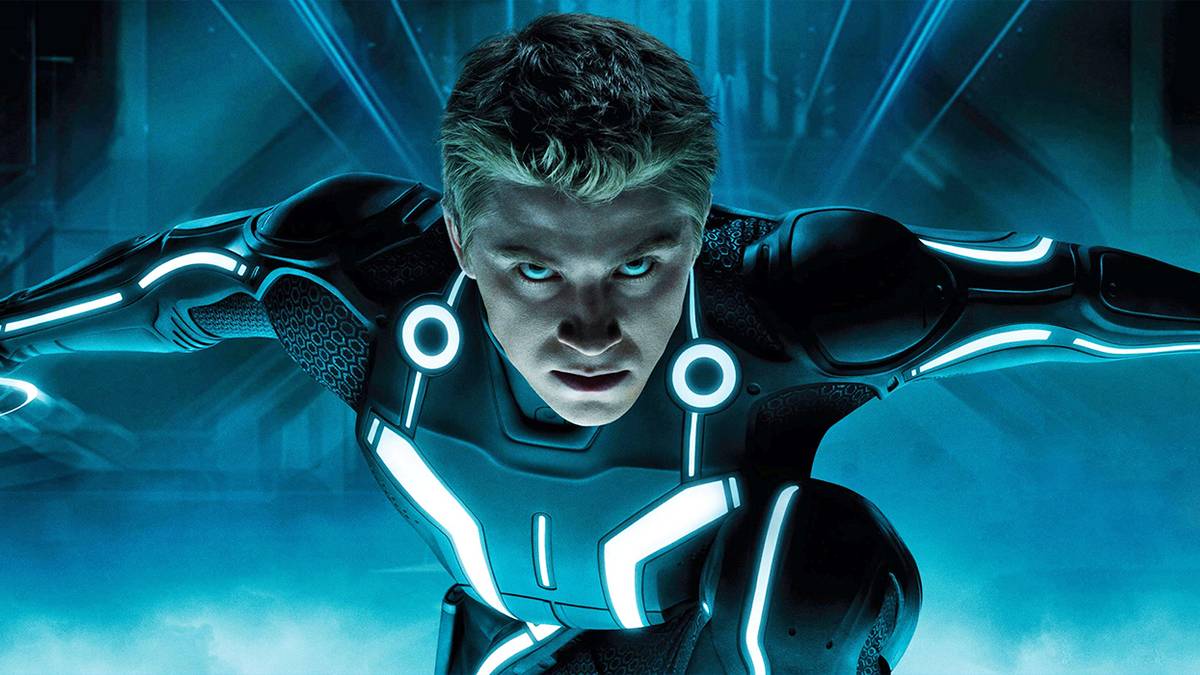
The visual debt to Disney's groundbreaking film was impossible to ignore. Automan himself was a walking, talking program, clad in a sleek suit that emitted the same iconic cyan glow as the denizens of the Grid. His vehicles, the 'Autocar' and 'Autochopper,' were luminous geometric creations that looked utterly alien on real city streets. The show even featured a unique fusion sequence where Walter and Automan would merge into a single, super-powered being—a concept that pushed its already-special-effects-heavy budget to the limit.
A Creator's Vision Meets Network Reality
'Automan' was the brainchild of Glen A. Larson, a prolific television producer responsible for era-defining hits like the original 'Battlestar Galactica' and, crucially, 'Knight Rider.' Larson brought his signature formula of a charismatic hero and a flashy technological gimmick to the project. However, despite the creative pedigree and Chuck Wagner's genuine enthusiasm for playing a digital superhero, the series lacked the magnetic star power of a David Hasselhoff. The ratings struggle began almost immediately.
The show faced brutal competition in its time slot, notably from the popular spy drama 'Scarecrow and Mrs. King'—which starred Bruce Boxleitner, the original actor behind 'Tron's' heroic program, Alan Bradley. This ironic scheduling twist was a symbolic nail in the coffin. Combined with the exorbitant cost of its primitive CGI and practical light effects, 'Automan' was canceled after just one season, vanishing into the realm of forgotten TV curiosities.
The Legacy of a Lost Program
For years, 'Automan' was notoriously difficult to find, with complete DVD sets only available as imports. Its 2015 North American release by Shout! Factory allowed a new generation to experience its peculiar charm. While it was a commercial failure, the series' core idea—a digital consciousness interacting with the physical world—proved prescient. This theme would be explored with far more depth and philosophical weight in later works, most notably the seminal anime 'Ghost in the Shell' and other thoughtful sci-fi narratives.
Ultimately, 'Automan' stands as a testament to 'Tron's' powerful aesthetic influence and the era's willingness to experiment with high-concept television. It was a show that tried to capture lightning in a bottle—or rather, light in a circuit board—but was ultimately crushed by the harsh realities of budget and ratings. Yet, its existence highlights Hollywood's enduring fascination with the digital frontier, a fascination that continues with upcoming projects like 'Tron: Ares.' In the grand arc of sci-fi history, 'Automan' may be a minor, flickering blip, but it's a blip that perfectly encapsulates the neon-soaked ambition of its time.