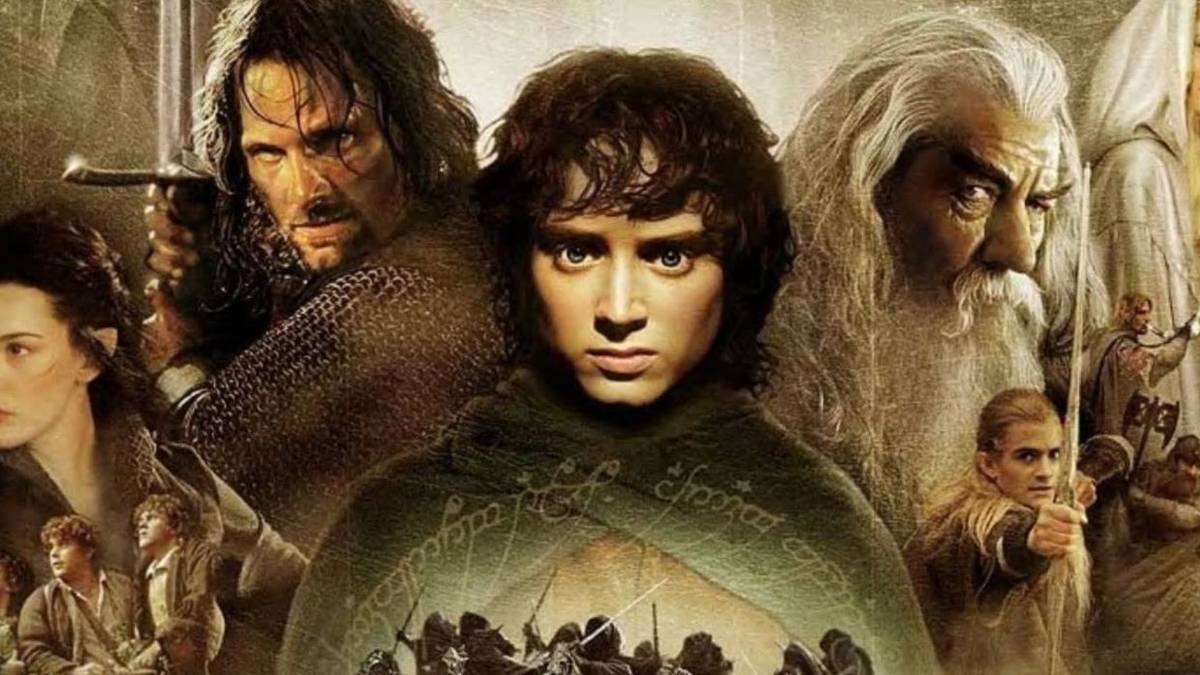
Peter Jackson's The Lord of the Rings trilogy is widely celebrated as one of the best book-to-screen adaptations ever made, but it's far from a page-for-page translation. Fans have long debated the changes, from Faramir's temptation by the One Ring to the absence of Tom Bombadil. Yet one of the most significant alterations concerns the trilogy's future king: Aragorn, played by Viggo Mortensen.
In both versions, Aragorn is a ranger of the North, a member of the Fellowship, and the rightful heir to the thrones of Gondor and Arnor. But the man himself is fundamentally different. Tolkien wrote a confident leader who embraces his heritage; Jackson gave us a brooding hero haunted by his ancestry. That shift doesn't break the plot, but it creates two very different characters.
The reluctant hero vs. the confident king
In the films, Aragorn is plagued by self-doubt. He fears that Isildur's weakness runs in his blood, telling Arwen, "The same blood runs through my veins. The same weakness." His journey is one of slowly accepting his destiny, proving his worth to himself before he can claim the crown. It's a classic reluctant-hero arc, and it works beautifully on screen.
Tolkien's Aragorn, however, never doubts his right to rule. He is proud of his lineage and fully intends to claim his place as King. He prioritizes destroying the One Ring first, but he doesn't agonize over whether he's worthy. A telling moment comes in Rohan, when Aragorn refuses to surrender his sword, citing his ancestry as reason enough to keep it. Film Aragorn would never volunteer his family history so openly. That single scene reveals how drastically the character's attitude was rewritten.
Arwen's expanded role and the reforged sword
The movies also add storylines that don't exist in the same form in the books. The most obvious is Aragorn's romance with Arwen. In Tolkien's novel, their relationship is relegated to the Appendices; Arwen barely appears in the main narrative. Elrond's opposition is far milder, and he agrees to the marriage on the condition that Aragorn becomes King of both Gondor and Arnor. The films turn this into a dramatic forbidden love, giving Arwen a much larger presence and adding emotional stakes to Aragorn's path.
To heighten that drama, the adaptation delays the reforging of Narsil into Andúril. In the book, the sword is reforged before the Fellowship leaves Rivendell, and Aragorn wields it for most of the quest. In the films, Elrond delivers the sword just before Aragorn enters the Paths of the Dead, emphasizing his reluctance and his romance with Arwen. It's a change that serves the film's themes, even if it deviates from Tolkien's timeline.
These additions work because Jackson's adaptation is so well-crafted, and Mortensen's performance is undeniably iconic. But it's worth remembering that the Aragorn on screen is not the Aragorn of the page. Tolkien's hero was never reluctant; he was a king in waiting, sure of his destiny from the start. The films gave him a different journey, and for many fans, that's part of the magic. For those who want to explore more of Tolkien's world, there are plenty of fantasy books that capture a similar epic spirit. And if you're curious about other adaptations, The Rings of Power season 3 is set to return in 2026, offering a new take on Middle-earth's Second Age.