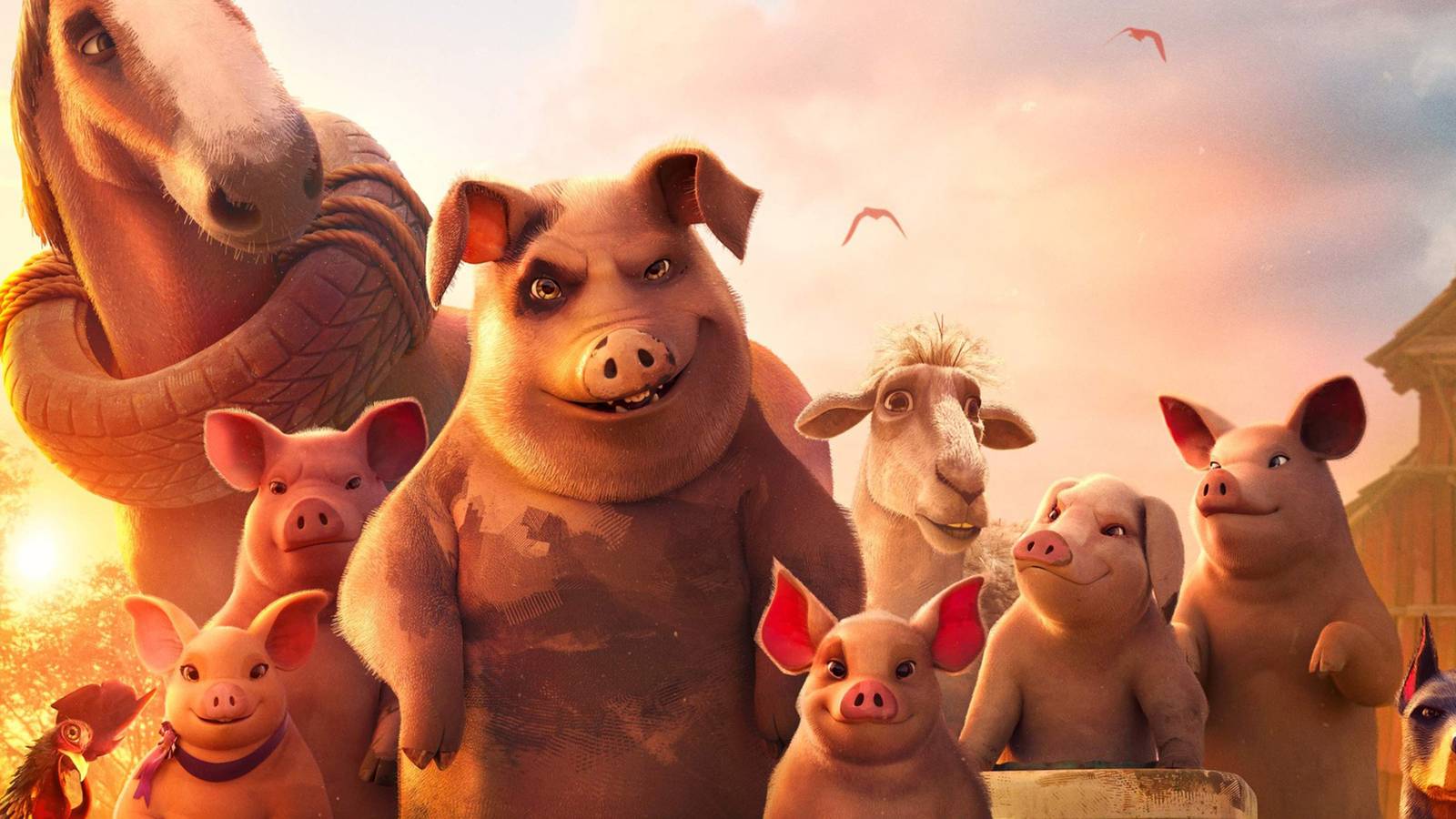
After more than a decade in development, Andy Serkis's passion project Animal Farm has finally hit theaters—and it comes with a surprising new ending that diverges from George Orwell's original vision. Serkis, who directed and voices a character in the film, recently opened up about why he chose to give the classic satire a more hopeful conclusion, especially for its target audience of young, curious minds.
Speaking with Collider, Serkis explained that the adaptation, written by Nicholas Stoller, was always intended to be a family film that tackles heavy themes like corruption, oppression, and exploitation without being preachy. "The last thing that any of us wanted to do was make a sort of… 'message-y' movie," he said. Instead, he describes the film as "experiential," allowing viewers to experience the rebellion and its aftermath through the eyes of a young piglet named Lucky (voiced by Gaten Matarazzo).
The shift from an initial live-action performance capture approach to a softer, more animated aesthetic was deliberate. Serkis wanted a "Disney-esque" look—specifically the darker tone of classic Disney—to make the story accessible without losing its bite. The film features a star-studded voice cast including Seth Rogen as Napoleon, Woody Harrelson, Steve Buscemi, Glenn Close, and Kieran Culkin.
One of the most significant changes from the original novella is the inclusion of Lucky, a character not found in Orwell's book. Lucky serves as the audience's entry point, navigating the moral corruption of the farm's leadership. "It's all about how do we engage young people, pull them away from their phones for a minute, and just start enjoying seeing a story that has pathos, meaning," Serkis said. He hopes the film will spark conversations between generations about why humanity keeps repeating the same mistakes.
Serkis also addressed the film's revised ending, which offers a glimmer of hope absent from Orwell's bleak conclusion. "We wanted to show that there is a possibility for change, for a better tomorrow," he explained. This optimistic twist has sparked debate among fans of the original, but Serkis defends it as essential for today's audience. "Young people need to see that while the world is full of challenges, there is always room for hope and action."
The director emphasized that the film's core message—questioning whether we see ourselves as separate from or part of a larger community—is more relevant than ever. "There's a key moment in the film where Lucky is asked, 'Are you a pig or are you an animal?' That, for me, is what the movie is about," Serkis said. "Are you someone who wants to see yourself as above others? Or are you going to serve everybody?"
For fans of Orwell's work, this adaptation may feel like a departure, but Serkis believes it honors the spirit of the original while speaking directly to a new generation. As he put it, "The world that we're living in now needs a film like this for young people."
If you're looking for more thought-provoking entertainment, check out our list of Fantasy TV Gems That Nailed It From Pilot to Finale or catch up on the latest buzz around Anne Hathaway's 'Devil Wears Prada 2'.